
There’s something genuinely thrilling about watching a barren digital canvas transform into rolling hills, jagged mountain ranges, and dense forests within minutes. I’ve spent the better part of eight years working in game development and architectural visualization, and honestly, the evolution of procedural landscape generation has been nothing short of remarkable.
Understanding the Basics
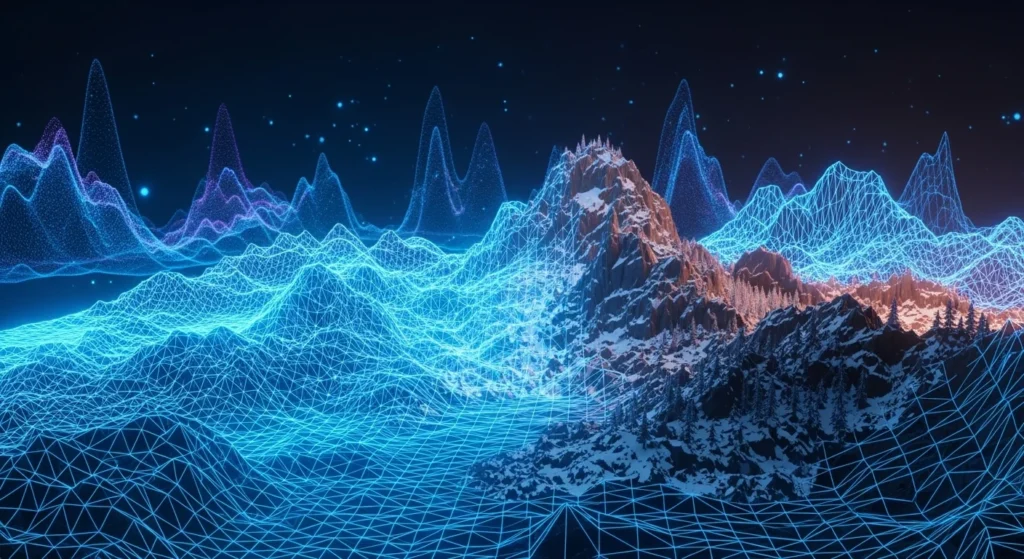
Procedural landscape creation combines algorithmic generation with machine learning to produce realistic terrain, vegetation, and environmental features without manually sculpting every detail. Think of it as teaching a computer the rules of geology, erosion, and natural growth patterns, then letting it apply those principles creatively.
When I first started working with terrain generation back in 2016, we relied heavily on noise functions, such as Perlin and simplex noise, and similar mathematical approaches. These worked fine for basic topography, but the results always felt somewhat artificial. Modern systems have changed the game entirely.
Contemporary tools analyze satellite imagery, geological surveys, and photogrammetry data to understand how real landscapes actually form. They learn the subtle patterns that make a river valley look authentic or why certain rock formations cluster together. The difference in output quality is staggering.
How Modern Systems Actually Work
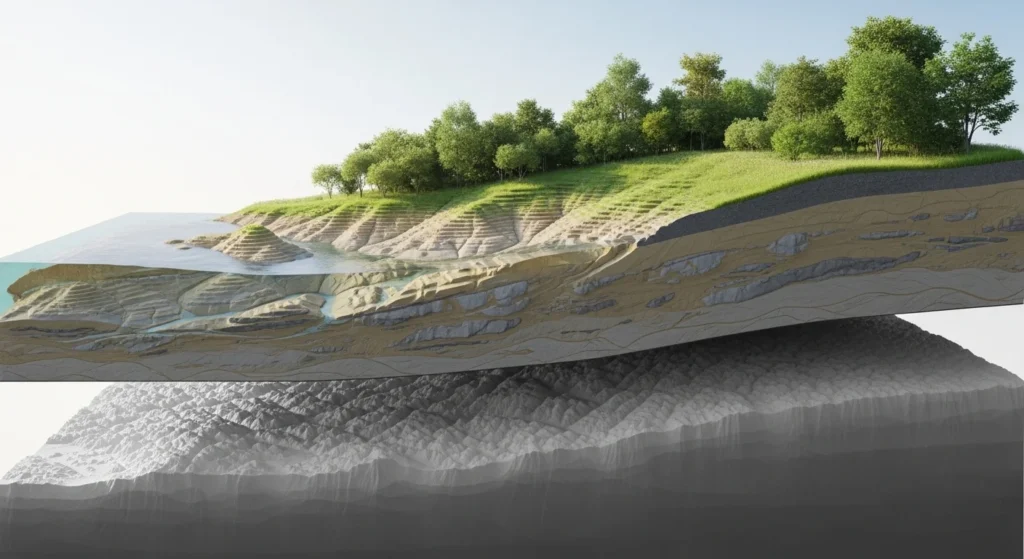
Most current procedural landscape generators operate on multiple layers. The foundation typically starts with generating a heightmap to establish basic elevation data. From there, additional passes add erosion simulation, hydrology networks, biome distribution, and finally, vegetation placement.
What makes newer systems particularly impressive is their contextual awareness. A mountain peak doesn’t just exist in isolation; it affects weather patterns, creates rain shadows, and influences what grows on different slopes. Smart procedural systems account for these relationships.
I worked on a project last year in which we needed to generate approximately 400 square kilometers of believable terrain for an open world game. Traditional methods would have taken our environment team months. Using procedural generation with machine learning refinement, we produced a base landscape in roughly two weeks. The remaining time went toward artistic polish and the placement of points of interest.
Popular Tools and Platforms
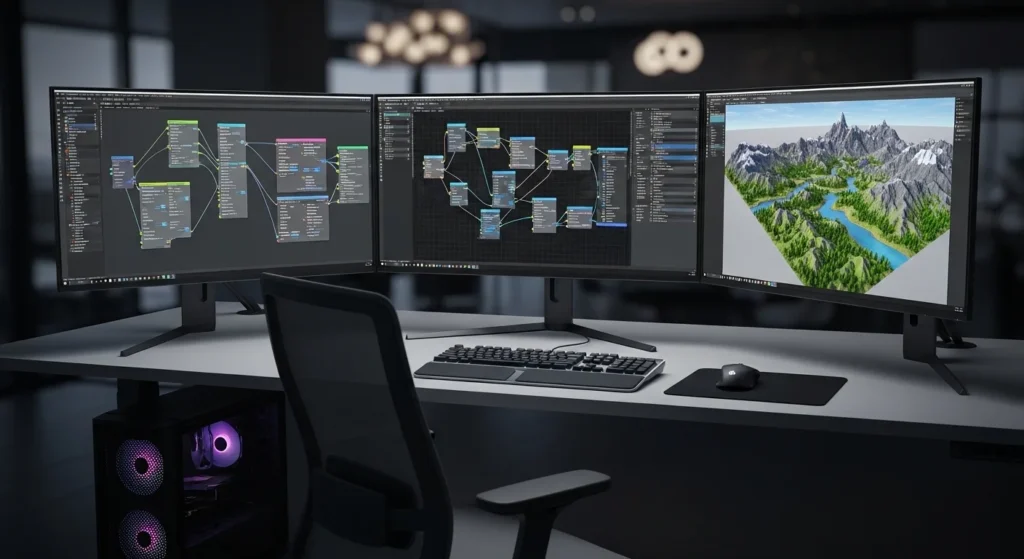
Several platforms have emerged as industry standards. Gaea by QuadSpinner remains a personal favorite for its node based workflow and excellent erosion simulation. World Creator offers capabilities similar to those of World Creator, with a slightly different approach to procedural generation. For integration with game engines, World Machine remains strong despite being around for years.
Houdini deserves special mention for teams with technical artists on staff. Its procedural workflow allows incredible customization, though the learning curve is admittedly steep. I’ve seen studios achieve stunning results with Houdini that aren’t possible with more accessible tools.
Unreal Engine 5’s built in landscape tools have also matured significantly. Combined with their Nanite technology and procedural content generation framework, smaller teams can now achieve results that previously required dedicated environment departments.
Real World Applications
Gaming obviously dominates this space. Titles like “Microsoft Flight Simulator” procedurally generate massive portions of their world from real geographic data, creating convincingly realistic terrain across the entire planet. Smaller indie studios use similar techniques to punch above their weight, creating expansive environments with limited resources.
Film and television production increasingly relies on procedural landscapes for establishing shots and background environments. A colleague working in visual effects recently mentioned that roughly 60% of their environment work now incorporates procedural generation at some stage.
Architecture and urban planning are also growing markets. Landscape architects use these tools to visualize development impacts, while environmental scientists model terrain changes over time. The applications keep expanding.
Limitations Worth Acknowledging
Let’s be realistic, procedural generation isn’t magic. Results often require significant artistic intervention. The systems excel at creating believable foundations but struggle with intentional design. A gameplay-critical ridge or a cinematically perfect valley usually needs human guidance.
Cultural and historical accuracy presents another challenge. Procedural systems can generate a realistic looking medieval village, but understanding the actual layout patterns of 14th century European settlements requires research and manual implementation. The technology enhances human creativity rather than replacing it.
Performance considerations matter too. Highly detailed procedural landscapes can strain hardware, particularly on consumer grade systems. Optimization remains crucial, and knowing when to bake procedural results into static assets is part of the craft.
Looking Forward
The trajectory seems clear. As machine learning models become more sophisticated and training datasets expand, procedural landscapes will increasingly approximate human artistic sensibility. Real time generation during gameplay will become more common, allowing truly dynamic environments that respond to player actions or narrative events.
Climate modeling and environmental simulation represent particularly exciting frontiers. Imagine procedural systems that accurately model how landscapes change over centuries, or that can demonstrate the visual impact of deforestation or urban expansion. The educational and advocacy applications alone could prove transformative.
Practical Advice for Getting Started
If you’re curious about exploring procedural landscape creation, start with accessible tools like Gaea or World Creator. Both offer free or trial versions sufficient for learning fundamental concepts. Focus on understanding how different node types interact before attempting complex landscapes.
Study real geography. The more you understand actual terrain formation, the better your procedural results will be. Geological surveys, topographic maps, and even hiking provide invaluable reference material.
Join communities. Forums, Discord servers, and subreddits dedicated to procedural generation offer tremendous support and inspiration. Watching how experienced artists approach problems accelerates learning significantly.
Conclusion
Procedural landscape creation represents one of those rare technological advances that genuinely democratize creative capability. Studios that once needed dozens of environment artists can now achieve competitive results with smaller teams. Individual creators can build worlds that previously existed only in imagination.
The technology continues to mature rapidly. Those who invest time in understanding these tools today will find themselves well positioned as procedural generation becomes increasingly central to digital content creation.
Frequently Asked Questions
What software is best for beginners in procedural landscape creation?
Gaea and World Creator offer approachable interfaces with excellent tutorials. Both provide free versions suitable for learning fundamental concepts.
Can procedural landscapes match the quality of hand crafted terrain?
For broad environments, absolutely. Specific gameplay, critical or narrative locations typically benefit from additional artistic refinement.
How long does it typically take to generate a large landscape?
Depending on the detail and system capabilities, anywhere from minutes to several hours. Real time previews help iterate quickly before final high resolution exports.
Do I need programming knowledge?
Most modern tools use visual node based systems requiring no coding. Technical artists working in Houdini benefit from scripting knowledge.
What industries use procedural landscape generation?
Gaming, film production, architectural visualization, urban planning, environmental science, and military simulation all utilize these techniques regularly.
How much computing power is required?
Mid range workstations handle most tasks adequately. Complex simulations and high resolution outputs benefit from powerful GPUs and substantial RAM.