
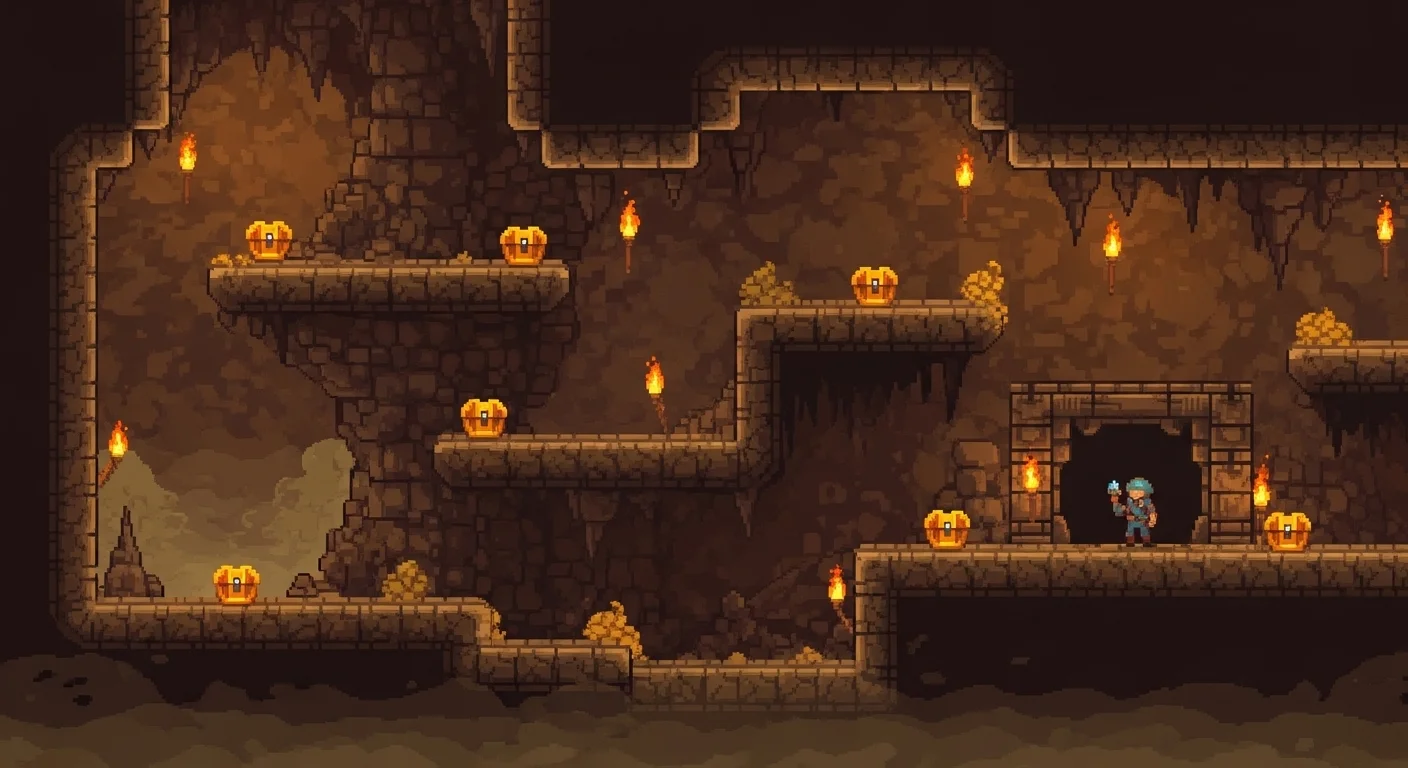
I’ve spent over a decade watching games evolve from static, handcrafted levels to dynamic worlds that feel different every time you play. The shift toward AI driven map variation has fundamentally changed how we experience virtual environments, and honestly, it’s one of the most underappreciated revolutions in game development.
When I first encountered procedural generation in Spelunky back in 2008, I didn’t fully grasp what I was experiencing. I just knew that each time I died, and I died a lot, the cave layout looked different. That simple variation kept me coming back for hundreds of hours. Fast forward to today, and we’re seeing AI systems that don’t just shuffle tiles around but actually understand spatial relationships, gameplay flow, and even player psychology.
What Makes Modern Map Variation Different

The early procedural generation systems were essentially randomizers with guardrails. They’d pick from predefined chunks and stick them together like LEGO bricks. Sometimes you’d get brilliant layouts; other times, you’d spawn next to an impossible enemy configuration or find yourself stuck in a boring corridor for twenty minutes.
Modern AI map variation systems operate on a different level entirely. They use machine learning algorithms that have analyzed thousands of player sessions to understand what makes a level engaging. These systems consider factors like pacing, difficulty curves, resource distribution, and even the emotional rhythm of gameplay.
Take Hades from Supergiant Games. While it uses procedural elements, the rooms themselves are handcrafted, and the AI system focuses on sequencing them intelligently. The system tracks your current build, your health status, and how recently you’ve had a challenging encounter. It doesn’t just throw random rooms at you; it constructs an experience. After my fifteenth escape attempt, I started noticing how the game seemed to know when I needed a shop or a fountain. That’s not luck; that’s sophisticated variation logic at work.
The Technical Backbone

From what I’ve gathered through developer conferences and technical write ups, most modern systems use a combination of approaches. Wave Function Collapse is popular for tile based games. It’s essentially a constraint solving algorithm that ensures everything connects properly while maintaining specific rules. I’ve seen it used brilliantly in games like Bad North, where it generates small islands that always feel geographically plausible.
Grammar based generation is another fascinating approach. Instead of working with physical tiles, these systems use rules like a language grammar to define how spaces should relate to each other. Quest designers love this because you can encode narrative structure directly into the generation rules. “First room should introduce theme, second room presents challenge, third room offers choice” becomes actual code that shapes the level.
Then there’s the neural network approach, which is newer and honestly still finding its footing. Some studios have experimented with training networks on their best handcrafted levels, then letting the AI generate variations. The results are mixed. I tested a game last year that used this method, and while some areas were genuinely impressive, others had that uncanny valley feeling, technically correct but somehow lifeless.
Real-World Applications and Trade offs
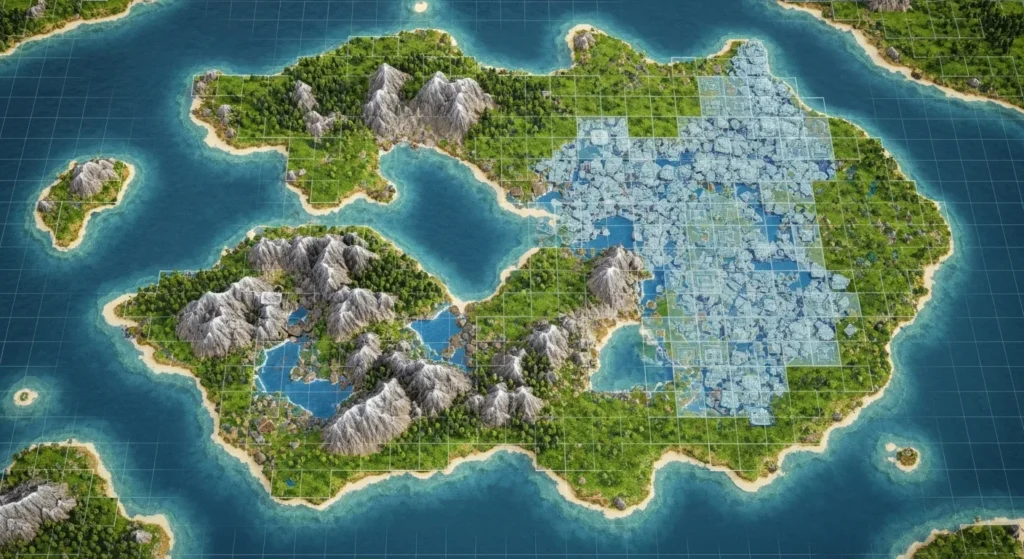
No Man’s Sky probably represents the most ambitious implementation of map variation I’ve encountered. When it launched in 2016, it promised 18 quintillion unique planets. The reality was that while each planet was technically different, many felt the same after a few hours. The variation was there mathematically, but not experientially.
Hello Games spent years refining their generation algorithms, adding more biome types, better terrain mixing, and more varied flora distributions. The 2023 version of the game feels genuinely diverse in ways the launch version didn’t. That evolution demonstrates an important truth: raw variation isn’t enough. The AI system needs to create meaningful variation.
The roguelike genre has basically become a laboratory for these systems. Slay the Spire uses AI variation not just for map layout but for encounter and reward sequencing. The system tracks global player data to adjust rare event frequencies and ensure that overpowered card combinations don’t appear too early or too late. When I’m deep in a run, the paths presented to me aren’t random; they’re calculated to maintain tension and possibility.
The Player Experience Perspective
Here’s something I’ve noticed across hundreds of gaming hours: the best AI map variation systems are invisible. You don’t think “oh, this is procedurally generated.” You just think, “this is interesting.”
Returnal nails this feeling. Each time you die and restart, the Atropos landscape reorganizes itself, but it never feels random. The landmarks remain recognizable, the progression structure stays coherent, and the difficulty scaling feels intentional. The AI variation serves the experience rather than defining it.
Contrast that with some survival games I’ve played where you can literally see the seams in the generation biomes that cut off abruptly, resource nodes that cluster nonsensically, or terrain features that repeat too obviously. That breaks immersion instantly and reminds you that you’re experiencing algorithmic output rather than a crafted world.
Design Challenges and Limitations
Game developers I’ve spoken with are honest about the challenges. AI variation systems are computationally expensive, can produce unexpected results that break gameplay, and require extensive testing. You can’t simply QA test every possible variation when there are millions of potential combinations.
The solution usually involves layered validation: the AI generates content, then automated systems check for broken scenarios, and finally, heuristic rules ensure the result meets quality standards. Even then, weird edge cases slip through. I’ve encountered unbeatable rooms in roguelikes, impossible jump sequences in platformers, and resource deserts in survival games, all products of variation systems doing technically legal things that resulted in practically broken situations.
There’s also the creative tension between variation and authored experience. Some games benefit from carefully scripted moments that hit specific emotional beats. Pure AI variation can dilute that impact. The best implementations find a middle ground using variation for replayability while preserving key moments.
Looking Ahead
The frontier right now is contextual awareness. AI systems that adapt not just to general player behavior but to individual playstyles in real time. Imagine a horror game where the AI map system learns what scares you specifically and adjusts corridor lengths, lighting, and encounter placement accordingly.
We’re also seeing more hybrid approaches where AI generates the foundation, then human designers can quickly tweak and polish. Tools like these let small teams create vast, varied content without the budget of a AAA studio.
The ethical considerations matter too. When an AI system can manipulate difficulty and pacing to maximize engagement, where’s the line between good design and exploitative retention mechanics? Some games already use variation systems to frustrate free players while easing paths for paying customers. Transparency about these systems remains lacking.
FAQs
Q: Do all modern games use AI map variation?
No, many games still use entirely hand crafted levels for tighter narrative control and specifically designed experiences.
Q: Can AI generated maps match hand-crafted quality?
Not entirely yet, but hybrid approaches combining AI generation with human refinement come very close.
Q: How much does map variation affect replayability?
Significantly, games with strong variation systems often have 10x or more replay value compared to static level designs.
Q: Do these systems work on all platforms?
Yes, though computational limits on mobile or older consoles can restrict complexity.
Q: Can players tell when they’re experiencing AI generated content?
Good systems are invisible; poor ones become obvious quickly through repetition or logical inconsistencies.