

I remember the first time I noticed something was different. I was playing an RPG, my bags were the usual disaster potions scattered across three different tabs, crafting materials mixed with quest items, weapons I’d been meaning to sell for the past five hours. Then I opened my inventory after a particularly hectic dungeon run, and everything was… organized. Neatly sorted. I hadn’t done it myself.
That’s when I realized: the game had quietly tidied up my mess while I wasn’t looking.
AI driven inventory management has been creeping into video games over the past few years, and honestly? Most players don’t even notice it’s happening. But once you start paying attention, you see it everywhere, from the way your favorite looter-shooter suggests which gear to scrap, to how MMORPGs now predict which consumables you’ll need before a raid.
What Actually Is AI Inventory Management?

At its core, we’re talking about algorithms that watch how you play and make decisions about your in-game items. Not the flashy, talking robot kind of AI, but machine learning systems that recognize patterns in player behavior.
These systems track what you pick up, what you use, what you ignore, and what you sell. Over time, they build a profile of your playstyle. Are you a hoarder who keeps every crafting material just in case? The system learns that. Do you immediately vendor all grey quality items? It notices. Prefer bows over swords? It’s taking notes.
The practical applications range from simple quality of life features to systems that fundamentally change how inventory works. I’ve seen implementations that auto-sort items based on your habits, flag gear you’ll probably want to dismantle, highlight upgrades the moment you loot them, and even auto deposit crafting materials into storage when your bags get full.
The Good Stuff: Why Developers Are Embracing This
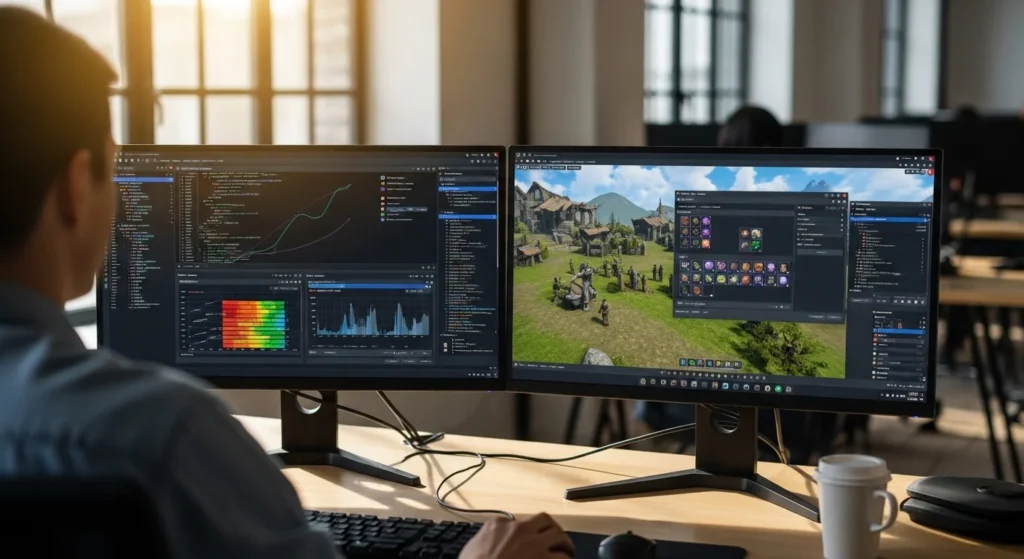
From a design perspective, inventory management has always been this weird friction point. Some players love the organizational puzzle, treating their bag space like a game within the game. But for many others, it’s just tedious busywork that pulls them out of the actual fun.
I spoke with a former guildmate who works at a mid sized studio, and he put it bluntly, Players were spending an average of twelve minutes per session just organizing inventory. That’s twelve minutes not fighting bosses, not exploring, not doing the stuff we actually spent years building.
Smart inventory AI solves this without removing player agency entirely. The system makes suggestions rather than forcing actions. In Destiny 2, for instance, the game will recommend which duplicate weapons to dismantle based on their perk rolls, but you still make the final call. It’s collaborative rather than dictatorial.
The accessibility angle matters too. Not everyone has the cognitive bandwidth or interest to min max their inventory. Players with certain disabilities, younger gamers, or folks who just play casually after work they all benefit from systems that reduce cognitive load without dumbing down the game itself.
Where It Gets Complicated

Of course, it’s not all smooth sailing. I’ve run into plenty of quirks and frustrations with these systems.
The biggest issue? Sometimes the AI is confidently wrong. I had a survival game decide that I obviously didn’t need the rare ore I’d been hoarding, because I hadn’t used it in three play sessions. It helpfully marked it for sale. I nearly lost materials I’d spent hours collecting because the algorithm couldn’t understand I was saving them for a specific blueprint.
There’s also the learning curve paradox. These systems need data to work well, which means they’re often useless or actively unhelpful when you first start playing. They make their worst suggestions precisely when you’re newest and least equipped to recognize bad advice.
Then there’s the more philosophical concern: are we outsourcing decision-making in a medium that’s supposed to be about making choices? Some veteran players feel that inventory management is part of the strategic challenge. In hardcore survival games, especially, deciding what to carry and what to leave behind creates meaningful tension. If an AI handles that for you, something is lost.
I partially agree with this, though I think it depends entirely on what kind of game you’re making. In a focused survival experience, inventory pressure is a feature. In a sprawling MMO with seventeen different currency types and twenty slot bags, auto sorting is mercy.
Real-World Examples You’ve Probably Encountered
The Division 2 uses a tagging system where the game analyzes your loadout and flags lower tier duplicates as junk. It’s not perfect; it once marked a god-roll piece I was testing, but it saves enormous amounts of time.
Path of Exile introduced loot filters that, while not strictly AI in the machine learning sense, accomplish similar goals by learning which item bases and modifiers you care about based on your character build.
Even something like Animal Crossing: New Horizons got into the game with its storage sorting options that prioritize recently acquired items and group similar objects together. It’s gentler, less algorithmic, but serves the same purpose: reducing tedious organization.
Mobile games have gone furthest down this road, often because they’re designed for short play sessions. Auto battle systems that also manage loot and equipment are standard in gacha RPGs. Some will even automatically equip upgrades, though admittedly, these implementations tend to be heavy handed compared to PC and console approaches.
The Future Is Probably More Personalized
What I’m watching for next is hyper personalization. Current systems are fairly broad in their pattern recognition, but we’re moving toward AI that understands nuance.
Imagine an inventory system that knows you’re a completionist achievement hunter, so it holds onto quest items even after completion because you like keeping trophies. Or one that recognizes you’re experimenting with a new character build and stops suggesting you scrap INT based gear even though you’ve been playing STR for fifty hours.
The technology exists. It’s just a matter of implementation and, frankly, whether developers want to invest resources into something many players will never consciously notice.
Privacy is worth mentioning here, too. These systems require data lots of data. Most operate entirely locally, but as games move further into cloud-based models, there’s legitimate concern about what player behavior data gets collected and how it’s used. Transparency matters.
Finding the Balance
After years of watching this technology evolve, I’ve landed on a pretty simple conclusion: AI inventory management works best as an optional assistant, not an invisible puppeteer.
Give players the choice to enable or disable it. Provide granular controls, maybe I want auto sort but not auto suggest. Make the system’s logic transparent so players understand why it’s making recommendations.
Done right, these systems remove tedium without removing agency. They respect players’ time while preserving the meaningful decisions that make games engaging. Done wrong, they’re just another layer of automation in a medium that’s supposed to be about interaction.
The games that get it right, the ones where you barely notice the help but definitely appreciate it, those are the ones that understand inventory AI isn’t about replacing player judgment. It’s about supporting it.
FAQs
Does AI inventory management mean the game is playing itself?
No. These systems typically make suggestions or perform basic organizational tasks. Final decisions about what to keep, use, or discard remain with the player in most implementations.
Can I turn off AI inventory features?
In most modern games, yes. Developers usually include toggle options in settings, though the specific controls vary by game.
Is my gameplay data being sent to servers?
It depends on the game. Many systems operate entirely locally on your device, but online games may transmit behavioral data. Check the game’s privacy policy for specifics.
Do these systems work well for new players?
Not initially. AI inventory tools need data about your playstyle to function effectively, so they often provide limited value in your first several hours of gameplay.
Will this replace traditional inventory management entirely?
Unlikely. Different game genres have different needs. Hardcore survival and strategy games will probably always maintain manual inventory as a core mechanic, while casual and mobile games may automate more aggressively.