
I’ve spent the better part of a decade working adjacent to game design teams, and if there’s one thing that keeps designers up at night, it’s currency balance. Get it wrong, and your player base evaporates. Get it right, and people barely notice, which is the point.
The role of artificial intelligence in balancing game currencies has evolved dramatically over recent years. What used to be a spreadsheet driven guessing game has turned into a sophisticated, data fueled system that adjusts, learns, and reacts in ways that would’ve seemed like science fiction to early MMO developers.
Let me break down how this actually works, why it matters, and where it’s headed.
Why Game Currency Balance Is So Brutally Hard
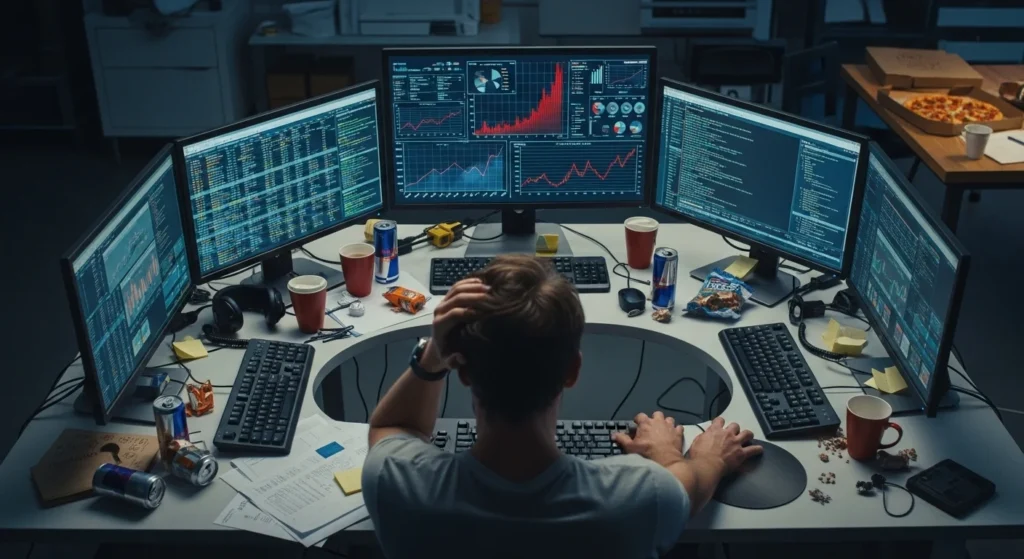
Think about it this way. A game economy is essentially a miniature real-world economy, except the developers are playing god. They control the money supply, the sinks (places where currency is spent and removed), and the faucets (where currency enters the system). The problem? Players are wildly unpredictable.
Some grind relentlessly. Others exploit loopholes. A few whales spend thousands of real dollars. Casual players log in twice a week. Balancing a currency system that feels fair and engaging across all these player types is genuinely one of the hardest problems in game design.
I remember talking to a lead economy designer on a mid sized RPG who told me, “We launched with what we thought was a perfectly tuned gold system. Within three weeks, hyperinflation made half our items worthless.” That story isn’t unusual. It’s practically a rite of passage.
How AI Steps Into the Picture
Traditional balancing relied heavily on manual tuning. Designers would look at data dumps, run simulations on paper, and make adjustments during patches. The cycle was slow, often weeks or months between meaningful changes.
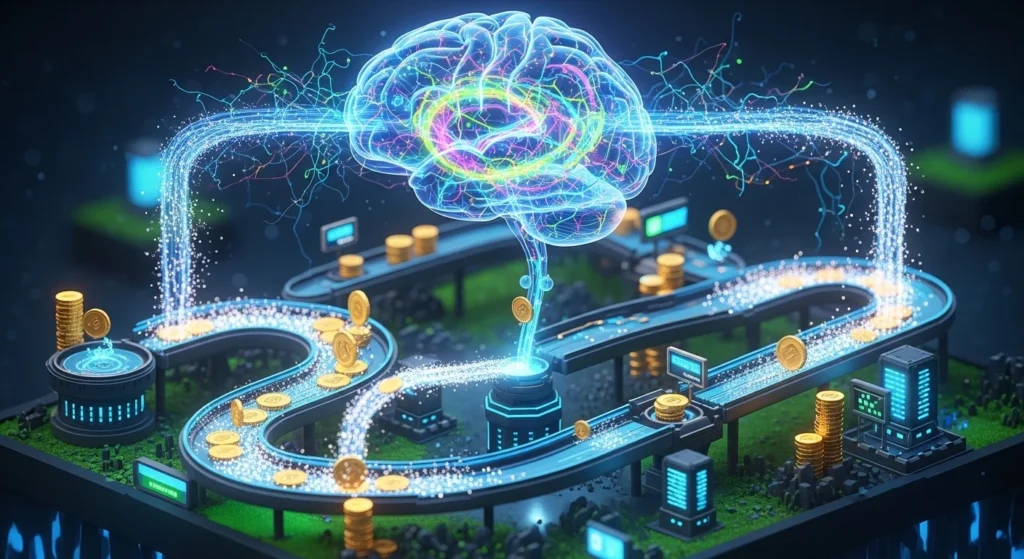
Modern AI driven systems operate differently. They monitor real time player behavior, detect anomalies, and either recommend or autonomously implement adjustments to currency flow. Here’s what that looks like in practice:
Dynamic Reward Scaling
AI systems track how quickly players accumulate currency and adjust reward outputs accordingly. If a particular quest or activity becomes an unintended gold farm, the system flags it and can reduce payouts before the economy spirals.
Predictive Inflation Modeling
Machine learning models analyze spending patterns, currency velocity, and item pricing trends to predict inflationary pressure before it becomes visible to players. This is similar to what central banks attempt, except the feedback loop is much faster.
Personalized Economy Experiences
Some games now use AI to subtly tailor currency rewards to individual player engagement levels. A returning player might receive slightly boosted rewards to ease them back in, while a hardcore player sees diminishing returns to prevent currency hoarding.
Real World Examples Worth Examining
Eve Online has long been a poster child for complex virtual economies. CCP Games employs a full time economist (yes, a real economist) and uses algorithmic tools to monitor their in game market. Their AI assisted systems track trillions of ISK flowing through the economy daily, identifying market manipulation and adjusting resource availability.
Fortnite and Genshin Impact take a different approach. Their premium currency systems use AI primarily on the monetization side, optimizing pricing, bundle offers, and reward cadences to maximize both engagement and revenue. It’s less about free market simulation and more about behavioral economics at scale.
Diablo IV launched with notable currency balance issues that Blizzard had to address through multiple patches. There’s been growing discussion about whether more aggressive AI monitoring during the early launch window could have caught gold duplication exploits and pricing imbalances faster.
The Ethical Tightrope
Here’s where things get uncomfortable, and I think it’s important to be honest about this.
AI-driven currency balancing can absolutely be used to manipulate players. When a system knows exactly how to throttle rewards to keep someone engaged right at the edge of frustration, but not quite quitting, that’s not just balancing. That’s behavioral manipulation.
The line between “good game design” and “exploitative monetization” gets blurry fast. Loot box mechanics, dynamic pricing in stores, and personalized scarcity are all areas where AI balancing intersects with real ethical concerns. Regulatory bodies in Europe and parts of Asia have already started scrutinizing these practices.
Responsible studios set boundaries. They use AI to maintain fairness, not to squeeze wallets. But not every studio operates that way, and players deserve transparency about how these systems work.
Limitations That Don’t Get Talked About Enough
AI isn’t magic. A few honest limitations worth noting:
- Garbage in, garbage out. If the underlying economic design is fundamentally broken, no amount of AI tuning will save it. The system needs a sound foundation.
- Player sentiment is hard to quantify. An economy might look balanced on paper while feeling miserable to play. AI struggles with the emotional dimension of virtual economies.
- Overcorrection is real. Automated systems can sometimes react too aggressively to short term anomalies, creating whiplash effects that confuse players.
- Transparency trade offs. The more sophisticated the system, the harder it is to explain to players why certain changes were made, which can erode trust.
Where This Is Heading
Looking at 2024 and beyond, a few trends stand out. More studios are building proprietary economic simulation engines powered by reinforcement learning. These systems can run thousands of simulated economy scenarios before a game even launches, stress testing currency balance against different player population models.
We’re also seeing more cross-pollination between academic economics and game design. Universities now study virtual economies as legitimate research subjects, and those insights are feeding back into better AI models.
The ultimate goal? An economy that feels alive, fair, and responsive, one where the AI acts like a skilled dungeon master quietly adjusting things behind the screen so everyone has a good time.
Frequently Asked Questions
What is AI balancing in game currencies?
It refers to using machine learning and algorithmic systems to monitor, adjust, and optimize the flow of virtual currencies within games to maintain economic stability.
Can AI completely replace human economy, designers?
No. AI excels at data analysis and pattern detection, but human judgment is essential for creative vision, ethical oversight, and understanding player sentiment.
Does AI currency balancing affect free to play games differently?
Yes. Free to play games often use AI more aggressively for monetization optimization, while subscription or premium games tend to focus on gameplay fairness.
Is AI driven currency balancing ethical?
It depends on implementation. When used to maintain fairness, it’s beneficial. When used to manipulate spending behavior, it raises serious ethical concerns.
Which games use AI for economy balancing?
Eve Online, several Ubisoft live service titles, and many mobile games use varying degrees of AI assisted economic balancing, though most studios don’t publicize specifics.
Can players detect AI driven economic adjustments?
Typically not. Well implemented systems are designed to feel natural and seamless, though drastic corrections can sometimes be noticeable to attentive players.