
I’ve been gaming for over two decades, and if there’s one aspect that’s undergone a radical transformation in recent years, it’s audio. Not just in quality, though that’s improved tremendously, but in how sound responds to what’s actually happening on screen. The days of looping background tracks and canned sound effects are fading fast, replaced by intelligent audio systems that breathe, react, and evolve with gameplay.
Dynamic sound environments powered by AI aren’t just a technical novelty. They’re reshaping immersion in ways that rival graphical advancements. Let me walk you through what’s happening in this space, why it matters, and where I think it’s headed based on what I’ve observed and experienced firsthand.
What Exactly Are AI Dynamic Sound Environments?
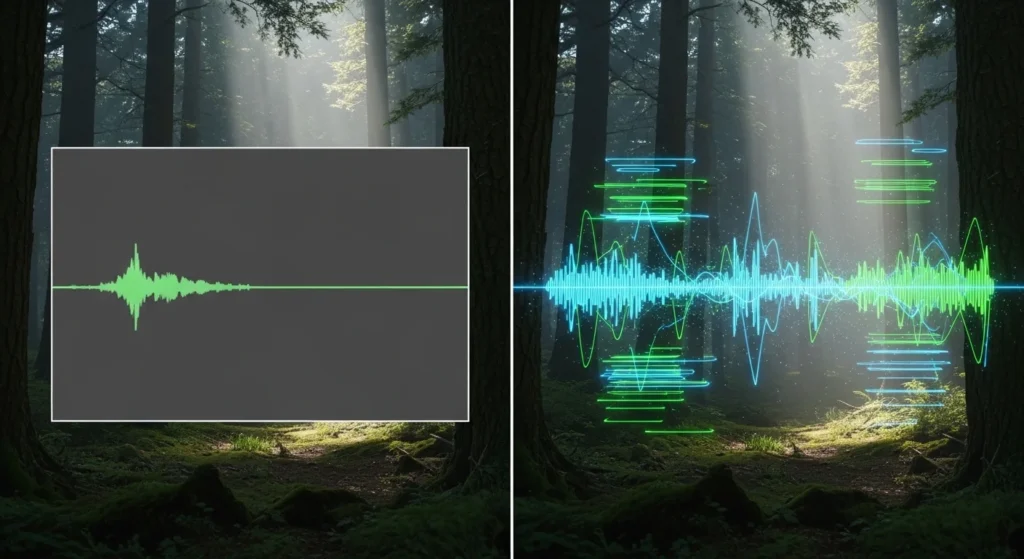
Traditional game audio works on triggers. Walk into a forest area, and the forest ambience plays. Enter combat, and the battle music kicks in. It’s functional, but predictable. AI dynamic sound environments take a fundamentally different approach by analysing what’s happening in real time and generating or modifying audio to match the moment.
These systems don’t just switch between pre recorded tracks. They might layer different musical stems based on tension levels, alter environmental sounds based on weather or time of day, or even synthesise entirely new audio elements on the fly. The AI monitors variables like player health, enemy proximity, exploration status, and dozens of other factors to craft a soundscape that feels organic rather than scripted.
I first noticed this shift playing Hellblade: Senua’s Sacrifice back in 2017. The binaural audio wasn’t strictly AI driven, but it demonstrated how responsive, context aware sound could elevate psychological immersion. Since then, the technology has grown more sophisticated, with machine learning models now capable of understanding complex gameplay states and responding musically.
How These Systems Actually Work
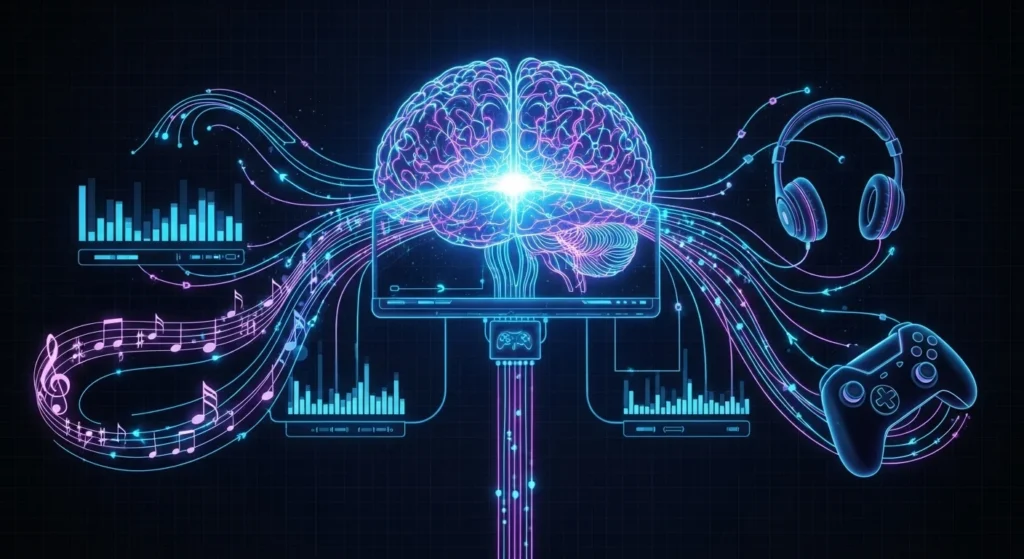
The technical foundation involves several components working together. At the core, you have machine learning algorithms trained to recognize gameplay patterns. These might be neural networks that have analysed thousands of hours of gameplay to understand what “tension,” “calm,” “chaos,” or “victory” looks like in data terms.
The system constantly receives input from the game engine, player actions, environmental conditions, and narrative beats. It then makes decisions about audio output: Should the bass drop out to create unease? Should the string section swell as the player approaches a vista? Should footstep sounds echo differently because it started raining?
Some implementations use procedural generation, where the AI creates variations of musical phrases rather than simply playing back recordings. Others employ adaptive mixing, where pre recorded elements are combined in near-infinite combinations based on the AI’s assessment of the current moment.
What impressed me recently was observing No Man’s Sky and its audio system. The game generates not just planets but also soundscapes unique to each world. While not purely AI driven in the machine learning sense, it demonstrates procedural audio generation that creates atmospheres you’ve never heard before, fitting planets you’ve never seen.
Real World Impact on Gameplay
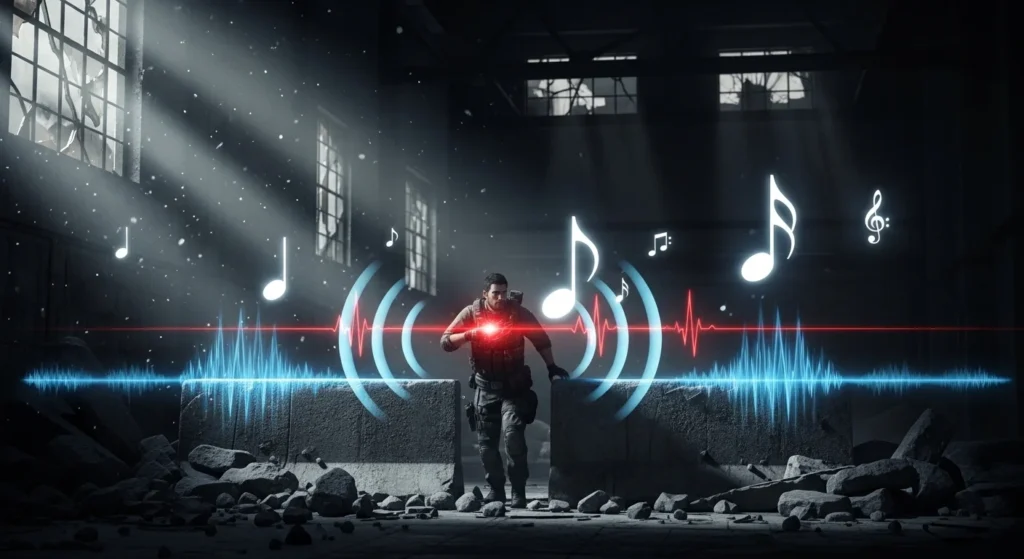
The difference between static and dynamic audio isn’t subtle once you’ve experienced both. I was playing a modern AAA title recently, one with advanced adaptive audio, and decided to test it. I let my character idle in different situations: hiding from enemies, standing victorious after battle, exploring peacefully.
The music didn’t just change tracks. It breathed. During the hiding sequence, percussion elements gradually dropped out, leaving only sustained tones that created palpable tension. After combat, the music didn’t immediately shift to calm; it slowly wound down, like an adrenaline comedown. During exploration, melodic elements emerged that I hadn’t heard in combat sections.
This responsiveness creates something crucial: emotional continuity. Your experience doesn’t feel segmented into “combat mode” and “exploration mode” with jarring audio transitions. Instead, there’s a flow that mirrors how tension and relief work in real experience.
Horror games benefit enormously from this technology. Instead of relying solely on jump scares with canned sound effects, adaptive audio can build dread through subtle changes, a barely perceptible shift in ambient tone, footsteps that become slightly more resonant, and background noise that slowly becomes foreground.
The Creative Challenges
Implementing these systems isn’t straightforward. I’ve spoken with audio designers who describe the shift as moving from composition to creating systems that compose. Instead of crafting a three minute battle theme, they’re building musical rule sets and training AI models to understand when certain musical ideas should emerge.
There’s also the question of artistic control. Composers understandably want their work heard as intended, but dynamic systems mean you’re never quite sure exactly what players will experience. It requires a different mindset, designing possibility spaces rather than fixed experiences.
Testing becomes exponentially more complex, too. With traditional audio, you can play through a level and verify that everything sounds correct. With AI-driven systems, you need to test countless permutations because the audio changes based on variables that might align each playthrough differently.
Current Limitations and What’s Next
These systems aren’t perfect yet. I’ve encountered moments where the AI misread the situation ramping up tension during what should have been a quiet character moment, or staying too calm when danger was imminent. The technology is still learning nuance.
Hardware limitations also play a role. Real time audio processing, especially with machine learning models running simultaneously with graphics rendering, demands resources. Most sophisticated implementations are currently limited to high end PCs and current-generation consoles.
Looking forward, I expect we’ll see AI audio systems that understand narrative context more deeply, not just gameplay states. Imagine soundscapes that respond to your play style over hours of gameplay, developing musical themes that reflect whether you’re aggressive or stealthy, methodical or chaotic.
Integration with voice synthesis is another frontier. We’re starting to see AI that can generate contextual dialogue variations, not just play back recorded lines. Combined with dynamic sound environments, this could create truly responsive acoustic worlds.
Why It Matters Beyond Novelty
Some might dismiss adaptive audio as a luxury, nice to have, but not essential. I’d argue it’s becoming fundamental to how we define immersion. As visual fidelity approaches photorealism and diminishing returns, audio represents a frontier where dramatic improvements remain possible.
Sound shapes emotion more directly than visuals in many ways. The right audio cue triggers immediate physiological responses: tension, relief, excitement, dread. When those cues are perfectly timed to your specific experience rather than generally scripted moments, the emotional connection deepens substantially.
For accessibility, dynamic audio also offers potential. Systems that can adjust based on player needs, enhancing directional cues for players with visual impairments, or reducing overwhelming audio complexity for those with sensory sensitivities, represent meaningful inclusive design.
The Bottom Line
AI dynamic sound environments represent one of the most significant evolutions in game design happening right now, even if they don’t generate the same headlines as graphical showcases. They’re transforming games from experiences with soundtracks to experiences with living, breathing soundscapes that exist specifically for each player’s journey.
As these systems mature and become more accessible to developers beyond major studios, I expect we’ll see creative implementations we haven’t imagined yet. The technology is still young, but the foundation is solid, and the potential is enormous.
If you haven’t paid much attention to game audio lately, I’d encourage you to listen actively next time you play something modern. Notice when the music shifts, how the ambience responds to your actions, the way tension builds acoustically. You might be surprised at how much is happening beneath your conscious awareness and how much it’s shaping your experience.
FAQs
What games currently use AI dynamic sound environments?
Recent titles like Returnal, The Last of Us Part II, and various procedurally generated games incorporate adaptive audio systems, though implementation sophistication varies.
Do these systems require special audio equipment?
No special equipment is required, though quality headphones or surround sound systems help you appreciate the detail. Some games do optimise for spatial audio technologies.
Can indie developers use this technology?
Increasingly, yes. Middleware tools and audio engines are making adaptive audio more accessible, though the most sophisticated implementations still require significant resources.
Does dynamic audio impact game performance?
It can, since real time audio processing requires computational resources, but modern systems are optimised to minimise performance impact.
Will this replace traditional game composers?
No, it shifts their role toward designing systems and musical frameworks rather than replacing the creative human element entirely.