
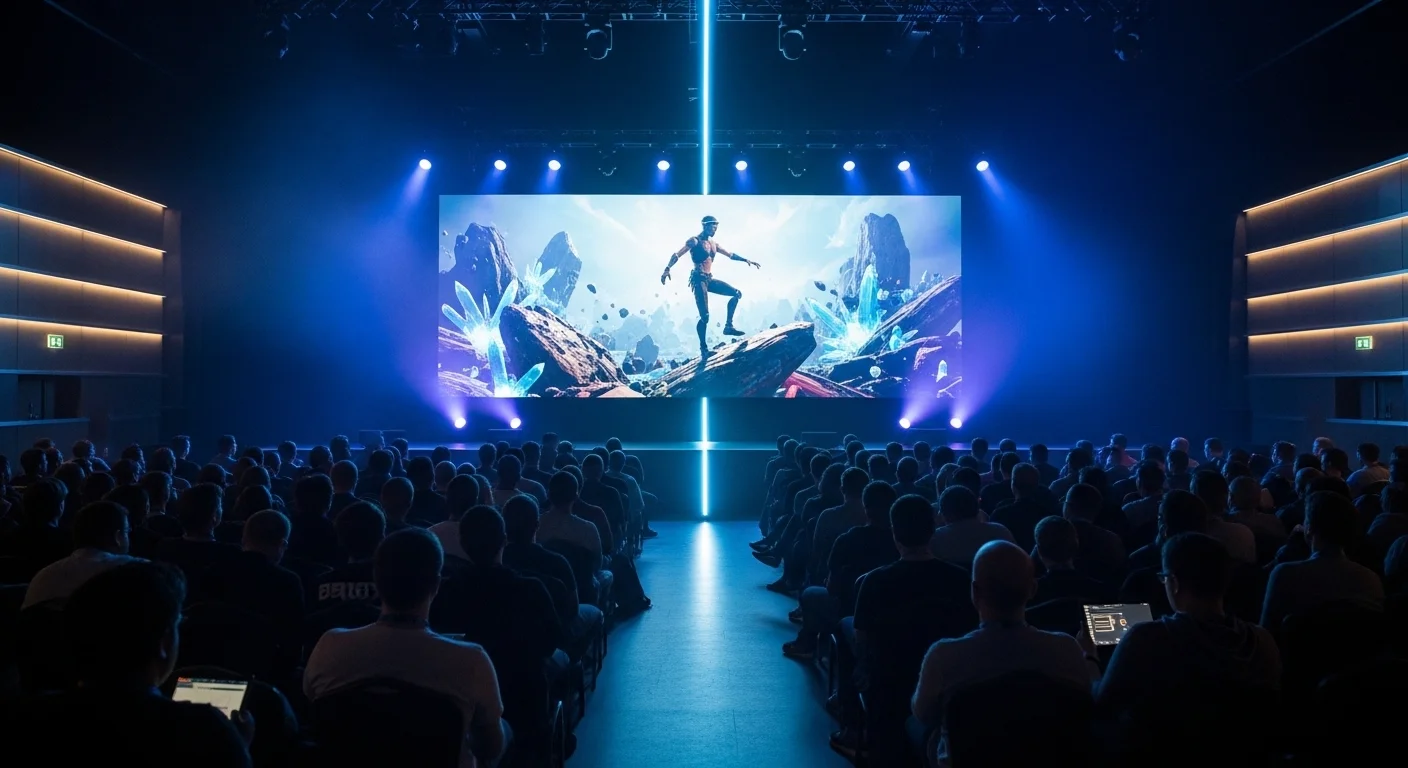
I remember sitting in a GDC session back in 2019 when a developer from Ubisoft showed us a demonstration that genuinely made the room go quiet. A character in their test environment wasn’t just running through pre programmed animations; it was actually learning how to balance, adapt to terrain changes, and recover from stumbles in real time. That moment crystallized something I’d been sensing for years: traditional physics engines were about to share the stage with something far more dynamic.
What Makes AI Driven Physics Different
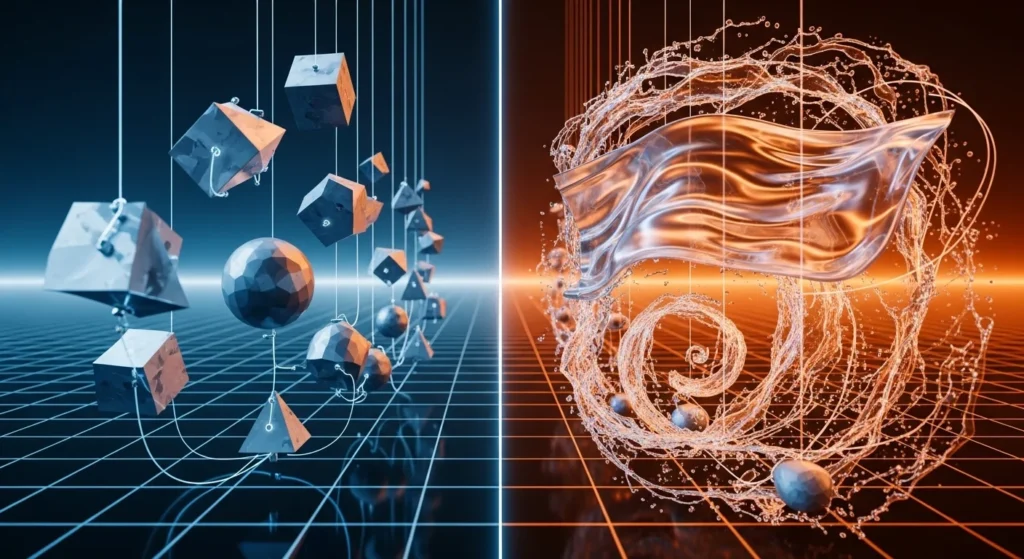
Traditional physics simulation in games relies on deterministic calculations. You apply force to an object, the engine computes trajectories using Newtonian mechanics, and you get predictable results. It works beautifully for rigid bodies, projectiles, and basic environmental interactions. Games like Half Life 2 revolutionized this approach nearly two decades ago with the Havok engine.
But here’s the limitation I’ve observed through countless development cycles: deterministic physics struggles with complexity. Cloth simulation, fluid dynamics, organic movement, soft body deformation these require enormous computational resources when handled through pure mathematical modeling. The calculations explode exponentially as variables increase.
AI physics simulation approaches the problem differently. Instead of calculating every interaction from first principles, machine learning models are trained on vast datasets of real-world physics behavior. These neural networks learn patterns, shortcuts, and approximations that can produce convincingly realistic results at a fraction of the computational cost.
Real World Applications I’ve Witnessed
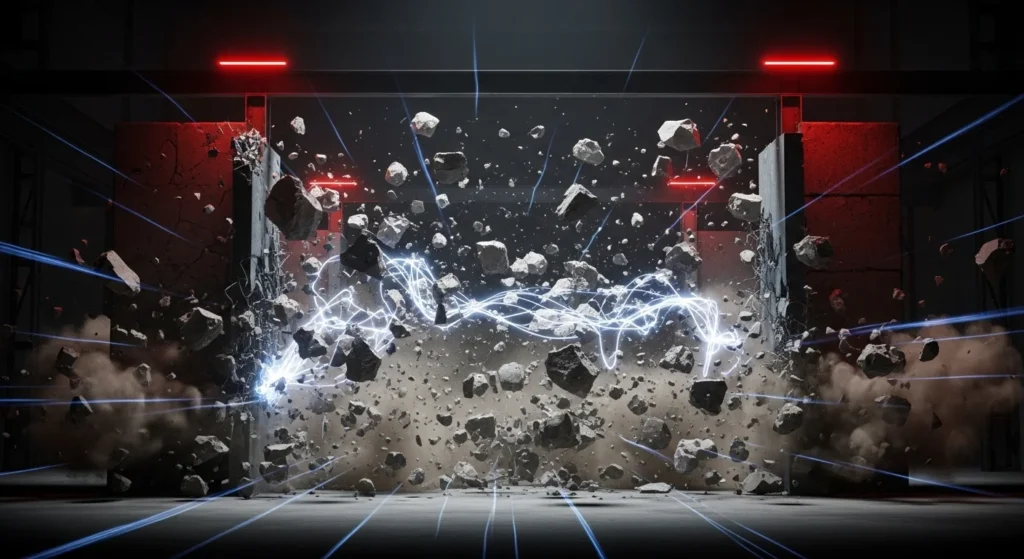
The most impressive implementation I’ve personally tested is NVIDIA’s GameWorks Flow system combined with their neural physics accelerators. Playing Control from Remedy Entertainment, the destruction physics felt remarkably organic. Concrete didn’t just shatter into predetermined chunks debris flew in ways that seemed genuinely responsive to the force vectors involved.
Character animation has seen perhaps the most dramatic transformation. EA Sports has been integrating machine learning into its FIFA and Madden franchises for several years now. Their HyperMotion technology captures real athletes’ movements, then uses AI models to blend, adapt, and generate new animations dynamically. When two players collide on the virtual pitch, the resulting interaction isn’t pulled from a library of canned animations; it’s synthesized in real-time based on learned physics behaviors.
Sony’s work on Uncharted 4 represented an earlier milestone. The rope physics in that game used a hybrid system where traditional simulation handled the broad strokes while learned models smoothed out edge cases and prevented the visual glitches that plagued earlier attempts at complex cable dynamics.
The Technical Backbone
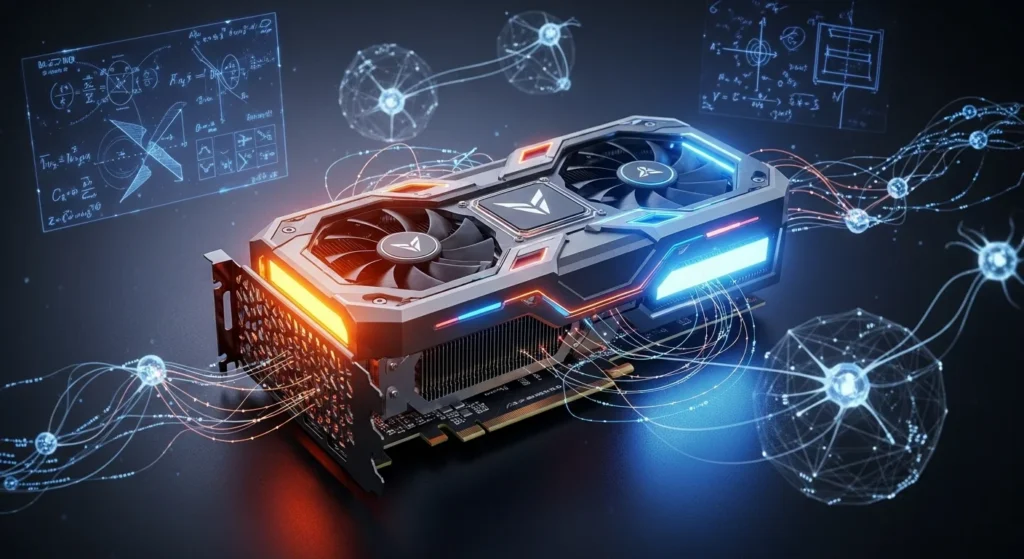
From a development perspective, implementing AI physics requires different infrastructure than traditional engines. Most studios working in this space utilize reinforcement learning frameworks where virtual agents essentially teach themselves physics through trial and error within simulation environments.
DeepMind’s research on physical reasoning has trickled down to game development in fascinating ways. Their work on predicting object interactions through visual observation alone has influenced how some studios approach environment design. Rather than manually tuning physics parameters for every material type, developers can train models that infer appropriate behaviors from reference footage.
The hardware side matters enormously. NVIDIA’s tensor cores and AMD’s equivalent technologies have made real time inference practical for gaming applications. Five years ago, running these models required cloud processing with noticeable latency. Today’s consumer GPUs can handle sophisticated physics inference locally at frame rates that don’t impact gameplay.
Challenges and Honest Limitations
I’d be painting an incomplete picture if I suggested AI physics has solved every problem. The technology introduces its own headaches.
Training data remains a significant bottleneck. Machine learning models are only as good as the examples they learn from. Simulating physically accurate behavior for materials or situations underrepresented in training datasets leads to bizarre results. I’ve seen demos where simulated water behaved perfectly in standard scenarios but produced absurd artifacts when interacting with unusual geometry.
Predictability also presents design challenges. Game designers often need precise control over physics outcomes for gameplay purposes. When an AI model produces slightly different results each time, ensuring consistent player experiences becomes trickier. Some studios maintain hybrid systems specifically to guarantee determinism where gameplay demands it.
There’s also the “uncanny valley” problem applied to physics. When simulated movement is almost but not quite right, players notice. Our brains are remarkably attuned to physical realism, having evolved in constant interaction with real world physics. A character whose walking animation is 95% realistic can feel more disturbing than one that’s deliberately stylized.
Where This Technology Is Heading
Based on conversations with developers across several major studios, the next few years should bring more seamless integration between AI physics and traditional game engines. Unity and Unreal are both investing heavily in machine learning tooling that abstracts away complexity for developers who aren’t specialists in neural networks.
Cloud gaming introduces interesting possibilities. With server side processing power available, physics simulations can run more sophisticated models than local hardware would allow. Google’s Stadia, despite its commercial struggles, demonstrated impressive physics fidelity that hinted at this potential.
The environmental simulation space particularly excites me. Weather patterns, ecosystem behaviors, and geological processes, these large scale phenomena could become dynamic systems rather than scripted events. Imagine open world games where erosion actually shapes terrain over in game years, governed by learned environmental physics.
Final Thoughts
Having watched this technology evolve from research curiosity to production reality, I’m convinced AI physics simulation represents one of gaming’s most significant technological shifts. It won’t replace traditional physics engines entirely; both approaches will coexist, each suited to different challenges. But for creating living, breathing virtual worlds that respond with organic authenticity, machine learning offers possibilities that deterministic calculation simply cannot match.
The games releasing over the next decade will look and feel fundamentally different because of these advances. For players, that means more immersive experiences. For developers, it means powerful new tools alongside fresh creative challenges.
Frequently Asked Questions
What is an AI physics simulation in gaming?
It’s the use of machine learning models to predict and generate realistic physical behaviors instead of relying solely on mathematical calculations.
Does AI physics require special hardware?
Modern GPUs with tensor cores or similar technology significantly improve performance, though basic implementations can run on standard gaming hardware.
Which games currently use AI physics?
Notable examples include Control, recent FIFA and Madden titles, and various racing simulators incorporating neural network based vehicle dynamics.
Is AI physics more realistic than traditional simulation?
For complex scenarios like cloth, fluids, and organic movement, AI approaches often achieve more convincing results at lower computational cost.
Will AI physics replace traditional game engines?
No. Most studios use hybrid approaches, combining AI prediction with deterministic physics depending on specific gameplay requirements.
Does AI physics work offline?
Yes. Once trained, neural network models run locally without requiring internet connectivity, unlike cloud-dependent processing approaches.