

There’s a moment I still remember vividly from playing a horror game late one night. I was sneaking through an abandoned hospital when I accidentally knocked over a metal tray. The clatter echoed differently depending on the room’s size, the nearby enemies reacted with unique vocal responses, and the ambient music shifted into something far more tense. That wasn’t scripted. That was an AI audio response system doing what it does best, making games feel genuinely alive.
What Exactly Are AI Audio Response Systems?
At their core, AI audio response systems are sophisticated technologies that allow games to generate, modify, and adapt sound in real time based on player actions, environmental conditions, and gameplay context. Unlike traditional audio design, where every sound effect is pre recorded and triggered at specific moments, these systems create dynamic soundscapes that respond organically to what’s happening on screen.
Think of it like the difference between a playlist and a live orchestra. A playlist plays the same songs in the same order every time. But a live orchestra? They can adjust their tempo, volume, and intensity based on the audience’s energy. AI audio systems bring that same adaptability to gaming.
The Evolution From Static to Dynamic

Gaming audio has come a long way since the bleeps and bloops of early arcade machines. For decades, developers relied on middleware solutions like FMOD and Wwise to manage audio assets. These tools were revolutionary in their time, allowing for layered soundscapes and basic adaptive music. But they still operated within predetermined parameters.
The real shift started around 2018-2019 when machine learning techniques became practical enough for real-time gaming applications. Studios began experimenting with neural networks that could analyze gameplay data and generate appropriate audio responses on the fly. Today, we’re seeing these systems deployed in everything from indie titles to major AAA releases.
How These Systems Actually Work
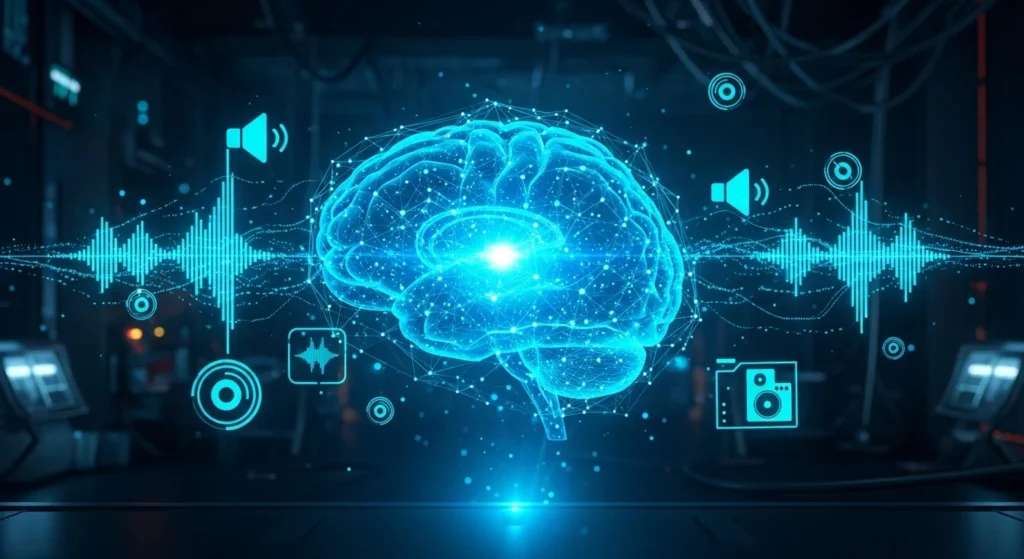
Without getting too technical, AI audio response systems typically operate through several interconnected components. First, there’s the analysis layer that monitors player behavior, environmental factors, and game state. Second, a decision engine processes this information and determines what audio changes are needed. Finally, the synthesis or selection module either generates new sounds or modifies existing audio assets to match the desired output.
Take voice responses from non player characters as an example. In older games, NPCs had maybe a dozen recorded lines that would repeat endlessly. Modern AI systems can combine vocal fragments, adjust pitch and timing, and even generate contextually appropriate dialogue variations. The result? Characters that feel less like audio files and more like actual inhabitants of the game world.
Real World Applications That Stand Out
Several recent titles showcase what’s possible with intelligent audio design. The Last of Us Part II featured an impressive audio engine that modified environmental sounds based on player position, weather conditions, and time of day. Rain hitting different surfaces produced distinct sounds, and enemy vocalizations changed based on their awareness state.
Red Dead Redemption 2 implemented what Rockstar called “reactive audio mixing.” The game continuously adjusted its audio balance so that important sounds would cut through when needed, while ambient noise would swell during quieter moments. Players rarely notice this consciously, but it significantly impacts emotional engagement.
More recently, racing games like Forza Motorsport have used machine learning to create realistic engine sounds that respond to every throttle input, gear shift, and road surface change. The sound isn’t just a recording it’s being constructed in real time based on dozens of variables.
The Benefits Players Actually Experience
What makes all this technology worthwhile? Immersion, primarily. When audio responds appropriately to player actions, the brain stops treating the game as an artificial construct. You’re not playing a game; you’re existing within its world.
There’s also the practical benefit of reduced repetition. Nothing breaks immersion faster than hearing the same grunt or footstep sound for the hundredth time. Dynamic audio generation ensures variety that keeps environments feeling fresh even during extended play sessions.
For developers, these systems can actually reduce workload in certain scenarios. Instead of recording thousands of vocal variations, a well designed AI system can create those variations procedurally. Of course, this requires significant upfront investment in system design, so it’s not automatically cheaper.
Challenges and Current Limitations
Let’s be honest about the rough edges. AI audio systems can sometimes produce strange results, particularly with voice synthesis. Players have a remarkable ability to detect when something sounds “off” about human speech, a phenomenon called the uncanny valley for audio. Getting generated dialogue to sound natural remains an ongoing challenge.
Resource demands present another hurdle. These systems require processing power that competes with graphics, physics, and other game systems. On consoles and lower end PCs, developers must make tough choices about where to allocate computing resources.
There are also creative concerns. Some sound designers worry that relying too heavily on procedural generation diminishes the artistic craft of audio design. The best implementations seem to use AI as a tool that enhances human creativity rather than replacing it entirely.
Looking Toward Tomorrow
The trajectory is clear. As hardware improves and machine learning techniques mature, we’ll see AI audio response systems become standard across the industry. Voice synthesis quality will improve to the point where generated NPC dialogue becomes indistinguishable from recorded performances. Adaptive music systems will compose unique scores for every playthrough.
I’ve been following game audio development for over fifteen years now, and this current period feels genuinely transformative. We’re moving toward games where every sound tells a story, where audio environments feel as alive as their visual counterparts. That’s not hyperbole, it’s simply where the technology is heading.
Frequently Asked Questions
Do AI audio systems work on all gaming platforms?
Most systems are designed with scalability in mind, working across PC, consoles, and some mobile devices, though performance varies.
Can players disable these features?
Generally, no, since they’re integrated into the core audio engine, but some games offer traditional audio options.
Does AI audio affect game file sizes?
It can actually reduce them since procedural generation requires less stored audio data than pre recorded alternatives.
Are these systems used in multiplayer games?
Yes, though implementation is trickier due to synchronization requirements across multiple players.
Will AI replace human sound designers?
Unlikely. These tools augment human creativity rather than eliminate the need for skilled audio professionals.