
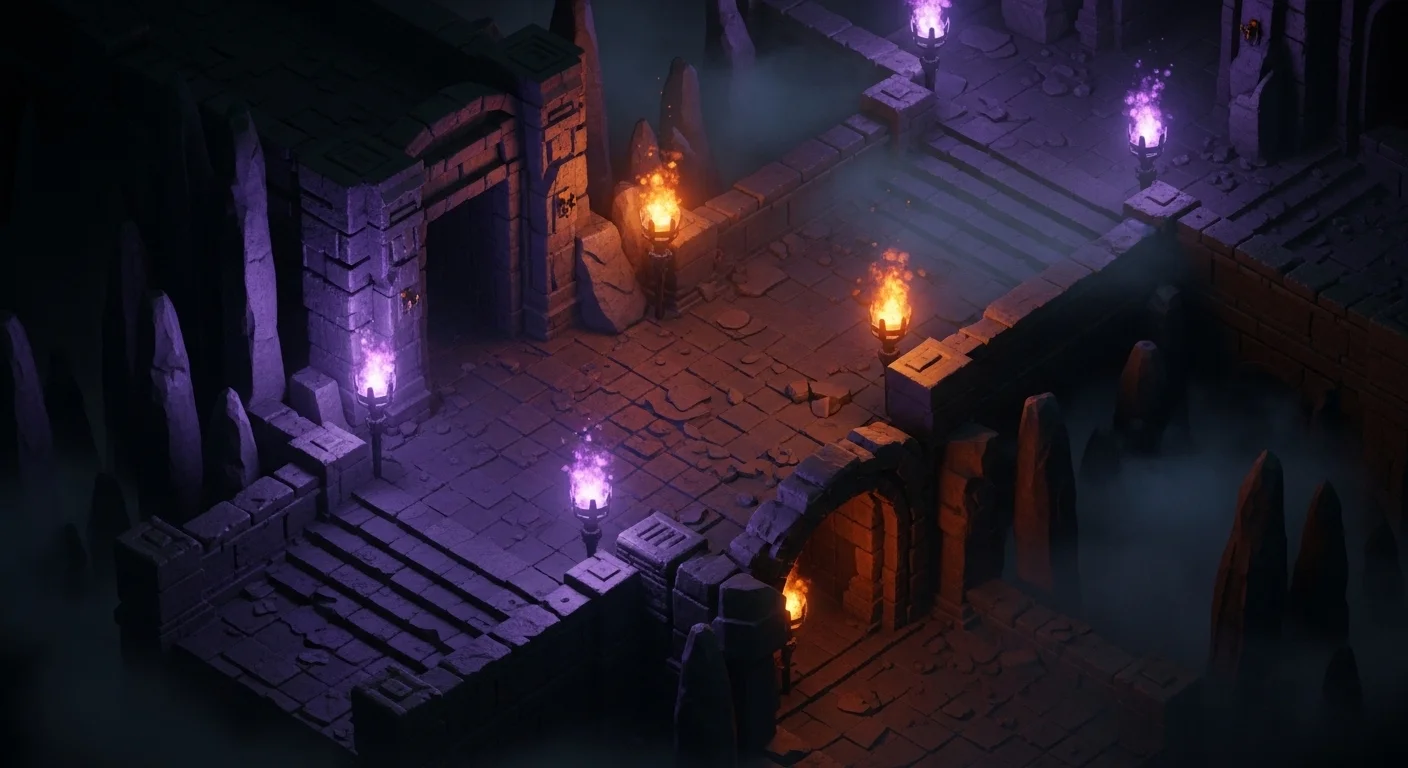
I still remember the first time I explored a dungeon in Diablo II that felt genuinely surprising. Every time I started a new game, the layouts shifted. Corridors twisted in unexpected directions, treasure rooms appeared in new locations, and enemy placements kept me on edge. That experience, rooted in procedural generation, planted a seed that eventually grew into my fascination with how algorithms create endless gaming worlds.
After spending over a decade in game development and studying procedural content generation systems, I’ve watched this technology evolve from basic random room placement to sophisticated intelligent systems that craft immersive, balanced dungeon experiences. Let me walk you through how modern automated dungeon generation actually works and why it matters for players and developers alike.
Understanding Procedural Dungeon Generation
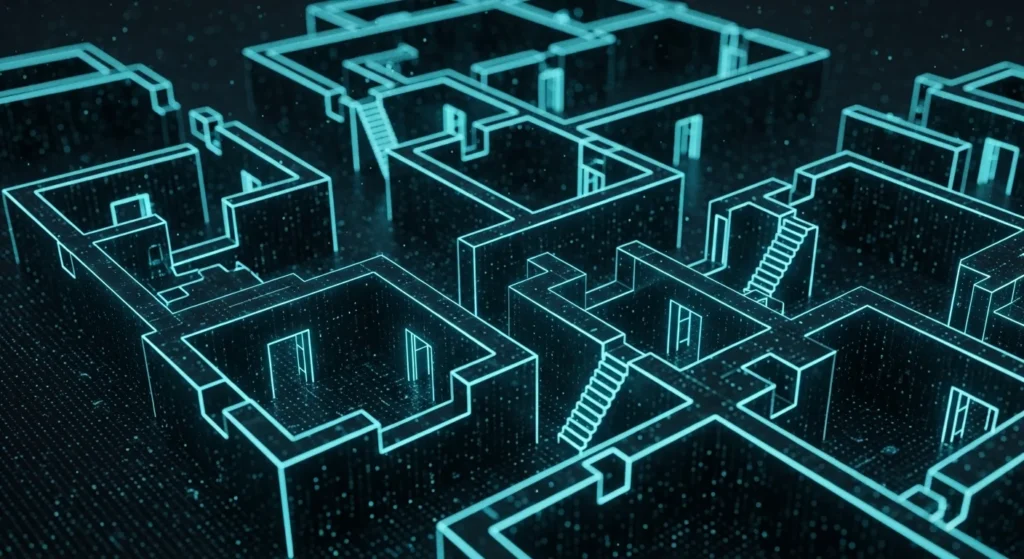
At its core, procedural dungeon generation refers to the algorithmic creation of game environments without manual design. Instead of an artist or level designer hand crafting every corridor, room, and treasure placement, the game creates these elements dynamically using mathematical rules and parameters.
The concept isn’t new. Rogue, released in 1980, pioneered this approach out of necessity, developers lacked storage space for pre designed levels. What started as a technical limitation became a beloved feature that spawned an entire genre.
Modern systems have grown exponentially more sophisticated. They don’t just randomly scatter rooms and hallways. They consider gameplay flow, difficulty curves, resource distribution, visual coherence, and even narrative pacing.
How Smart Algorithms Craft Dungeon Layouts
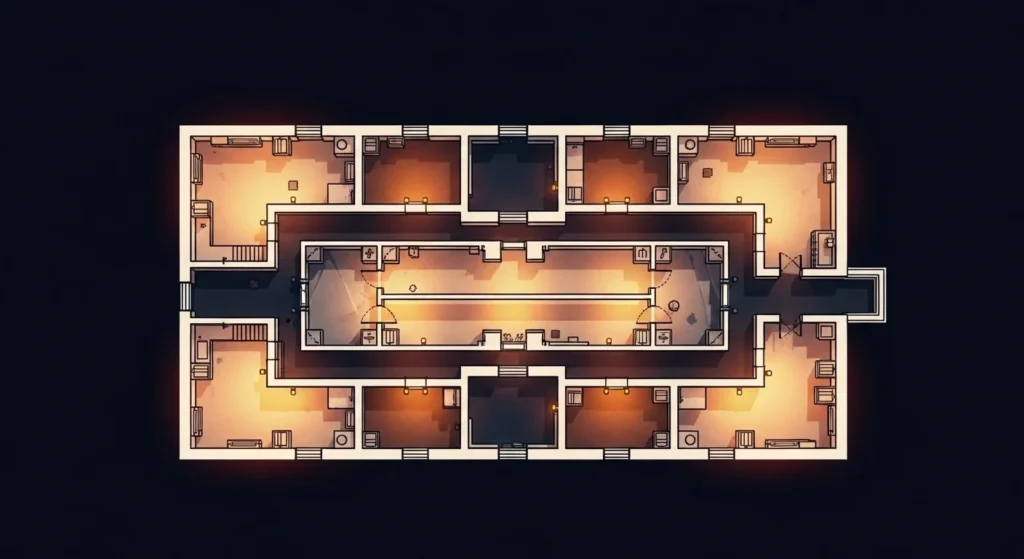
Several proven techniques power automated dungeon generation, each with distinct characteristics and applications.
Binary Space Partitioning (BSP)
This method divides rectangular space recursively into smaller sections, then places rooms within those sections. The result produces dungeon layouts with a somewhat grid like feel but guaranteed connectivity. Games like NetHack utilized variations of this approach effectively.
Cellular Automata
Inspired by biological systems, cellular automata start with random noise and apply rules iteratively. If a cell has enough “wall” neighbors, it becomes a wall. This organic approach generates cave-like structures that feel natural rather than architectural.
Wave Function Collapse
One of the more recent innovations, Wave Function Collapse, uses constraint-based logic to place tiles that must match adjacent pieces. Originally developed for texture generation, it’s been adapted brilliantly for dungeon creation, producing intricate environments that maintain visual consistency.
Graph Based Generation
My personal favorite approach starts with the dungeon’s logical structure rather than physical layout. You define rooms as nodes and connections as edges, establishing how spaces relate before determining their shapes. This ensures gameplay progression; you won’t find the boss room before the key that unlocks it.
Real World Applications That Work
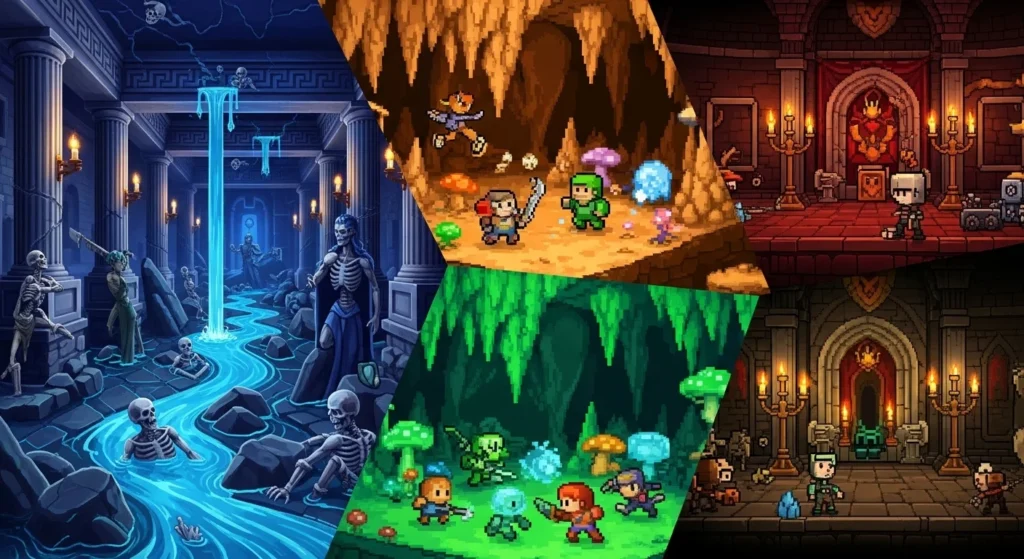
Several commercial games demonstrate procedural dungeon generation at its finest.
Hades from Supergiant Games combines hand designed room templates with intelligent arrangement systems. Each run feels fresh while maintaining tight, polished gameplay. The team spent years refining how rooms connect to create satisfying flow.
Spelunky represents another masterclass in procedural design. Derek Yu’s approach generates levels in chunks, ensuring each segment remains playable while the overall arrangement stays unpredictable. The genius lies in constraining randomness; everything random is still designed.
Enter the Gungeon uses room templates mixed with enemy and item placement algorithms. The base layouts repeat, but combinations and modifications create variety. This hybrid approach balances designer control with procedural freshness.
Benefits That Transform Development
For studios, automated dungeon generation offers tangible advantages.
Extended Replayability:
Players return knowing each session brings new challenges. This retention value significantly impacts a game’s longevity and commercial success.
Development Efficiency:
Small teams can create vast amounts of content without manually designing thousands of variations. Moonlighter’s developers openly credited procedural systems for making their ambitious vision achievable.
Player Driven Difficulty:
Systems can adjust generation parameters based on player performance, creating personalized challenges without obvious difficulty sliders.
Limitations Worth Acknowledging
Procedural generation isn’t a magic solution, and experienced developers know its pitfalls.
Quality Consistency:
Algorithms occasionally produce awkward layouts, dead ends that feel punishing, room sequences that create difficulty spikes, or aesthetically jarring combinations. Quality assurance becomes challenging when you can’t test every possibility.
Emotional Resonance:
Handcrafted levels carry intentional emotional beats. The approach in that Dark Souls corridor, the relief of that Zelda safe room, these moments require deliberate design. Purely procedural systems struggle to replicate such precision.
Development Complexity:
Building robust generation systems demands significant upfront investment. Teams need expertise in both design and technical implementation. Debugging procedural systems when something goes wrong proves notoriously difficult.
The Evolving Landscape
Current research pushes boundaries further. Machine learning models trained on successful dungeon layouts can generate new content that captures design principles without explicit rules. Researchers at universities and industry labs experiment with systems that understand player psychology, creating experiences that adapt in real time.
Mixed approaches show particular promise. Designers create building blocks and define constraints while algorithms handle arrangement. This collaboration between human creativity and computational power produces results neither could achieve independently.
The technology continues to democratize game development. Tools like those integrated into Unity and Godot make procedural generation accessible to independent developers without requiring deep algorithmic knowledge.
Looking Forward
After watching this field evolve for years, I’m convinced we’re approaching an inflection point. The combination of more powerful hardware, sophisticated algorithms, and accumulated design knowledge enables unprecedented possibilities.
The best implementations will always require thoughtful human guidance. Pure automation produces content; intentional design creates experiences. The developers who master this balance will shape the next generation of games we can’t stop playing.
Frequently Asked Questions
What is automated dungeon generation?
It’s the algorithmic creation of game dungeon layouts, rooms, and content without manual design, using mathematical rules and parameters to produce varied environments.
Which games use procedural dungeon generation?
Popular examples include Diablo series, Hades, Spelunky, Binding of Isaac, Enter the Gungeon, and Dead Cells.
Is procedural content worse than hand designed levels?
Neither is inherently superior. Each approach suits different game types and design goals. Many successful games combine both methods.
Can small development teams implement dungeon generation?
Yes, modern game engines offer built in tools and plugins that make implementation accessible without extensive programming backgrounds.
Does procedural generation completely replace level designers?
No. Designers remain essential for creating templates, defining rules, establishing constraints, and ensuring quality standards that algorithms alone cannot guarantee.