
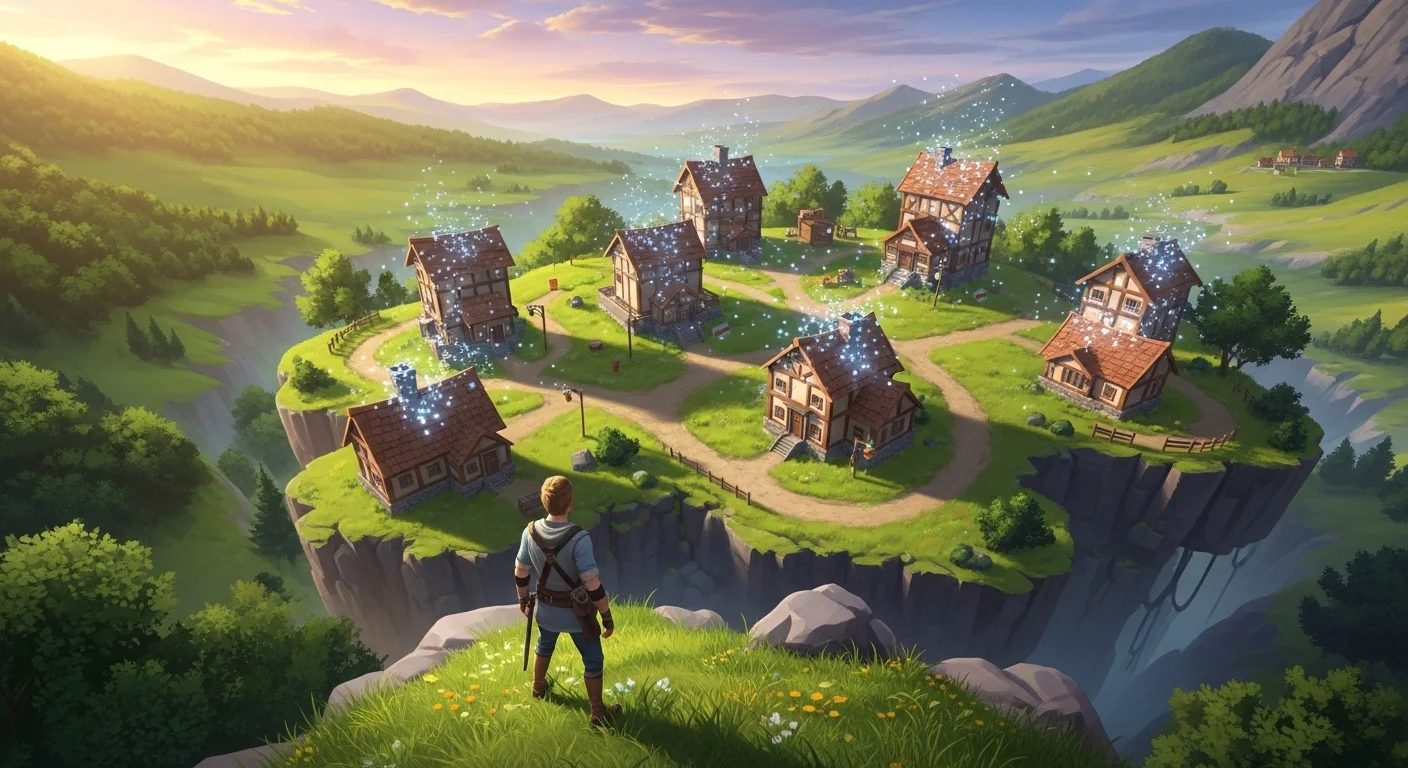
I still remember the first time I watched a settlement grow organically in a game without my direct input. It wasn’t scripted. It wasn’t pre rendered. The AI was actually making decisions about where to place buildings, how to route roads, and which resources to prioritize. That moment fundamentally changed how I think about open world games.
We’re living through a fascinating shift in game development. For decades, every building, every street corner, every marketplace in our favorite open world games was painstakingly placed by human designers. Now, artificial intelligence is taking the reins, constructing entire cities that feel alive, reactive, and genuinely unpredictable.
The Evolution from Static to Dynamic Cities
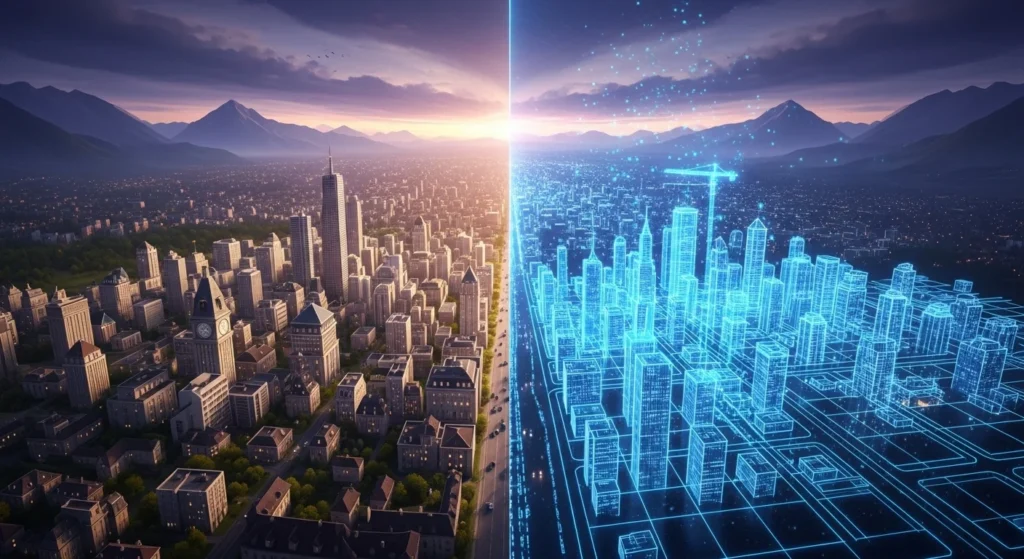
Traditional open world games gave us stunning cities think Novigrad in The Witcher 3 or Los Santos in GTA V. These locations are masterpieces of design, but they’re essentially beautiful static paintings. Every vendor stands in the same spot. Every building serves the same purpose across millions of playthroughs.
The new wave of AI driven city building changes this equation entirely. Instead of designers placing every element manually, they create rule systems and let AI agents make construction decisions based on terrain, resources, player behavior, and simulated economic factors. The results can be mesmerizing.
I’ve spent considerable time examining games like Dwarf Fortress, which pioneered many of these concepts years before they became trendy. The game generates entire civilizations with histories, architectural styles, and urban planning quirks that emerge from AI decision making rather than human planning. No two fortress cities look identical because the AI responds to unique circumstances each time.
How AI Actually Builds These Virtual Cities
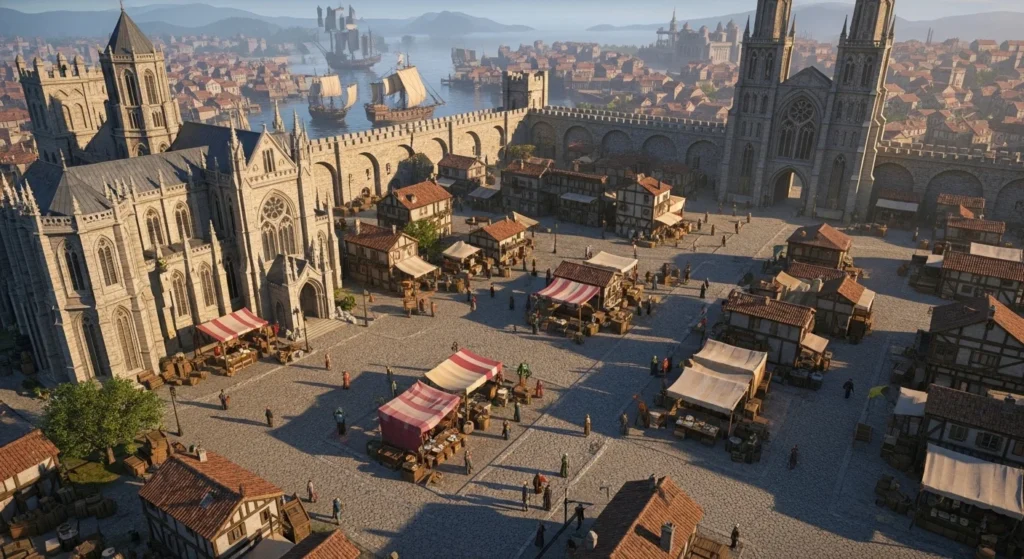
The technology isn’t magic; it’s sophisticated but understandable. Modern procedural generation combined with machine learning creates cities through several key mechanisms.
First, terrain analysis happens. The AI examines the landscape, identifying flat areas suitable for construction, water sources, defensive positions, and resource deposits. This isn’t random scattering; it’s contextual evaluation similar to how actual city planners work.
Next comes zoning logic. The AI designates areas for residential, commercial, industrial, and civic functions based on proximity rules and simulated needs. A blacksmith is placed near ore deposits. Markets emerge at crossroads. Residential areas cluster away from noisy industrial zones.
Road networks develop organically through pathfinding algorithms. Instead of perfect grids, you get roads that follow natural contours, connect important locations efficiently, and sometimes create those charming, inefficient tangles you find in medieval European cities.
Population simulation drives expansion. As virtual citizens “need” more housing or “demand” new services, the AI responds by authorizing construction. I’ve watched cities in certain colony simulation games sprawl outward in response to immigration waves, then consolidate during resource shortages behavior that feels eerily lifelike.
The Benefits Are More Than Cosmetic
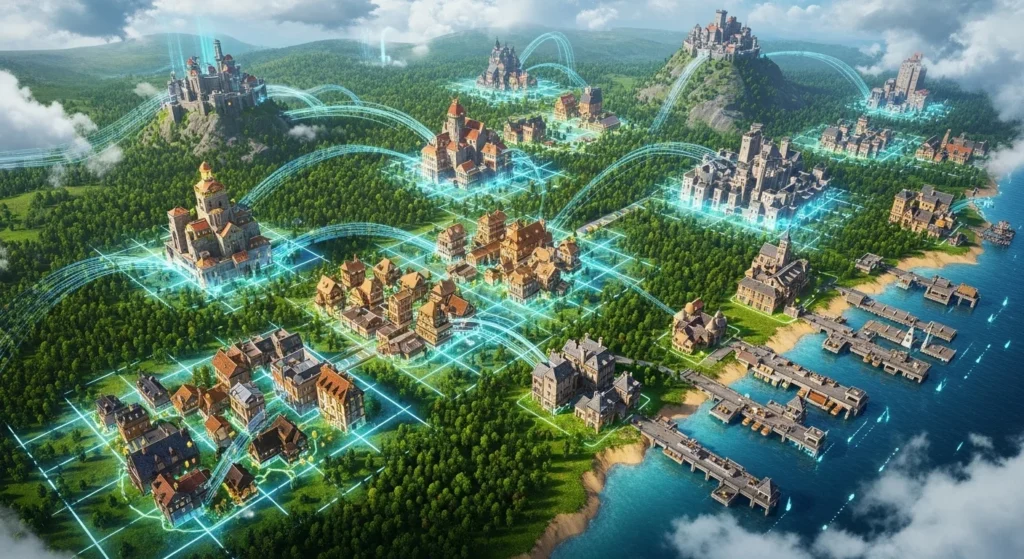
This technology solves real problems game developers face. Building a convincing city manually takes enormous time and budget. A skilled environment artist might spend weeks on a single detailed district. AI can generate varied, believable urban spaces in hours, freeing human creativity for other tasks.
Replayability skyrockets. When I revisit a traditionally designed game, I know exactly where everything is. The mystery evaporates. But in games with AI generated cities, each playthrough presents new geographical challenges and opportunities. The tavern might be near the city gates in one game and across town in another, forcing different strategic approaches.
Dynamic storytelling becomes possible. Instead of NPCs referencing a static city that never changes, they can comment on actual growth, new construction, or economic shifts happening in real-time. This creates narrative depth that scripted events can’t match.
The Limitations We Need to Talk About
Despite my enthusiasm, AI city building isn’t a perfect solution. I’ve encountered plenty of wonky results that remind you a human didn’t review every decision.
Aesthetic coherence sometimes suffers. Human designers create visual themes and enforce style guidelines. AI might place a grand cathedral next to shabby warehouses because the algorithm doesn’t understand architectural prestige the way humans do. Some games address this with strict rule sets, but that limits the AI’s creative flexibility.
Performance optimization remains tricky. Hand crafted cities get optimized for rendering efficiency. AI generated layouts might create sight-line nightmares that tank frame rates, especially in dense urban cores with complex geometry.
Narrative integration poses challenges. Story driven games need specific locations for quest events. When the AI builds your city differently each time, how do you direct players to “the old mill by the eastern bridge” if that mill might not exist or could be anywhere? Developers solve this by either constraining generation around key locations or making narratives more general, but both approaches have trade-offs.
Real Examples From the Gaming Landscape
Several current and upcoming titles showcase different approaches to this technology. Minecraft’s village generation, while simple compared to cutting edge systems, demonstrates the appeal of procedurally placed structures that feel contextually appropriate to their biomes.
Games in the city builder simulation genre, like Cities: Skylines, have experimented with AI controlled districts that develop according to set parameters. While players still drive overall planning, watching neighborhoods mature based on simulated citizen behavior provides a glimpse of more autonomous systems.
The upcoming wave of survival and strategy games increasingly advertises “living world” features where settlements evolve based on AI decision-making rather than player micromanagement. I’m watching this space carefully because it represents where single player and multiplayer experiences might converge.
What This Means for the Future
We’re still early in this technological journey. The most impressive implementations combine AI generation with human curation, letting algorithms do the heavy lifting while artists and designers refine the results.
I expect we’ll see more games where cities actually respond to player actions through AI driven reconstruction. Destroy a district, and watch the city reorganize around the damage. Establish a popular trading route, and see commercial zones expand along it. This level of reactivity was technically impossible just a few years ago.
The ethical dimension interests me too. As AI becomes more capable of creative tasks traditionally done by artists, the game industry needs to figure out how these tools complement rather than replace human workers. The best results I’ve seen use AI to handle tedious repetition while preserving human roles for creative direction and refinement.
Wrapping Up
AI built cities in open world games represent more than a technical achievement. They’re pushing games toward genuinely dynamic worlds that surprise even their creators. The technology isn’t flawless, and it works best when thoughtfully combined with human expertise, but the potential is undeniable.
Every time I explore a city that was built by algorithms responding to virtual circumstances, I feel a particular kind of wonder. It’s not the carefully orchestrated awe of a handcrafted vista. It’s the organic surprise of discovering something that emerged from systems rather than scripts more like exploring a real place than touring a theme park.
That feeling, I think, is where open world games have always wanted to take us.
FAQs
Can AI completely replace human level designers?
Not yet, and probably not entirely. AI excels at generating varied content quickly but lacks the intentional artistic vision and narrative integration that human designers provide. The best results combine both.
Do AI generated cities feel repetitive?
They can if the underlying rule systems are too simple. Sophisticated implementations with enough variables create genuinely varied results, though you might notice algorithmic patterns after extensive play.
How much processing power does this require?
It varies significantly. Some generation happens during development or initial world creation, using developer hardware. Real time city evolution during gameplay is more demanding but increasingly feasible on modern systems.
Will every future open world game use this technology?
Unlikely. Story focused games often benefit from carefully designed spaces that support specific narratives. The technology suits sandbox, simulation, and procedurally generated games best.
Can players control how the AI builds?
In many implementations, yes. Games often let you set parameters, designate zones, or guide development while the AI handles detailed placement and expansion.