

I’ve been watching the gaming industry evolve for over two decades, and I can honestly say we’re living through one of the most exciting shifts in how stories are told in games. The emergence of sophisticated AI systems isn’t just changing gameplay mechanics; it’s fundamentally transforming how players shape and experience narratives. Gone are the days when “player choice” meant selecting from three pre written dialogue options that all led to the same conclusion.
The traditional branching narrative structure, while revolutionary in its time, always had clear limitations. I remember playing through Mass Effect and Dragon Age, marveling at the choices available, yet knowing that developers had to manually craft every possible storyline variation. The workload was astronomical, and even the most ambitious studios could only create so many branches before hitting practical limitations. This meant that player agency, while impressive, was ultimately an illusion confined within carefully constructed boundaries.
The New Frontier of Dynamic Storytelling
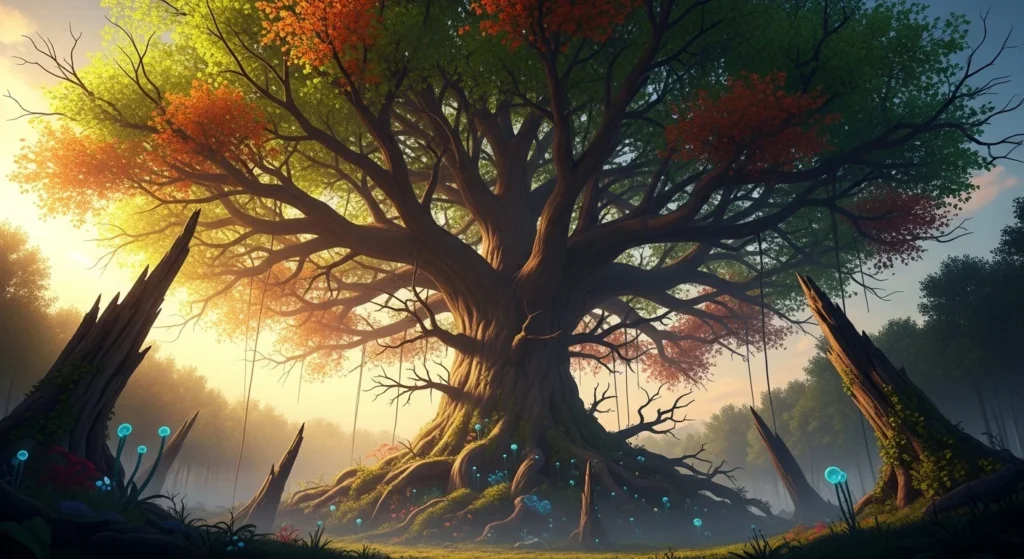
What we’re seeing now is different. Modern AI systems can generate contextual responses, remember player behaviors across dozens of hours of gameplay, and adapt narrative elements in ways that feel genuinely responsive rather than scripted. I recently spent time with a game that used AI driven NPCs, and the difference was striking. These characters didn’t just cycle through preset dialogue trees; they actually referenced previous conversations, reacted to my character’s reputation in the game world, and even changed their behavior based on how I’d treated their friends or rivals.
The technology uses natural language processing combined with dynamic content generation. Instead of developers writing every possible conversation, they create personality frameworks, relationship systems, and narrative guardrails. The AI then fills in the gaps, generating dialogue and reactions that feel organic while staying true to the character and the overall story direction.
One developer I spoke with at a gaming conference last year described it like conducting an orchestra rather than playing every instrument. They set the themes, establish the emotional beats, and define character motivations, but the AI handles the moment to moment improvisation that makes each player’s experience unique.
Real World Applications That Are Already Here
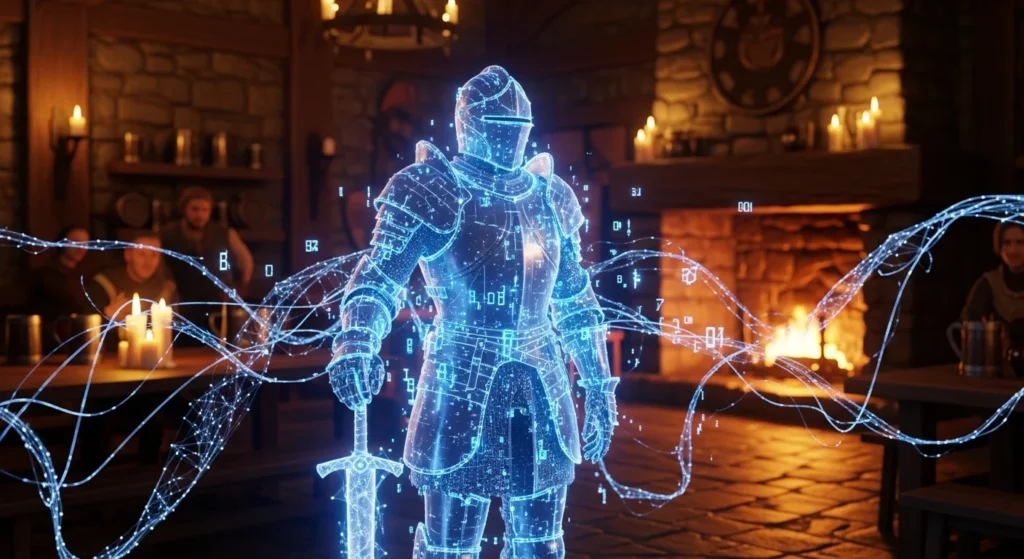
This isn’t science fiction or vaporware. Several games have already started implementing these systems with varying degrees of success. I’ve noticed that smaller indie studios are often more willing to experiment than major publishers, who understandably worry about the risks of untested technology in hundred million dollar productions.
One particularly memorable example involved a detective game in which interrogations played out differently, not just on dialogue choices but also on the order of questions, the time spent in rooms examining evidence, and even the player’s success rate in previous cases. The suspect’s lawyer would reference your character’s track record. Witnesses would become more or less cooperative based on how you’d treated other NPCs in their community. These weren’t scripted events; they were emergent properties of interconnected AI systems tracking player behavior and generating appropriate responses.
The system wasn’t perfect. Sometimes, NPCs would reference events with slightly incorrect details, or the generated dialogue would feel a bit off tone. But the trade off was worth it: I felt like I was genuinely investigating rather than following a predetermined path with the illusion of choice.
The Technical Challenges Nobody Talks About
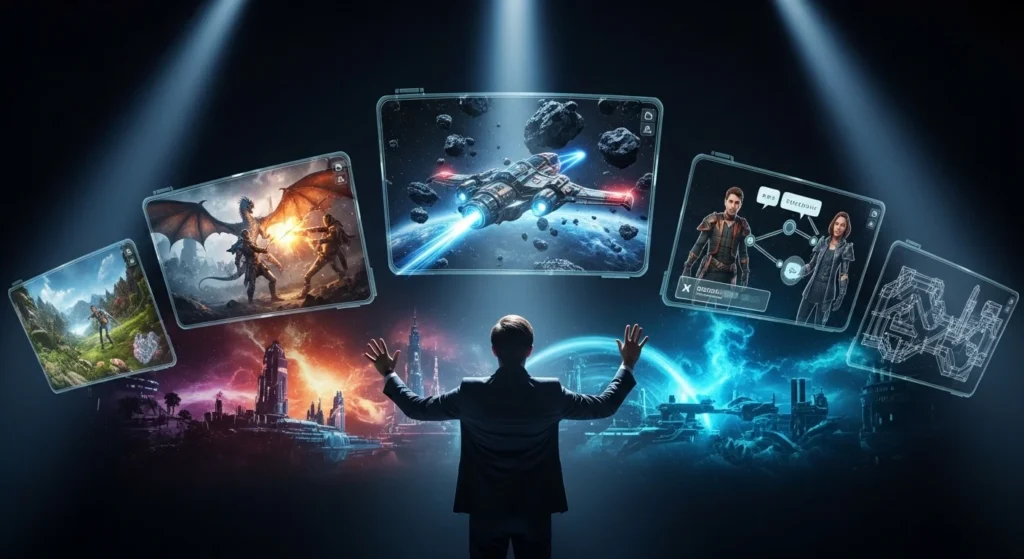
Implementing AI driven narratives isn’t straightforward, and I think it’s important to be honest about the limitations. The biggest challenge I’ve observed is maintaining narrative coherence. Games still need satisfying story arcs, thematic consistency, and emotional payoffs. Too much procedural generation can create a story that meanders without purpose or builds to climaxes that feel unearned.
Quality control becomes exponentially more difficult when you can’t predict exactly what players will experience. Traditional playtesting involves running through scripted scenarios and identifying bugs or pacing issues. With AI generated content, testers need to explore countless variations, and even then, players will inevitably encounter situations no one anticipated.
There’s also the resource question. These AI systems require significant computational power, which can impact performance on older hardware or consoles. I’ve seen games where the narrative AI worked beautifully on high end PCs but had to be scaled back significantly for console releases, creating inconsistent experiences across platforms.
The Human Element Remains Essential
Despite all this technology, the role of human writers hasn’t diminished it’s evolved. The best implementations I’ve seen involve writers working alongside AI systems, curating generated content, establishing narrative boundaries, and crafting the critical story moments that define a game’s identity.
I had a conversation with a narrative designer who compared it to editing rather than pure writing. They review AI generated dialogue, adjust character voices, ensure thematic consistency, and intervene when the system creates something that doesn’t serve the larger story. It’s a collaborative process between human creativity and computational possibility.
The ethical considerations matter too. Some players worry about whether an AI generated story arc is as meaningful as one crafted by human hands. I don’t think there’s a simple answer. What I’ve found is that the best experiences blend both: human crafted emotional cores with AI generated variations that make the journey feel personal.
What This Means for the Future
Looking ahead, I expect we’ll see increasingly sophisticated implementations. The key will be finding the right balance using AI to enhance player agency without losing narrative coherence. The games that succeed will be those that use this technology to deepen immersion rather than replace human creativity.
We’re also likely to see new genres emerge built specifically around these capabilities. Imagine truly reactive open worlds where every NPC has persistent memory and evolving relationships, or narrative games that fundamentally change based on each player’s unique play style rather than explicit dialogue choices.
The technology is here. The question now is how developers will use it to create experiences that weren’t possible before. Based on what I’ve seen so far, I’m optimistic. Player-driven narratives are becoming genuinely player driven in ways that would have seemed impossible just a few years ago.
FAQs
Q: Are AI driven narratives replacing human writers in games?
A: No. Human writers remain essential for establishing characters, themes, and story structure. AI systems work best as tools that writers use to expand possibilities.
Q: Do all modern games use AI for storytelling?
A: Not at all. Many games still use traditional branching narratives or linear stories. AI driven narratives are emerging, but not yet standard across the industry.
Q: Can AI create unique stories for every player?
A: Within limits, yes. AI can generate variations and personalized moments, but games still need core narrative structures that provide coherence and meaningful conclusions.
Q: What are the biggest problems with AI narratives currently?
A: Maintaining story quality, ensuring thematic consistency, technical performance requirements, and occasional contextual errors are the main challenges developers face.
Q: Will this make games more expensive?
A: Development costs may initially increase, but over time, AI systems could actually reduce the resources needed to create branching content compared to manually writing every variation.