
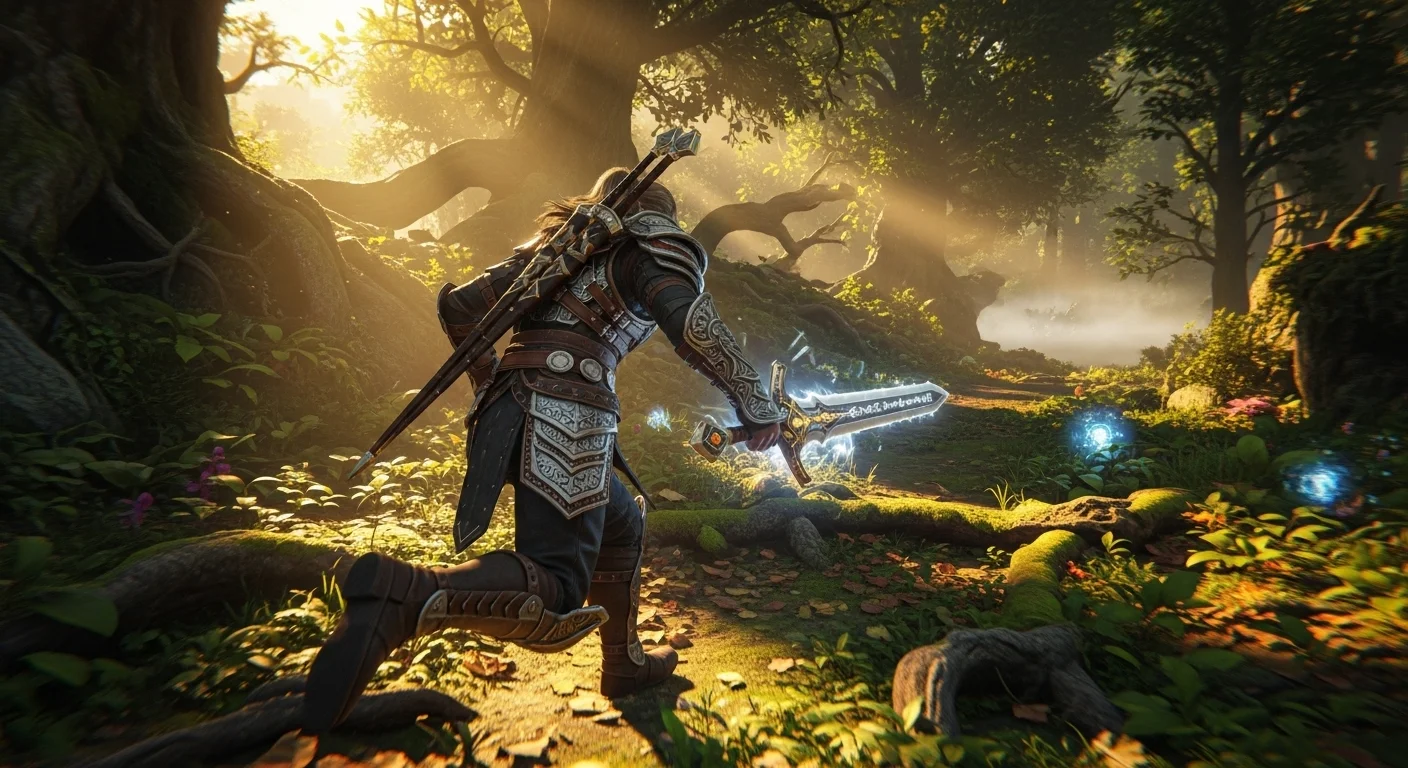
Something is fascinating about playing a modern video game and never once thinking about the camera. That seamless experience where you’re fully immersed in the action, never fighting awkward angles or losing sight of crucial moments? That’s not accidental. Behind every smooth camera movement lies sophisticated AI driven positioning systems that most players never consciously notice, and that’s exactly the point.
The Silent Director Behind Your Gameplay
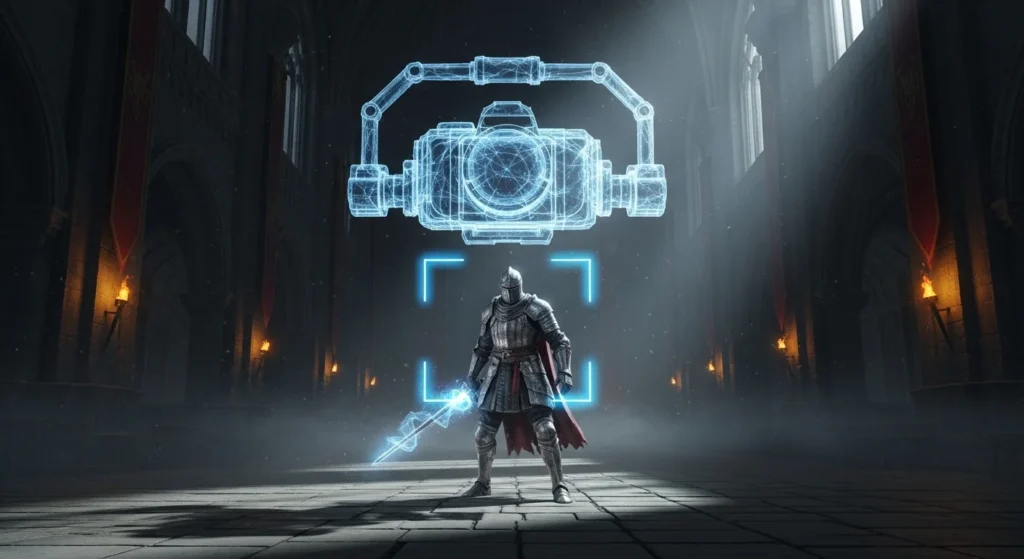
After spending nearly a decade studying game design and interviewing developers across the industry, I’ve come to appreciate how criminally underrated intelligent camera systems are in discussions about gaming technology. We obsess over graphics, frame rates, and ray tracing, but the camera? It rarely makes headlines.
Smart camera positioning uses artificial intelligence algorithms to dynamically adjust viewpoints, angles, and movements based on what’s happening in the game. Unlike fixed or player controlled cameras, these systems anticipate action, respond to environmental changes, and make split second decisions about what you should see and when.
Think of it like having an experienced cinematographer sitting next to you, constantly adjusting the frame to deliver the most compelling visual experience possible.
How These Systems Actually Work
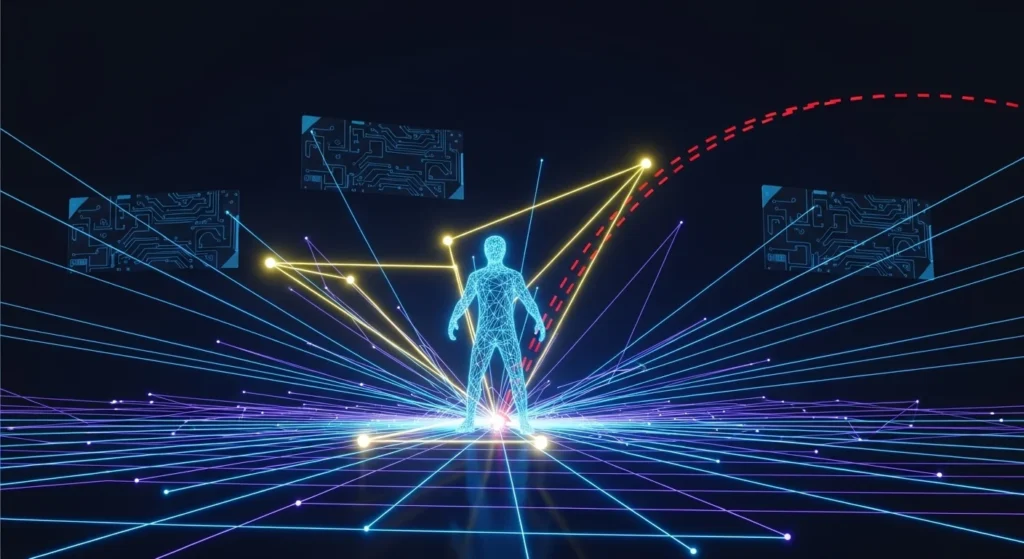
The technical foundations of AI camera positioning involve several interconnected components working simultaneously. At its core, the system uses pathfinding algorithms, collision detection, and predictive analytics to determine optimal camera placement.
The camera AI typically evaluates multiple factors:
Player position and velocity tell the system where you’re headed. If you’re sprinting toward a cliff edge, the camera might pull back to reveal what’s below. If you’re backing into a corner, avoid clipping through walls.
Environmental awareness prevents the camera from embedding itself in geometry. Nothing breaks immersion faster than your view suddenly filling with textureless gray polygons because the camera got stuck in a wall.
Action priority systems determine what deserves screen real estate. During combat, the camera might track enemies. During exploration, it showcases environmental storytelling. During cutscenes, it behaves like a traditional film camera with predetermined angles.
Distance calculations maintain appropriate framing. Too close and you lose spatial awareness. Too far and you miss important details.
Evolution: From Frustration to Flow
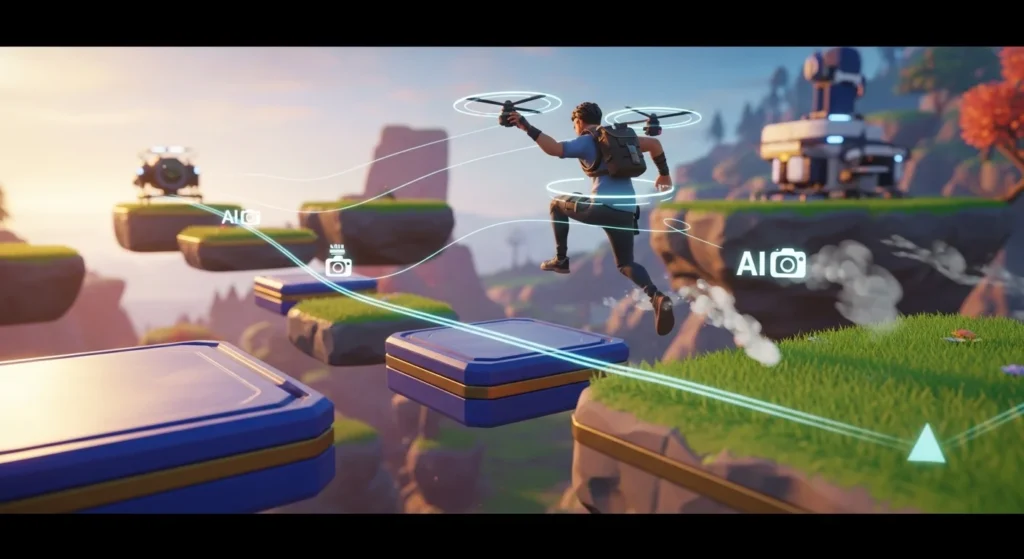
Veterans of gaming remember the dark ages of camera systems. Playing early 3D platformers sometimes felt like wrestling an angry octopus while trying to navigate treacherous jumps. The original Tomb Raider, despite its revolutionary gameplay, had camera behavior that could generously be described as “challenging.”
The breakthrough came gradually. Games like Super Mario 64 introduced dynamic camera systems that attempted to follow the action intelligently. It wasn’t perfect, but anyone who’s played remembers those moments when the camera chose to focus on a fascinating corner while Mario plummeted to his doom.
The real revolution happened when developers started applying machine learning principles to camera behavior. Instead of rigid rule based systems, modern cameras learn from player behavior patterns and adapt accordingly.
Real Games Doing It Right
God of War (2018) deserves particular recognition for its unbroken camera technique. The entire game unfolds in what appears to be a single continuous shot, a feat that required extraordinarily intelligent camera positioning. The system seamlessly transitions between intimate conversations, explosive combat, and sweeping environmental reveals without visible cuts.
Speaking with developers who worked on similar projects, I’ve heard them describe the challenge as “teaching the camera to be curious but not annoying.” It needs to show players interesting things without constantly wrestling control away from them.
The Horizon series demonstrates excellent camera performance during large scale machine encounters. When fighting enemies that tower above the player, the camera dynamically adjusts to keep both the protagonist and the threat visible without sacrificing the sense of scale.
Sports games like FIFA and NBA 2K employ broadcast style camera AI that mimics actual television coverage. These systems predict play development and position virtual cameras to capture the action just like a seasoned sports director would.
The Balance Between Assistance and Autonomy
One ongoing debate within game development circles concerns how much control cameras should take from players. Too much AI intervention feels patronizing; too little leaves players struggling with manual adjustments during critical moments.
The best implementations offer graduated assistance. Casual players benefit from an aggressive camera, while experienced players can reduce AI involvement for greater personal control.
Racing games illustrate this balance particularly well. Beginners might appreciate cameras that automatically track the optimal racing line, while competitive players prefer full manual control to execute specific techniques.
Current Limitations and Honest Challenges
Despite significant advances, smart camera systems aren’t perfect. Certain situations still challenge even sophisticated AI:
Tight indoor spaces remain problematic. The camera needs somewhere to exist, and cramped corridors offer limited options.
Multiple points of interest create prioritization dilemmas. When three important things happen simultaneously, something has to be sacrificed.
Player unpredictability occasionally defeats predictive algorithms. Some players don’t behave the way systems expect, leading to awkward positioning.
Performance overhead remains a consideration. Complex camera AI consumes processing resources that could otherwise be used to enhance graphics or physics.
Where Things Are Heading
Current trends suggest increasingly personalized camera experiences. Systems that learn individual player preferences over time, adjusting behavior based on demonstrated play styles rather than universal assumptions.
Virtual reality presents unique challenges and opportunities. VR cameras must respect player comfort to avoid motion sickness while still delivering compelling perspectives during intense moments.
Cloud based processing may eventually enable more sophisticated camera AI by offloading computational demands. This could allow real time adjustments based on broader player data analysis.
Final Thoughts
Next time you play a game, and everything feels right visually when the camera captures a dramatic moment perfectly or gracefully navigates a complex battle without your input, take a moment to appreciate the invisible intelligence making it happen.
Great camera work, whether in film or games, succeeds precisely when you don’t notice it. The technology fades away, leaving only the experience it enables.
FAQs
What is AI smart camera positioning in games?
It’s technology that automatically adjusts in game camera angles, distance, and movement using artificial intelligence to provide optimal viewing experiences without manual player control.
Why do some games still have bad camera controls?
Development resources, technical limitations, and complex environments make implementing good camera AI challenging. Budget constraints often affect the sophistication of camera systems.
Can players disable smart camera features?
Most modern games offer camera sensitivity options and manual overrides, letting players choose between AI assistance and full manual control.
Which game genres benefit most from smart cameras?
Third person action games, sports simulations, and open world titles see the greatest improvements, though nearly every genre benefits somewhat.
Does smart camera AI affect game performance?
Yes, camera calculations require processing power, though modern systems optimize this efficiently. Impact varies based on implementation complexity.
How do developers test camera systems?
Extensive playtesting with diverse player types, algorithmic stress testing, and iterative refinement based on feedback and analytics data.