

I remember the first time a video game character remembered something I’d done three hours earlier and called me out on it. It wasn’t scripted in the traditional sense, the response felt eerily personal, almost uncomfortably so. That moment stuck with me because it represented something fundamentally different about how stories could unfold in interactive media.
Story progression has always been the backbone of engaging entertainment. Whether you’re watching a film, reading a novel, or playing through a role playing game, the way events unfold keeps you hooked. But what happens when that progression isn’t predetermined? What happens when the narrative responds, adapts, and grows based on your choices in real time?
That’s where artificial intelligence enters the picture, and honestly, it’s changing everything I thought I knew about narrative design.
Understanding AI Driven Narrative Systems

Traditional storytelling in games and interactive media relies on branching paths. Writers craft multiple storylines, anticipate player choices, and create decision trees. It works, but it’s limited. You can only account for so many possibilities before the workload becomes impossible.
AI powered story progression operates differently. Instead of following predetermined branches, these systems generate narrative content dynamically. They analyse player behaviour, track emotional tone, consider past decisions, and construct story beats that feel organically connected to individual experiences.
Think of it like having a dungeon master who never runs out of ideas and never forgets what happened in session one. The system maintains consistency while allowing genuine freedom.
Real World Applications in Gaming
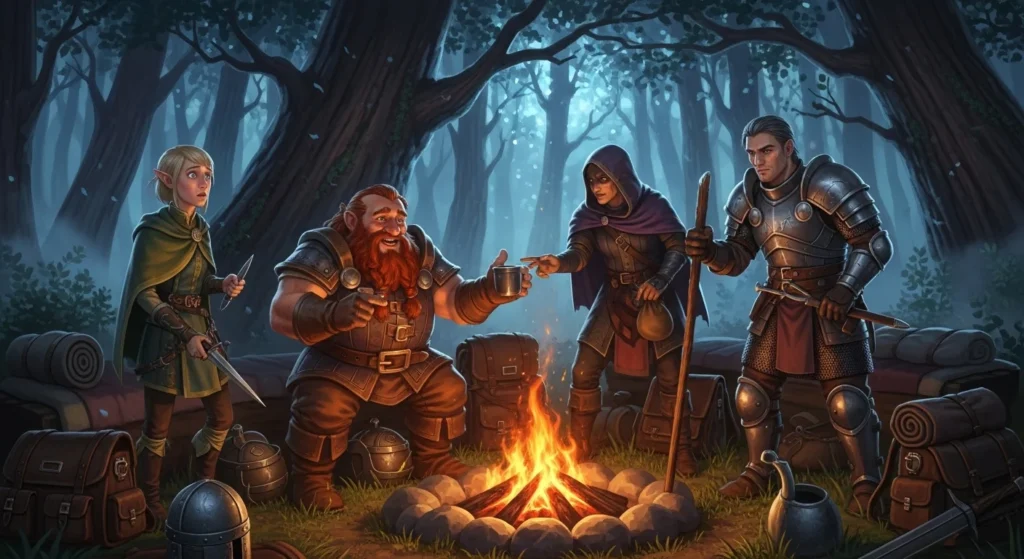
Several studios have started implementing these technologies with varying degrees of success. The most impressive implementations I’ve encountered balance procedural generation with authored content, creating what feels like infinite possibility within carefully designed guardrails.
Games like “AI Dungeon” pushed this concept into mainstream awareness, though early versions struggled with coherence. More refined approaches have emerged since then. Studios working on role-playing games now use machine learning models trained on thousands of narrative patterns to generate side quests, character dialogues, and plot developments that maintain thematic consistency.
One project I followed closely involved a fantasy RPG where companion characters developed distinct personalities over time based on player interactions. If you consistently made cruel choices, your companions would grow fearful or confrontational. If you showed kindness, relationships deepened naturally. None of these responses was individually scripted; they emerged from the system’s understanding of character motivation and player behaviour patterns.
The Technical Side Without the Jargon

How does this actually work? At its core, AI story progression relies on several interconnected systems. Natural language processing allows the technology to understand context and generate appropriate responses. Machine learning models trained on vast libraries of narrative content recognise storytelling patterns, rising action, conflict, resolution, and character arcs.
The system tracks what narrative designers call “world state,” essentially a comprehensive record of everything that’s happened in your story. When generating new content, it references this state to ensure continuity. Your character killed the king in chapter two? Every subsequent interaction accounts for that reality.
Some systems also incorporate emotional analysis, attempting to gauge player engagement and adjust pacing accordingly. Feeling bored? The next encounter might introduce unexpected danger. Overwhelmed? Perhaps a quieter character moment emerges instead.
Benefits That Actually Matter
The most significant advantage is replayability. Traditional narrative games offer maybe three or four meaningfully different experiences. AI driven progression can theoretically provide unlimited variations while maintaining quality, though we’re not quite there yet.
For creators, these tools reduce the burden of accounting for every possible player choice. Writers can focus on crafting compelling characters, interesting worlds, and meaningful themes while the system handles moment to moment narrative construction.
Personalisation reaches new levels too. Stories can adapt to individual play styles, creating experiences that feel crafted specifically for each player. Someone who loves political intrigue might encounter more diplomatic challenges, while action oriented players face combat heavy narratives.
Limitations and Honest Concerns
Let’s not pretend this technology is perfect. Current systems occasionally produce content that feels generic or inconsistent. They struggle with subtle emotional nuance that human writers handle instinctively. A machine generated tragic moment rarely hits as hard as one crafted by a skilled author who understands human grief.
There’s also the question of artistic intent. When stories emerge from algorithms rather than deliberate creative choices, do they carry the same meaning? Some argue that randomness undermines the purpose of storytelling, that narratives should reflect specific visions, not procedural outputs.
I’ve seen projects where AI generated content felt hollow despite technical competence. The words made sense, but something essential was missing. Call it soul, intention, or human touch, whatever it is, machines haven’t fully captured it.
The Future Looks Collaborative
The most promising direction isn’t AI replacing human storytellers but augmenting them. Imagine writers creating core narrative frameworks while AI handles expansion and variation. Authors establish themes, characters, and emotional beats; the system generates countless implementations of those foundations.
This collaborative model preserves artistic vision while enabling unprecedented flexibility. Players get personalised experiences that still reflect coherent creative perspectives.
Interactive entertainment studios are increasingly investing in these hybrid approaches. The technology improves monthly, and what seemed impossible five years ago is becoming standard practice.
Ethical Considerations Worth Mentioning
As these systems grow more sophisticated, questions about content moderation become crucial. If AI can generate unlimited story content, how do we prevent harmful narratives? Who bears responsibility for offensive material produced by algorithms trained on human created data?
These aren’t hypothetical concerns. Early implementations demonstrated troubling tendencies toward bias and inappropriate content. Responsible development requires ongoing oversight and thoughtful constraints.
Frequently Asked Questions
What exactly is AI powered story progression?
It’s technology that generates and adapts narrative content dynamically based on player choices and behaviour, creating personalised story experiences rather than following predetermined scripts.
Which games currently use this technology?
Various titles employ different implementations, from text adventures like AI Dungeon to RPGs incorporating dynamic dialogue systems. The technology appears in both indie projects and major studio releases.
Will AI replace human writers in game development?
Unlikely in the foreseeable future. Current trends suggest collaboration rather than replacement, with AI handling variation and expansion while humans craft core narratives.
How does the system maintain story coherence?
Through comprehensive tracking of world state, character relationships, and past events, combined with models trained to recognise and maintain narrative patterns.
Is AI generated storytelling as good as human writing?
Currently, no. While impressive, AI generated content often lacks the emotional depth and intentionality that skilled human authors provide. The gap is narrowing, but meaningful differences remain.