
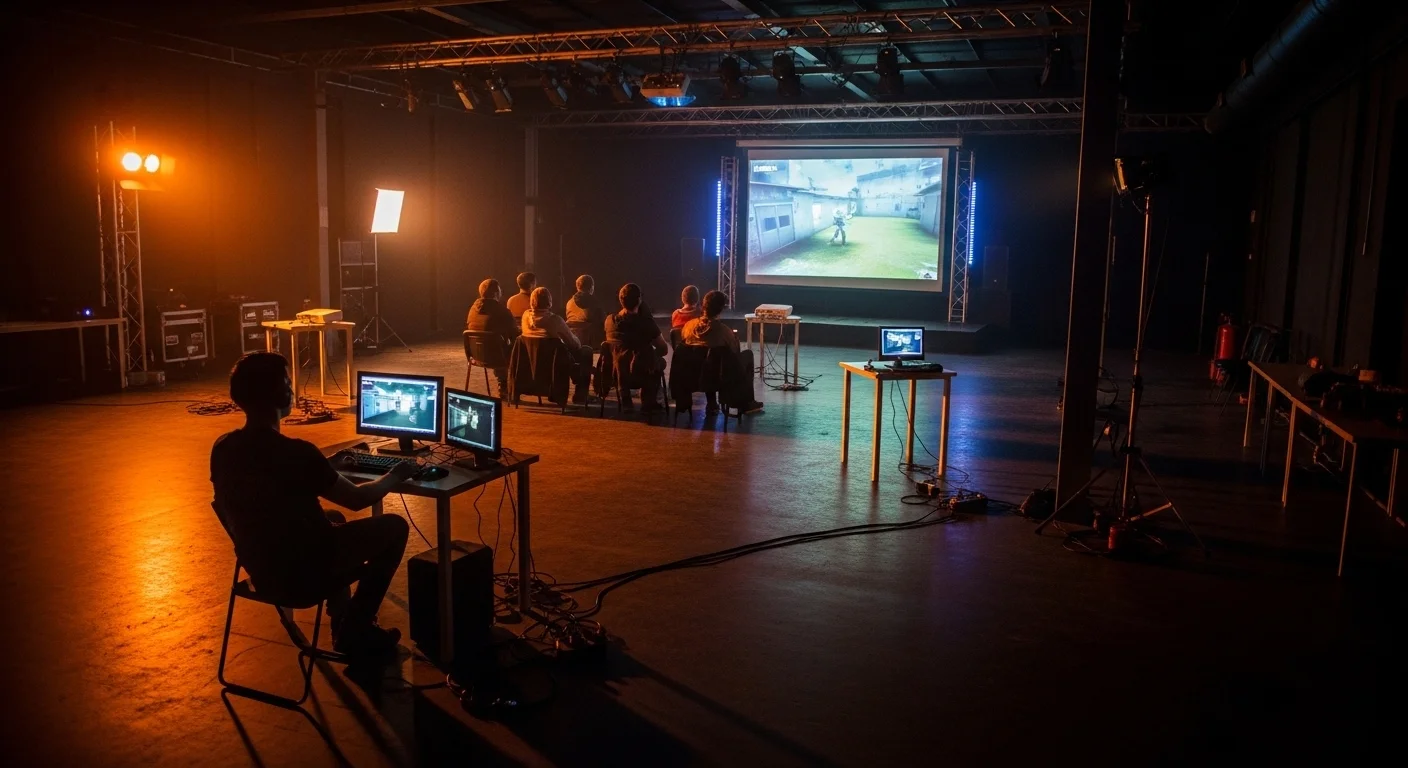
When I first started covering esports tournaments back in the early 2010s, camera work was the wild west. Observers of the people controlling what viewers see during a match had one of the most underappreciated yet crucial jobs in the industry. Miss a game winning headshot in Counter Strike, and thousands of fans would flood social media with complaints. Catch every critical moment perfectly, and nobody noticed because that’s what they expected.
Today, AI spectator camera systems are quietly transforming how millions watch competitive gaming, and honestly, the technology has matured faster than I anticipated.
The Old Way: Human Observers Under Pressure
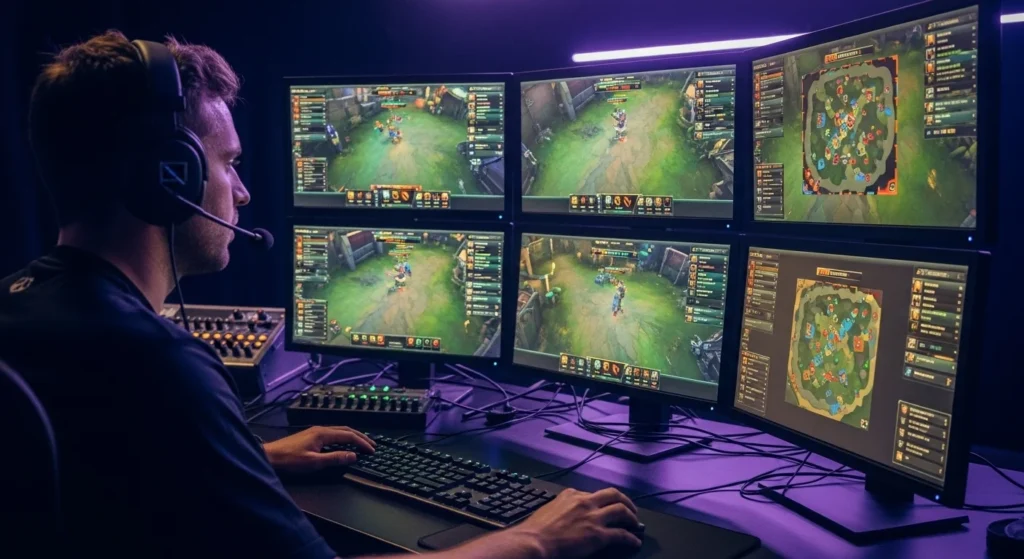
Before diving into AI systems, it’s worth understanding what they’re replacing or, more accurately, augmenting. Traditional esports broadcasting relies on dedicated observers who manually control the in game camera. In a game like League of Legends or Dota 2, where ten players spread across a massive map simultaneously, choosing where to look becomes an art form bordering on clairvoyance.
I’ve watched observers work during live events, and the pressure is intense. They’re monitoring multiple screens, listening to producer calls in their headset, tracking ultimate abilities coming off cooldown, and predicting where the next skirmish will break out, all while never missing the action viewers came to see. One observer I spoke with at a regional League of Legends tournament described it as “playing three-dimensional chess while someone screams countdown timers in your ear.”
Human error is inevitable. Even the best observers occasionally focus on a quiet farming lane while a crucial teamfight erupts elsewhere. These mistakes can ruin the viewing experience and, in some cases, leave spectators confused about how a match swung so dramatically.
Enter AI: Teaching Machines to Know Where to Look
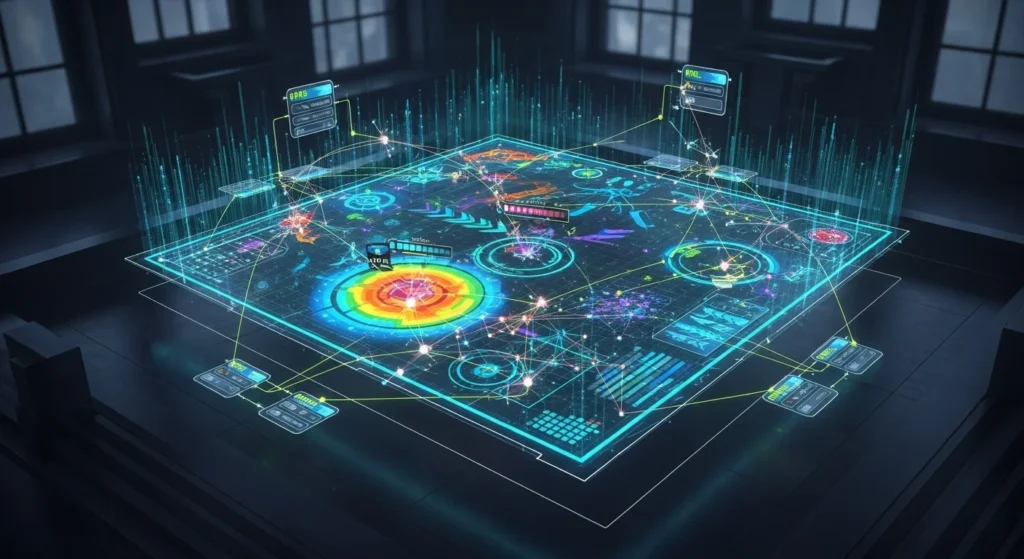
AI spectator systems use machine learning algorithms trained on thousands of hours of gameplay footage. These systems analyze multiple factors simultaneously: player positioning, health bars, economy states, ability cooldowns, map objectives, and historical patterns from professional matches.
The technology really started gaining traction around 2018-2019, when companies realized that esports viewership was exploding, but the observer talent pool wasn’t growing at the same rate. You can’t just hire any gamer to be an observer; it requires deep game knowledge, broadcasting instincts, and ice-cold composure.
What impressed me most when I first saw these systems in action was their predictive capability. Rather than reacting to action after it starts, sophisticated AI cameras analyze player movements and game states to anticipate where fights will break out. In a first person shooter like Valorant, the system tracks where players are likely to encounter each other based on round timing, utility usage, and common strategies for that particular map and score situation.
Real World Implementation: Not Perfect, But Improving
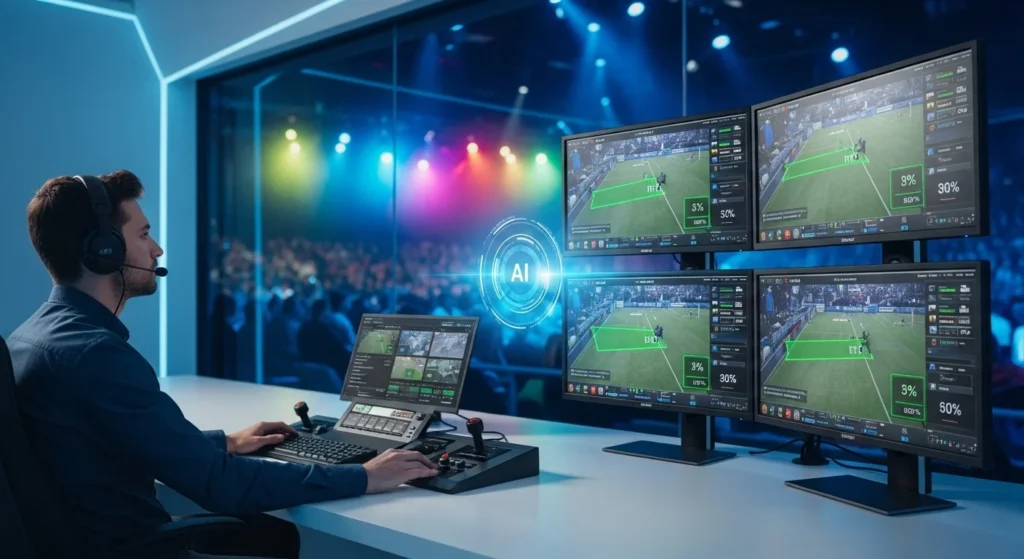
I attended a CSGO tournament in 2022 where the broadcast team used a hybrid approach, AI assisted camera work with human override capability. The observer explained that the AI handled about 60 70% of camera decisions during calmer moments, suggesting optimal viewpoints, but humans took control during complex multi-angle situations or when storytelling required focusing on a specific player narrative.
The results were noticeably smoother than fully manual observation, though not flawless. The AI occasionally got “distracted” by statistically significant events that weren’t actually interesting to watch like a player taking predictable damage from the zone in a battle royale game. However, it seldom missed major eliminations or objective captures, which was the whole point.
Riot Games has been particularly aggressive in developing AI camera systems for League of Legends and Valorant. Their “Director Mode” technology, while not fully autonomous, provides observers with AI generated suggestions about where to focus attention. According to broadcast team members I’ve talked with, this reduces cognitive load significantly and lets human observers focus more on storytelling and creative shot selection rather than pure action tracking.
The Technical Challenges Nobody Talks About
Building these systems isn’t as straightforward as feeding gameplay footage into a neural network and getting perfect camera work out. Game-specific challenges abound.
In fighting games like Street Fighter or Tekken, camera work is relatively simple, with two characters on a 2D plane. But in sprawling games like Apex Legends or Fortnite, with sixty players spread across huge maps, the AI must constantly decide between following individual high skill plays versus showing strategically important rotations that might look boring but explain the eventual outcome.
Latency is another issue I’ve seen teams struggle with. The AI needs to process game state information, make decisions, and execute camera movements fast enough that there’s no perceptible delay. In fast-paced games where critical moments unfold in milliseconds, even a half second delay means missing the shot.
There’s also the “highlight problem.” Humans instinctively understand dramatic tension and narrative pacing. We know that watching a team slowly set up for an objective creates anticipation. Early AI systems would sometimes jump around too frantically, chasing every bit of action without letting moments breathe. Newer systems incorporate pacing algorithms that mimic human cinematographic instincts, but it’s still an evolving science.
The Human Element Isn’t Going Anywhere
Despite the technological advances, I don’t see human observers becoming obsolete anytime soon. The best esports broadcasts blend AI efficiency with human creativity and game sense.
Top tier observers bring contextual knowledge that AI systems still struggle with. They recognize when a player is tilting based on unusual aggression patterns. They know which player matchups have a backstory worth highlighting. They understand when to ignore a statistically “important” moment because a more compelling narrative is developing elsewhere.
At The International 2023 Dota 2’s world championship, the production team used what they called “collaborative intelligence” AI handling routine camera work while veteran observers directed key moments and wove in storytelling elements. The result felt more polished than either approach alone could achieve.
What’s Next: Personalized Viewing Experiences
The future gets really interesting when you consider personalized AI camera work. Imagine watching a tournament where you control what the AI prioritizes maybe you’re a support player who wants more vision on ward placements and rotations rather than just kills. Or you’re analyzing a specific team and want the camera to favor their perspective.
Some platforms are already experimenting with this. Viewers could potentially have AI generated personal broadcasts tailored to their interests and skill level, with appropriate commentary and camera focus. The technology exists; it’s more about implementation and bandwidth.
The Bottom Line
AI spectator camera systems represent one of esports’ quieter revolutions. They’re not as flashy as prize pools hitting tens of millions or arenas selling out in minutes, but they fundamentally improve how hundreds of millions of people experience competitive gaming.
These systems work best when augmenting human expertise rather than replacing it entirely. The pressure on observers has decreased, broadcast quality has become more consistent, and viewers miss fewer critical moments. That’s progress worth celebrating, even if most fans never consciously notice the technology working behind the scenes.
As someone who’s watched esports evolve from grainy streams to productions rivaling traditional sports broadcasts, I’m genuinely excited about where this technology heads next. The gap between attending live and watching remotely continues narrowing, and AI camera systems are a significant part of that equation.
FAQs
Do all esports use AI camera systems?
No, adoption varies widely. Major titles like League of Legends, Valorant, and some CSGO tournaments use AI-assisted systems, while many smaller esports still rely entirely on human observers.
Can AI completely replace human observers?
Not yet. Current AI handles routine camera work well, but lacks the contextual storytelling ability and creative instincts that experienced human observers provide.
How does AI know where action will happen before it starts?
The system analyzes player positions, game economy, ability cooldowns, map objectives, and patterns from thousands of previous professional matches to predict likely conflict zones.
Will viewers get personalized AI cameras?
Some platforms are testing this. The technology exists to offer customized viewing experiences where AI prioritizes what individual viewers want to see, though widespread implementation is still developing.
Does AI camera work make esports more accessible to new viewers?
Generally yes. AI systems ensure new viewers don’t miss crucial action, and future versions may include difficulty settings that emphasize different strategic elements based on viewer knowledge level.