
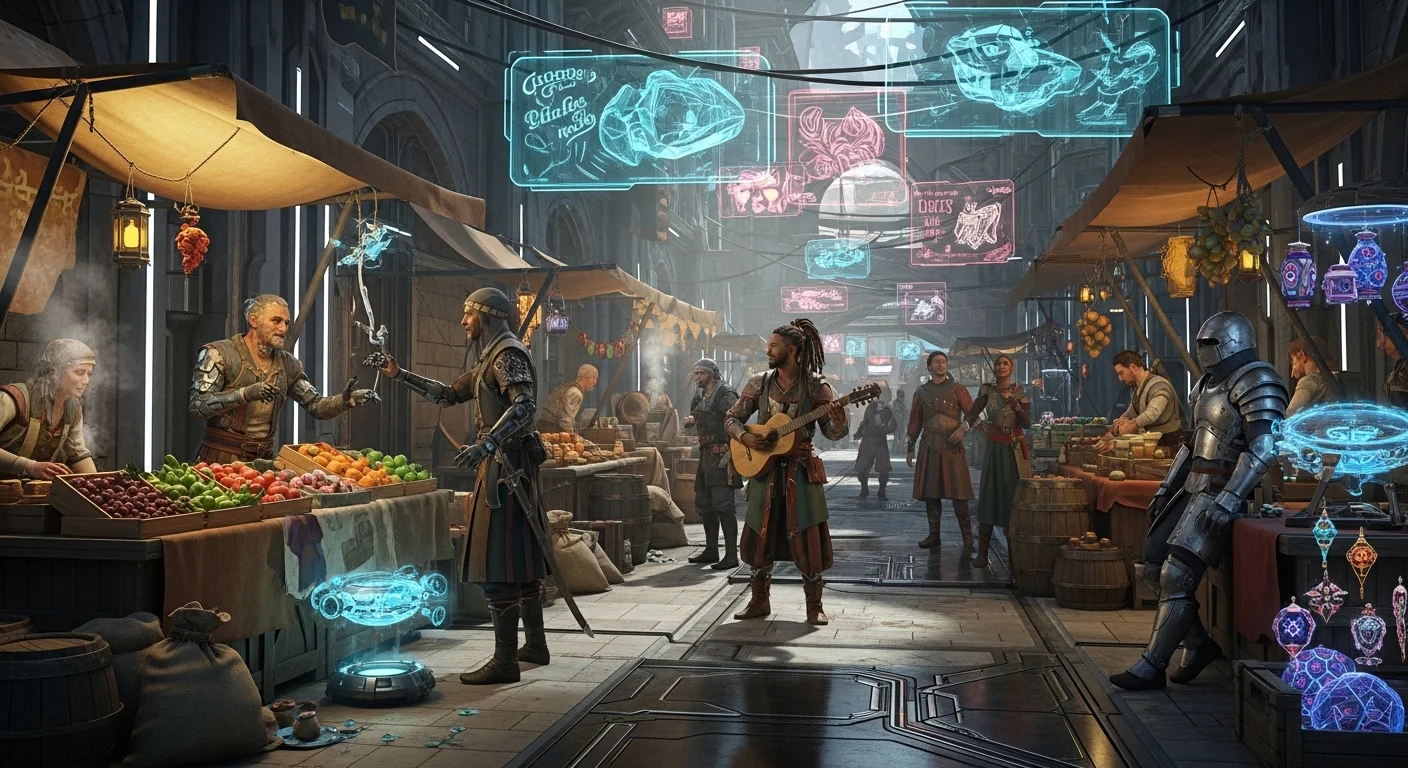
I’ve spent over twelve years covering game development, and nothing quite matches the excitement I felt watching NPCs in recent titles actually react to their environment in meaningful ways. Gone are the days when enemy guards followed predictable patrol routes, completely oblivious to the chaos unfolding around them. Today’s simulation AI represents something fundamentally different, a shift that’s reshaping how we experience interactive entertainment.
The Evolution From Scripted Behavior to Living Systems
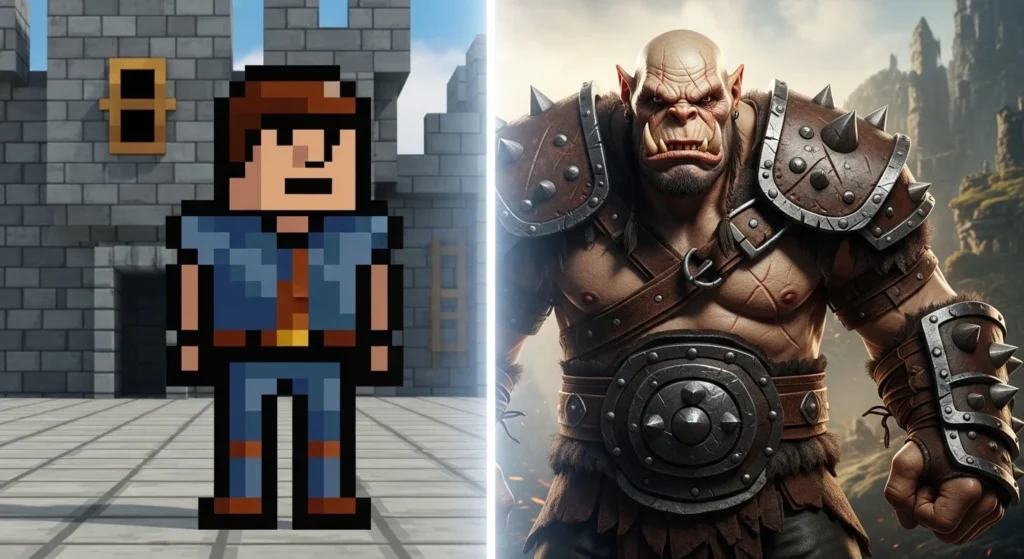
Remember playing early stealth games where enemies would investigate a noise, shrug, and return to their exact starting position? That predictability wasn’t laziness on developers’ parts; it was simply the technological ceiling of the era.
Modern simulation AI operates on entirely different principles. Instead of following decision trees with predetermined outcomes, these systems simulate underlying needs, motivations, and relationships. Characters get hungry, form opinions about other NPCs, remember past interactions, and make decisions based on accumulated experiences.
The Nemesis System in Middle earth: Shadow of Mordor stands as a landmark achievement here. Orcs remembered my failed assassination attempts, developed genuine grudges, and rose through ranks based on their victories against me. One particular captain who killed me early in my playthrough became my nemesis for the entire game earning scars from our encounters, taunting me about past defeats, and eventually becoming a formidable war chief. That emergent storytelling felt genuinely personal.
How Modern Simulation AI Actually Works
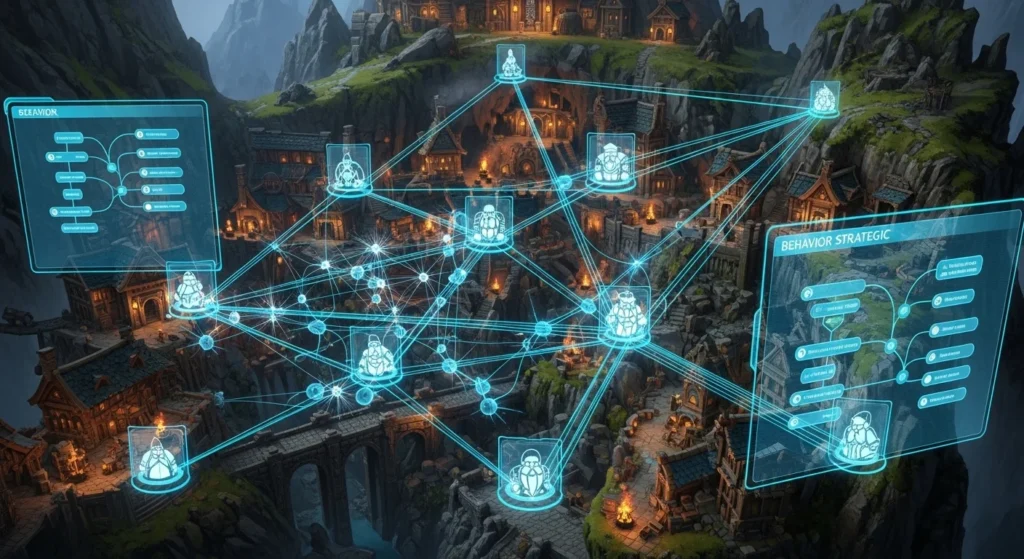
At its core, advanced game AI relies on several interconnected systems working simultaneously. Behavior trees provide the foundation, but they’re layered with utility systems, goal oriented action planning, and increasingly sophisticated machine learning components.
Utility AI deserves special attention because it’s revolutionized NPC decision making. Rather than following rigid “if then” logic, characters evaluate multiple potential actions and score them based on current circumstances. A guard might weigh the value of investigating suspicious activity against their fatigue level, relationship with nearby allies, and perceived threat level. The highest-scoring action wins, creating behavior that feels situational and surprisingly human.
Dwarf Fortress remains the gold standard for deep simulation. Each dwarf possesses dozens of personality traits, preferences, and relationships that influence every decision. I’ve watched colonies collapse not because of external threats, but because a depressed dwarf’s spiral affected morale across the entire settlement. That’s not scripted drama, it’s emergent narrative arising from interconnected systems.
Real World Applications Beyond Entertainment
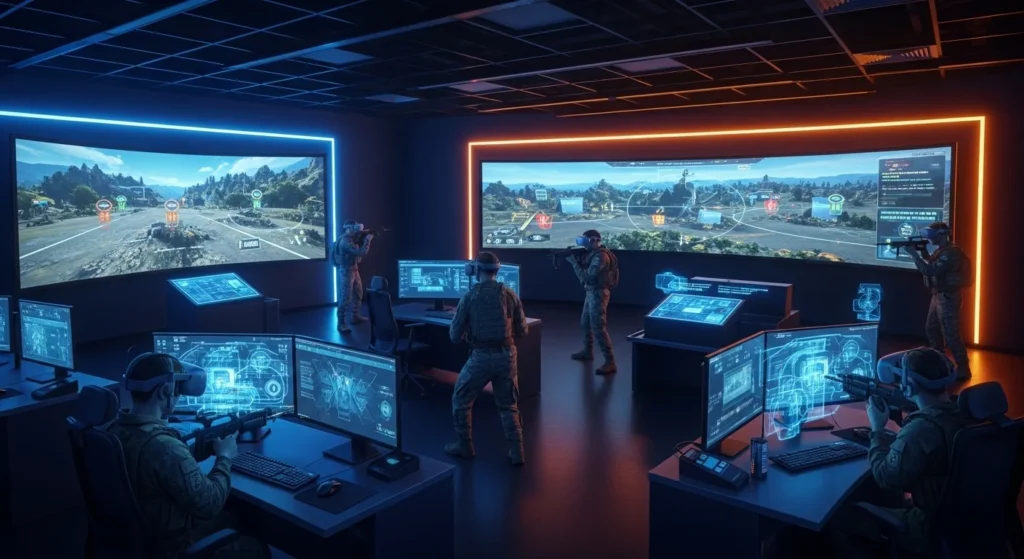
What many people don’t realize is that game simulation AI has serious applications beyond entertainment. Military organizations use modified game engines for training scenarios. Urban planners employ similar systems to model pedestrian traffic and emergency evacuations.
The techniques developed for crowd simulation in games like Assassin’s Creed directly informed real architectural software. When you see thousands of NPCs moving naturally through Renaissance Florence, that’s the same mathematical foundation used to design stadium exits and subway stations.
Current Frontiers in Game Simulation
Several recent titles showcase just how far we’ve come. RimWorld creates compelling stories through relatively simple systems interacting in complex ways. Characters form relationships, develop addictions, experience mental breaks, and pursue individual goals all without explicit scripting.
Crusader Kings 3 takes character simulation in strategic directions. Every ruler possesses detailed personality traits affecting diplomacy, warfare preferences, and family dynamics. I’ve had campaigns derailed because my heir developed unfortunate personality combinations through childhood events. The game simulates not just statistics but believable human behavior across generations.
Red Dead Redemption 2 pushed environmental simulation to remarkable levels. Animals follow realistic behavior patterns, NPCs maintain daily routines, and the world genuinely feels alive in ways that remain unmatched. Hunting in that game feels genuinely challenging because prey animals exhibit realistic flight responses and social behaviors.
The Challenges Developers Face
Creating convincing simulation AI isn’t straightforward. Processing power remains a genuine constraint. Every simulated agent consumes computational resources, forcing developers to balance complexity against performance.
There’s also the “uncanny valley” of behavior. Systems that almost feel real but occasionally break in obvious ways can feel worse than simpler, consistent alternatives. I’ve played games where impressive AI occasionally did something so nonsensical it shattered immersion entirely.
Debugging emergent systems presents unique headaches. When behavior emerges from interconnected systems, tracking why something happened becomes exponentially harder. One developer described it as “trying to find a needle in a haystack that keeps rearranging itself.”
Where We’re Headed
The next frontier combines traditional simulation with machine learning. While fully learned behavior remains computationally expensive for real-time games, hybrid approaches show promise. NPCs might learn player tendencies over time, adapting strategies based on observed patterns.
Procedural narrative generation represents another exciting direction. Rather than developers writing every possible story beat, AI systems could generate contextually appropriate dialogue and events based on simulation state. Early implementations exist, but we’re years away from truly seamless procedural storytelling.
Ethical Considerations Worth Discussing
As simulated characters become more convincing, interesting ethical questions arise. When NPCs exhibit fear, pain, or suffering convincingly, does that change our responsibilities as designers and players? The games industry is beginning to grapple with these questions, though consensus remains elusive.
There’s also concern about manipulation. Highly sophisticated AI that adapts to player psychology could potentially exploit vulnerabilities in problematic ways. Responsible developers consider these implications carefully during design.
Final Thoughts
Advanced simulation AI represents one of gaming’s most exciting frontiers. We’ve moved from simple state machines to genuinely complex systems that create unique, memorable experiences. The technology continues advancing rapidly, and honestly, I can’t wait to see where we land in another decade.
The games that stick with us, the stories we tell friends about emergent chaos in strategy games, the rivals we remember from action titles, and the communities we built in simulation games increasingly come from these sophisticated systems rather than scripted sequences.
FAQs
What is simulation AI in video games?
Simulation AI creates believable virtual worlds where NPCs and environments react dynamically based on underlying systems rather than predetermined scripts.
Which games have the best simulation AI?
Dwarf Fortress, RimWorld, Crusader Kings 3, and Red Dead Redemption 2 are frequently cited for exceptional simulation systems.
How does the Nemesis System work?
It tracks NPC relationships with players, allowing enemies to remember encounters, gain promotions, and develop unique characteristics based on gameplay events.
Is simulation AI the same as machine learning?
No. Most game simulation uses traditional algorithms. Machine learning is gradually being incorporated, but faces performance constraints in real-time applications.
Why don’t all games use advanced simulation AI?
Processing limitations, development costs, and debugging complexity make sophisticated simulation impractical for many projects.
Does simulation AI affect game performance?
Yes. More complex simulations require more processing power, forcing developers to balance depth against frame rates and device compatibility.