
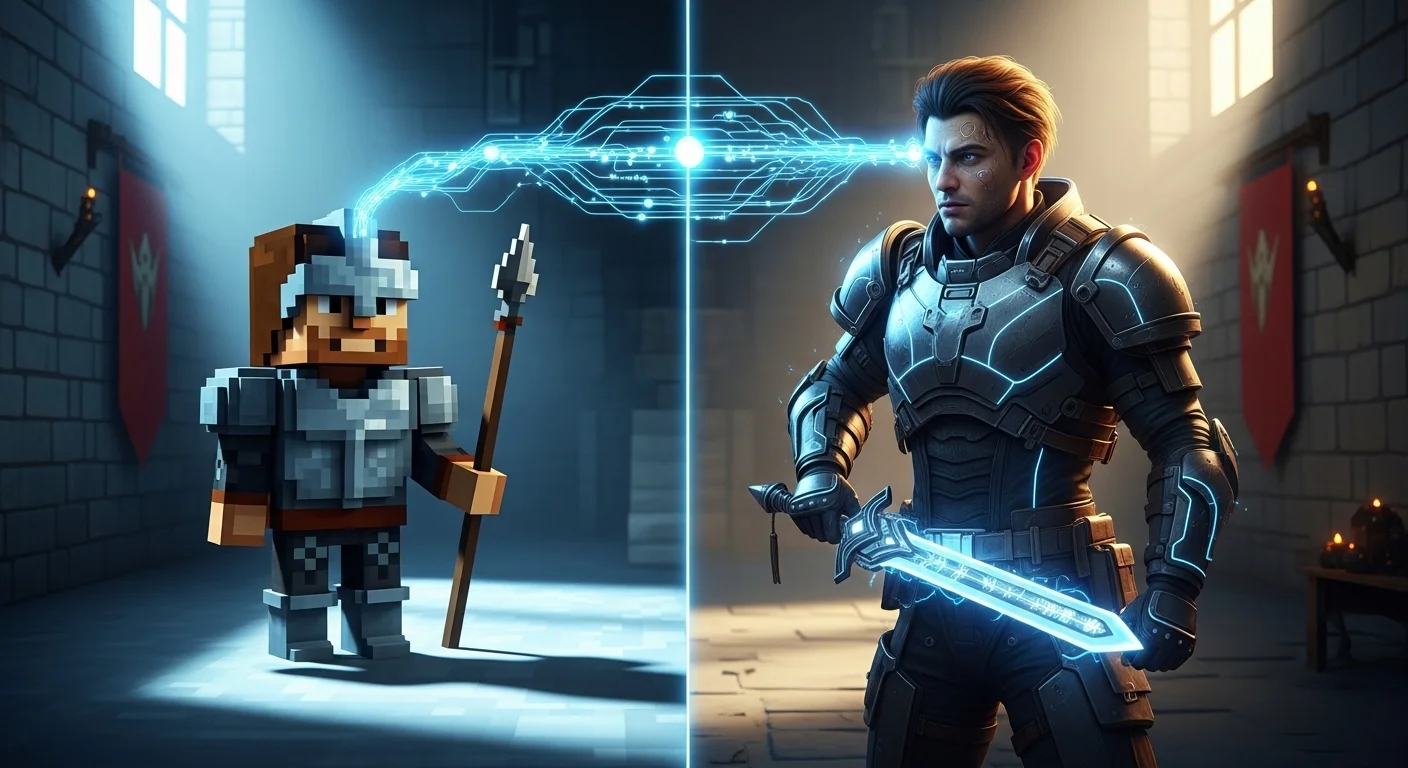
I’ve been gaming for over two decades, and the evolution I’ve witnessed in non player characters NPCs has been nothing short of remarkable. Remember those guards in early Skyrim who’d repeat the same “arrow in the knee” line ad nauseam? Fast forward to today, and we’re seeing game characters that adapt, learn, and respond in ways that feel genuinely intelligent. This shift comes down to cognitive AI models, sophisticated systems that are fundamentally changing how we interact with virtual worlds.
What Makes Cognitive AI Different from Traditional Game AI
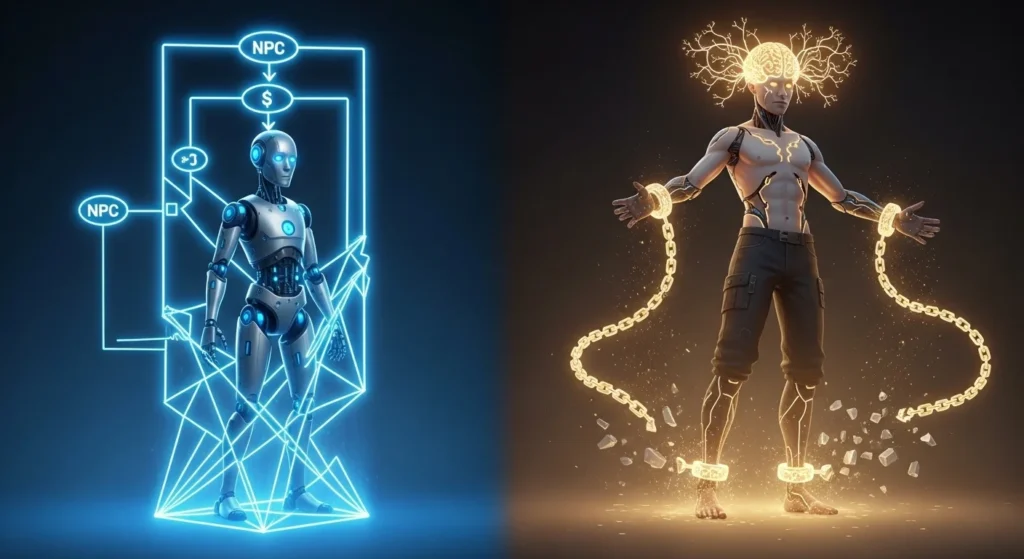
Traditional game AI operates on scripted behaviors and decision trees. An enemy sees you, follows a predetermined attack pattern, and reacts based on simple if then logic. It works, but it’s predictable. After a few encounters, you’ve figured out the pattern, and the magic fades.
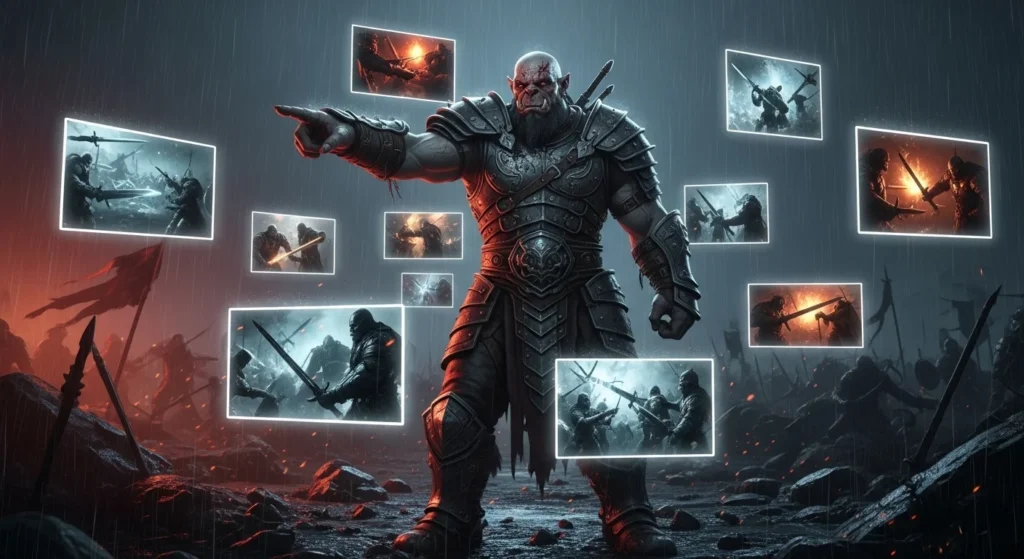
Cognitive AI models, on the other hand, simulate aspects of human thinking. They incorporate machine learning, natural language processing, and behavioral modeling to create characters that genuinely surprise you. I first noticed this playing Middle earth: Shadow of Mordor with its Nemesis system. Orc captains remembered our previous encounters, developed personalities based on those interactions, and even harbored grudges. One particular captain, Grublik the Diseased, killed me three times before I finally took him down, and each encounter, he taunted me about our history. That wasn’t scripted dialogue; it was dynamically generated based on our shared “experience.”
How These Models Actually Work in Modern Games
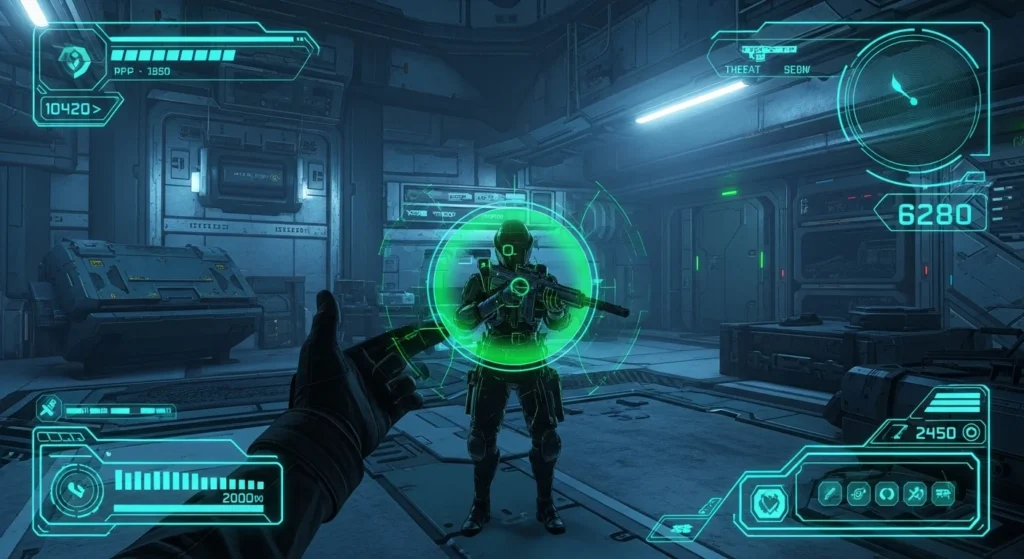
The technical implementation varies, but most cognitive AI systems in gaming combine several components. At the foundation, you have perception systems that allow NPCs to gather information about their environment, not just “player in range” but contextual details like the player’s health, equipped weapons, or recent actions.
Take The Last of Us Part II, where enemy AI communicates organically. When you take down an enemy, their companions don’t just generically alert; they call out that specific person’s name, showing emotional responses that shift their behavior. This requires the AI to track relationships between characters and access a knowledge base about squad composition.
Memory systems represent another crucial element. NPCs in games using cognitive models maintain short and long-term memory. In Red Dead Redemption 2, townspeople remember if you’ve caused trouble before. Draw your weapon in Valentine after previously robbing the general store, and folks react with fear or hostility before you’ve even done anything this time around. That persistent memory creates a world that feels alive and reactive.
Real World Implementation: Challenges and Breakthroughs
From my research and conversations with developers at industry conferences, implementing cognitive AI isn’t straightforward. The primary constraint is computational power. Running sophisticated learning models for dozens of NPCs simultaneously can tank frame rates, which is why many games use a hybrid approach, reserving the most advanced AI for key characters while background NPCs run simpler systems.
Alien: Isolation demonstrates one brilliant solution. The xenomorph stalking you uses a two tier AI system. The “director AI” knows your exact location and the optimal path to you, but it doesn’t directly control the alien. Instead, it feeds hints to the alien’s “local AI,” which operates on limited information and must actually search for you. This creates that terrifying unpredictability the creature feels like it’s hunting you intelligently without having unfair omniscience.
Performance optimization often means making tough choices. Developers might run cognitive processing at lower frequencies, update certain NPC behaviors only when players are nearby, or limit the number of “smart” characters active at once. I’ve noticed in open world games that truly reactive AI often appears in scripted sequences or confined areas where the system can dedicate resources.
The Impact on Gameplay and Storytelling
Cognitive AI fundamentally alters game design. When NPCs behave unpredictably and adaptively, you can’t just publish strategy guides with guaranteed tactics. Games become more about emergent situations than memorized patterns.
Watch Dogs: Legion attempted something ambitious, procedurally generating entire character backstories, relationships, and personalities for its “play as anyone” mechanic. While the execution had limitations, it showed where things are heading. Each recruited character had unique traits affecting gameplay, not just cosmetic differences.
The storytelling implications particularly excite me. Traditional narrative design relies on carefully crafted moments. With cognitive AI, you get player specific stories. My playthrough of Dishonored 2 differed vastly from my brother’s, not just in choices made at scripted moments but in how guards adapted to our different playstyles. He went lethal and loud; guards started heavily armoring themselves and traveling in larger groups. I played stealthily; they began setting more traps and watching vantage points.
Current Limitations and Ethical Considerations
Despite the progress, we’re still far from truly conscious game characters. Current cognitive models excel in narrow domains but lack general intelligence. An NPC might react brilliantly during combat yet fail at basic conversation logic. The “uncanny valley” applies to behavior as much as appearance near intelligent AI that occasionally does something absurdly stupid breaks immersion worse than consistently simple AI.
There’s also the question of frustration versus challenge. If AI becomes too adaptive, games risk becoming unfairly difficult or feeling like they’re punishing player creativity. Striking that balance requires careful tuning. Some players want the power fantasy of outsmarting opponents; others crave the challenge of adversaries that genuinely test their skills.
Privacy and data use present emerging concerns. Some modern games collect gameplay data to train AI models. While this improves the experience, it raises questions about informed consent and data ownership that the industry is still grappling with.
What’s Next for Cognitive AI in Gaming
Looking forward, I expect we’ll see more personalization. AI that learns your individual playstyle and adjusts difficulty dynamically, creating an experience tailored to you. We’re already seeing early versions with titles like Resident Evil Village, adjusting enemy aggression and resources based on your performance.
Natural language processing will likely transform NPC interactions. Imagine conversing with game characters using your own words rather than selecting from predetermined dialogue options. Early experiments exist, though making this work within coherent narratives remains challenging.
The boundary between single player and multiplayer experiences might blur as cognitive AI creates NPC companions and opponents that feel as dynamic as human players. For those who enjoy solo gaming but want that unpredictability, this could be transformative.
FAQs
What is cognitive AI in gaming?
Cognitive AI refers to game characters that use advanced models to simulate human like thinking, learning from player behavior, and adapting strategies rather than following fixed scripts.
Are cognitive AI models expensive to implement?
Yes, they require significant computational resources and development time, which is why they’re typically reserved for major releases or specific key characters within games.
Can cognitive AI make games too difficult?
It can if not properly balanced. Developers must carefully tune adaptive systems to maintain fun and fairness rather than creating frustration.
Do cognitive AI NPCs actually learn from players?
Within limits, yes. They can adjust tactics based on observed player behavior, though most reset between sessions rather than persistently evolving.
Will cognitive AI replace traditional scripted AI?
Unlikely completely. Both serve different purposes. Scripted AI ensures predictable, crafted experiences where needed, while cognitive models add dynamic unpredictability where appropriate.