
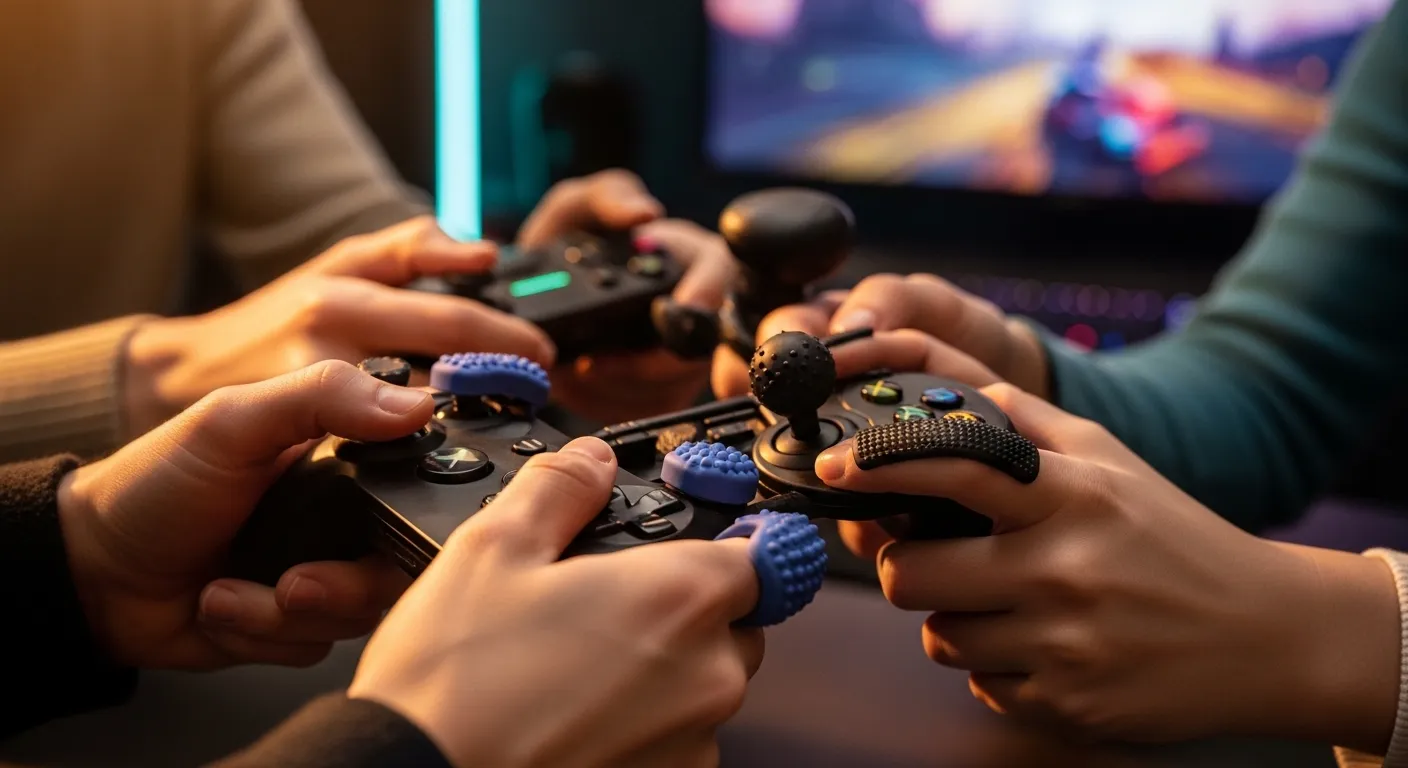
I still remember watching my friend Matt struggle through the opening hours of The Last of Us Part II back in 2020. Matt has limited mobility in his right hand due to a childhood injury, and what most gamers take for granted, quick dodges, perfect aim, split second button combinations, presented genuine barriers. Then he discovered the game’s adaptive difficulty features, and everything changed. This wasn’t just about lowering enemy health bars. The game was actually learning from how he played and adjusting itself accordingly.
That experience got me diving deep into adaptive game controls powered by artificial intelligence, and what I’ve learned over the past few years has convinced me we’re witnessing a genuine revolution in how games respond to players.
What Exactly Are Adaptive Game Controls?
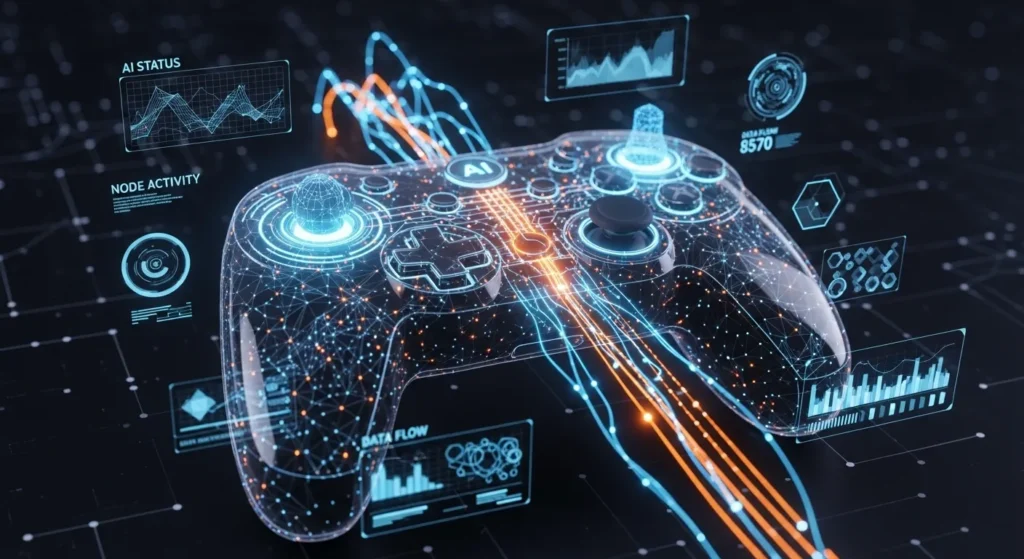
Let’s strip away the marketing speak for a moment. Adaptive game controls use machine learning algorithms to monitor how you play, your reaction times, accuracy, movement patterns, and even how often you retry sections, and then automatically adjust various elements to match your skill level and physical capabilities.
Unlike traditional difficulty settings, where you pick “Easy,” “Normal,” or “Hard” at the start and live with it, adaptive systems make hundreds of micro-adjustments you barely notice. The enemy might take an extra half second before firing. Your character’s aim assist might strengthen slightly during intense sequences. Quick time event windows might expand or contract based on your success rate.
The really sophisticated implementations go further. They can modify control schemes entirely, remap complex button combinations into simpler alternatives, or even predict your intended actions based on context.
Why This Matters More Than You Think

I’ve covered the gaming industry for over a decade, and I’ve seen plenty of features come and go. But adaptive controls address something fundamental: the gap between a game’s designed experience and what individual players can actually handle.
Consider the spectrum of players picking up any modern action game. You’ve got 14-year olds who grew up with controllers in their hands, their reflexes sharp as razors. Then there’s someone like my neighbor Janet, who discovered gaming at 58 and loves story driven adventures but struggles with complex combat systems. And there are millions of players with various disabilities, motor impairments, visual challenges, and cognitive differences who want access to the same incredible experiences.
Traditional difficulty modes try to solve this with a sledgehammer. Adaptive AI uses a scalpel.
Real World Examples I’ve Actually Tested
Returnal’s adaptive controller settings genuinely impressed me when I tested them last year. The game monitors your performance continuously and can automatically enable or strengthen auto sprint, aim assist, and other features. What struck me wasn’t just that these options existed, plenty of games have accessibility menus but that the game made intelligent decisions about when to activate them.
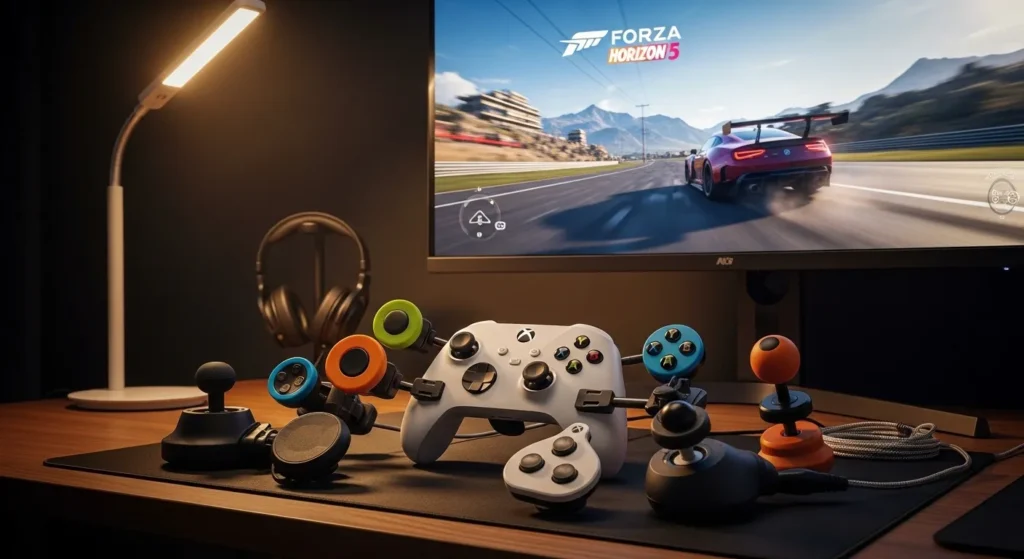
Microsoft’s relationship with machine learning in gaming has produced some fascinating results. Their Xbox Adaptive Controller, combined with games that support dynamic difficulty adjustment, creates experiences that would’ve seemed like science fiction a decade ago. I watched a player with cerebral palsy navigate Forza Horizon 5 using custom inputs that the game’s AI learned to interpret and optimize over several sessions.
Resident Evil Village took a different approach that I found particularly clever. Its “Dynamic Difficulty Rank” system stays invisible to players but constantly evaluates your performance. Dying repeatedly to Lady Dimitrescu? The game might give you slightly more ammunition or reduce enemy aggression subtle enough that you don’t feel patronized, but meaningful enough to prevent frustration from ruining your experience.
The Technical Side Without the Jargon Overload
Having spoken with several developers about implementation, I can tell you the systems running under the hood are surprisingly complex. The AI needs to collect data points constantly: accuracy percentages, damage taken, movement efficiency, resource management, menu navigation speed, and dozens of other metrics.
Then comes the tricky part interpreting that data correctly. A player might die repeatedly not because the section is too hard, but because they’re experimenting with different strategies. Good adaptive systems distinguish between productive struggle and genuine barriers. They track patterns over time rather than reacting to individual moments.
The best implementations I’ve encountered use what developers call “confidence thresholds.” The system won’t make major adjustments based on limited data. It waits until it’s reasonably certain about your capabilities before intervening, which prevents the game from feeling inconsistent or unpredictable.
The Concerns Are Valid
I’d be dishonest if I didn’t acknowledge the criticisms I’ve heard from both players and developers. Some gaming enthusiasts argue that adaptive difficulty undermines intentional game design. When Dark Souls is brutally difficult, that’s not an oversight it’s the point. Having AI secretly smooth out the rough edges could fundamentally alter what makes those games special.
There’s also the transparency question. Should players know when adaptive systems are helping them? I’ve had heated debates about this at industry events. Some argue that invisible assistance feels dishonest, like receiving unearned participation trophies. Others counter that constantly notifying players about adjustments would be equally immersion breaking.
Privacy represents another consideration. These systems work by collecting detailed behavioral data. Who has access to that information? How long is it stored? Most developers I’ve spoken with keep this data locally on your device, but it’s worth asking these questions.
Where This Technology Is Heading
Based on conversations with developers and my own observations, adaptive controls will become increasingly sophisticated and personalized. We’re moving toward systems that don’t just react to your current performance but learn your preferences across multiple games.
Imagine a future where your gaming profile knows you prefer slower-paced exploration with minimal combat frustration. That preference could automatically transfer across different titles from participating developers, creating tailored experiences from the moment you start playing.
Voice and eye tracking integration is already happening in specialized accessibility contexts. As these technologies become more mainstream and affordable, adaptive AI will have richer data sources to work with, enabling even more nuanced adjustments.
The Bottom Line
After years of watching this space evolve, I believe adaptive game controls represent one of the most important developments in making gaming genuinely inclusive. They’re not perfect, and they shouldn’t replace thoughtful accessibility options and traditional difficulty settings. But when implemented well, they create bridges that let more people experience the medium we love.
The technology will keep improving. Developers will learn from mistakes and successes. And hopefully, we’ll reach a point where questioning whether someone “can” play a game becomes as outdated as wondering whether someone can read a book with adjustable font sizes.
Gaming is better when everyone can participate. Adaptive AI helps make that possible.
FAQs
Do adaptive game controls make games too easy?
Not inherently. Well designed systems aim to maintain appropriate challenge while removing frustrating barriers. You’re still playing the game, just with optimized parameters for your capabilities.
Can I turn adaptive controls off if I don’t want them?
In most implementations, yes. Reputable developers include options to disable adaptive features entirely, giving players full control over their experience.
Do competitive multiplayer games use adaptive controls?
Generally no. Adaptive systems primarily appear in single-player experiences where adjusting difficulty doesn’t create unfair advantages over other players.
How is this different from regular difficulty settings?
Traditional settings require manual selection and apply broad changes. Adaptive systems make continuous, subtle adjustments based on your actual performance without requiring menu navigation.
Are adaptive controls only for accessibility purposes?
While they significantly benefit players with disabilities, adaptive controls help anyone by creating more personalized experiences that match individual skill levels and play styles.