
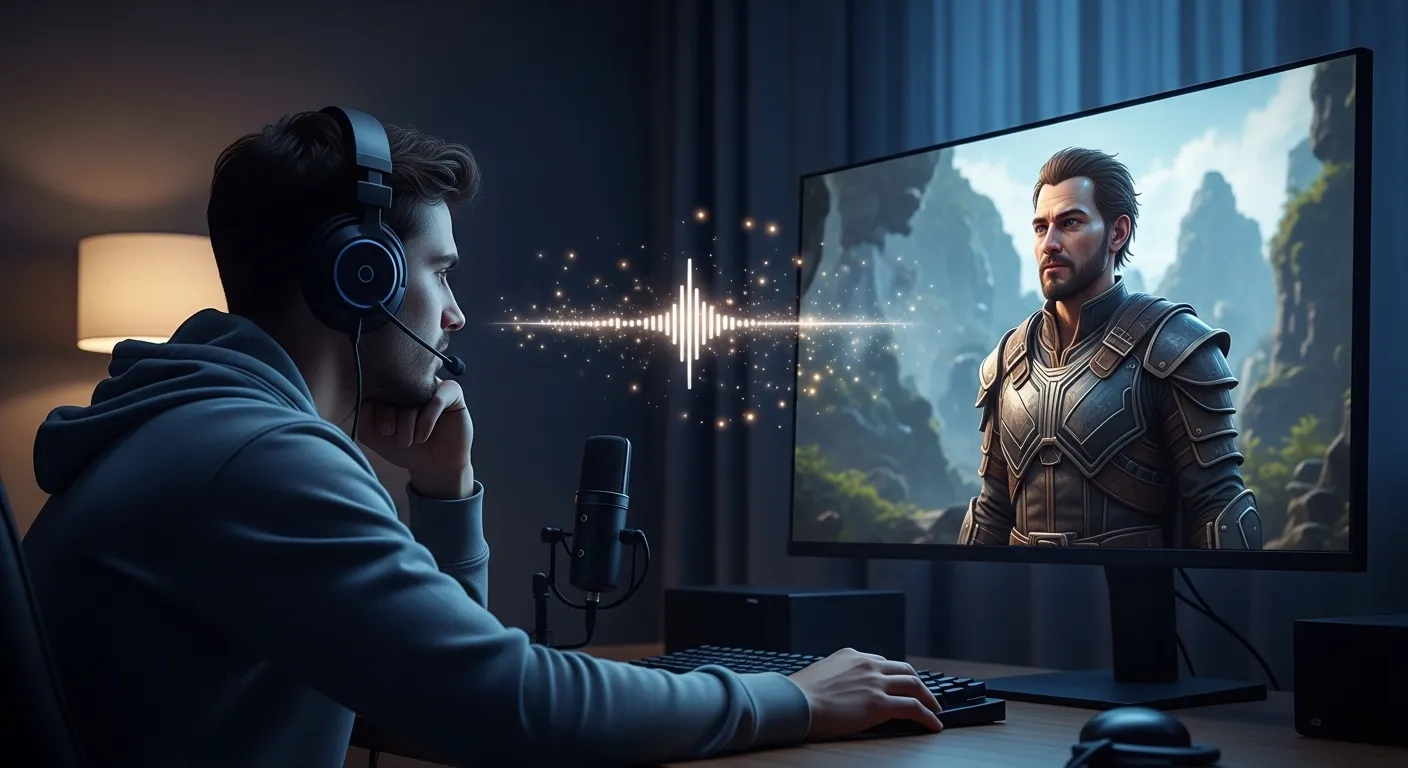
I still remember the first time I genuinely spoke to a video game character and received a coherent, contextual response. It wasn’t scripted. It wasn’t pulled from a predetermined dialogue tree. The NPC actually understood my question and answered appropriately. That moment fundamentally shifted my understanding of where gaming is headed.
After spending nearly a decade covering gaming technology and testing countless titles, I’ve watched voice interaction evolve from a gimmicky feature to something genuinely transformative. Let me walk you through what’s happening in this space and why it matters more than most people realize.
The Shift from Commands to Conversations
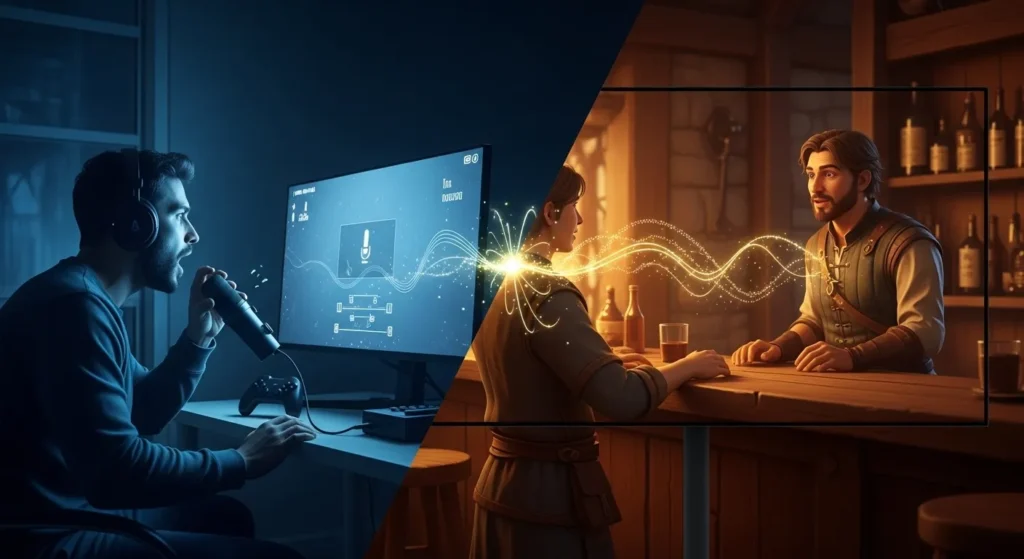
Traditional voice controls in games were frustratingly limited. You’d bark orders at your console, “Xbox, record that, “and hope the microphone caught your words correctly. These systems recognized specific phrases and executed predetermined actions. Nothing more.
What’s emerging now is fundamentally different. Modern voice interaction systems in games don’t just recognize words; they interpret meaning, context, and even emotional undertones. The distinction might seem subtle, but the gameplay implications are massive.
Think about classic RPGs where you’d click through hundreds of dialogue options. Now imagine simply asking a tavern keeper about local rumors in your own words. No menu navigation. No predetermined responses limit your curiosity. Just conversation.
Real Examples Worth Mentioning
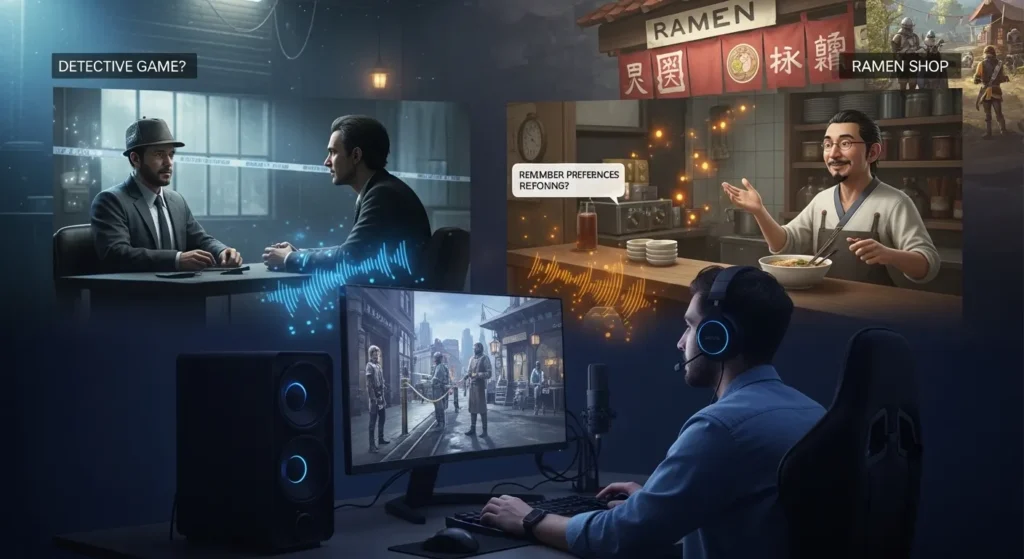
Several games have already begun implementing sophisticated voice interaction. Inworld AI partnerships with major studios have produced demos where players interrogate suspects in detective games using natural speech. The characters respond dynamically, remember previous statements, and even display personality consistent reactions to aggressive questioning.
NVIDIA’s ACE technology demonstrated similar capabilities with “Kairos,” an interactive ramen shop owner who remembers customer preferences and engages in surprisingly natural small talk. These aren’t finished products yet, but they’re playable proofs of concept.
Independent developers are pushing boundaries too. Modding communities have retrofitted voice interaction into games like Skyrim, creating experiences where you can verbally negotiate with merchants or talk your way past guards. The results are imperfect but genuinely impressive.
How This Technology Actually Works

Without getting too technical, these systems typically combine three components. Speech recognition converts your spoken words into text. Natural language processing interprets what you’re actually asking or saying. Response generation creates appropriate dialogue that matches the character’s personality and the game’s context.
The magic happens when these elements work together seamlessly. Latency matters tremendously here. If there’s a three second delay between your question and the character’s response, immersion shatters instantly. Developers are working hard on optimization, and local processing on newer hardware has reduced these delays significantly.
Character consistency presents another technical challenge. An ancient wizard shouldn’t suddenly start using modern slang because the language model defaults to contemporary speech patterns. Training these systems on specific character profiles takes considerable effort but yields much more convincing results.
What This Means for Gameplay
The implications extend far beyond convenient dialogue systems. Voice interaction opens entirely new gameplay possibilities that menu based systems simply cannot provide.
Stealth games could feature genuine verbal persuasion. Instead of selecting “Lie” from a dialogue wheel, you’d actually construct a believable excuse on the spot. The system would evaluate your delivery and content, determining whether guards buy your story.
Horror games benefit tremendously from this technology. Imagine being forced to stay quiet because in game creatures respond to your actual voice. Or conversely, needing to scream for help when trapped, using your real voice to summon rescue within the game world.
Educational games and simulations gain practical training applications. Language learning through conversation with native-speaking characters. Medical training scenarios where you must communicate with virtual patients showing various symptoms. The possibilities genuinely excite me.
Current Limitations and Honest Concerns
I’d be doing readers a disservice by ignoring the problems. Voice interaction systems still struggle with accents, background noise, and unconventional speech patterns. Accessibility concerns arise immediately these features could potentially exclude players with speech disabilities unless alternative input methods remain available.
Privacy represents another legitimate worry. Always listening microphones in gaming setups raise data collection questions. Who stores your voice data? How long? For what purposes beyond gameplay? Studios implementing these features need transparent policies and robust security measures.
Content moderation adds complexity, too. What happens when players say inappropriate things to characters? How should virtual NPCs respond to harassment or offensive language? These aren’t just technical problems, they’re ethical considerations that developers must address thoughtfully.
Where We’re Actually Headed
Based on everything I’ve tested and the industry conversations I’ve had, widespread implementation is probably three to five years away for mainstream titles. The technology works now, but scaling it across hundreds of characters in open world games requires infrastructure most studios don’t currently possess.
Multiplayer applications present fascinating possibilities. Imagine dungeons where you must verbally coordinate strategies with teammates while NPCs listen and react. Or social deduction games, where reading vocal hesitation becomes a genuine skill.
The technology will likely appear first in smaller, focused experiences before reaching blockbuster open world games. This gradual rollout allows developers to learn what works without risking massive budgets on unproven systems.
Final Thoughts
Voice interaction represents perhaps the most significant leap in gaming immersion since 3D graphics. We’re moving toward experiences where the barrier between player and game world becomes increasingly transparent. Speaking to characters instead of clicking through menus fundamentally changes your relationship with virtual worlds.
That said, I’m cautiously optimistic rather than unconditionally excited. Implementation matters enormously. Poor voice systems will feel worse than traditional dialogue options. But when done well? Those moments when you genuinely converse with a virtual character and forget you’re talking to code? That’s something special.
Frequently Asked Questions
Do I need special equipment for voice interaction in games?
Most systems work with standard gaming headsets or built-in microphones. Higher quality microphones improve recognition accuracy but aren’t strictly necessary.
Will voice interaction replace traditional dialogue systems?
Probably not entirely. Many players prefer reading dialogue at their own pace, and accessibility considerations require alternative input methods to remain available.
Can these systems understand different languages?
Support varies by implementation. Major languages typically receive better recognition, while less common languages may have limited functionality initially.
Is my voice data being stored when I use these features?
Policies vary between developers. Always check privacy settings and terms of service. Some systems process voice locally without cloud transmission.
How do voice-interactive NPCs handle inappropriate player speech?
Approaches differ, but most systems either ignore offensive content, redirect conversation, or have characters respond disapprovingly while maintaining their personality.
Will this technology work offline?
Some implementations require internet connectivity for processing, while others run entirely on local hardware. Check specific game requirements before purchasing.