
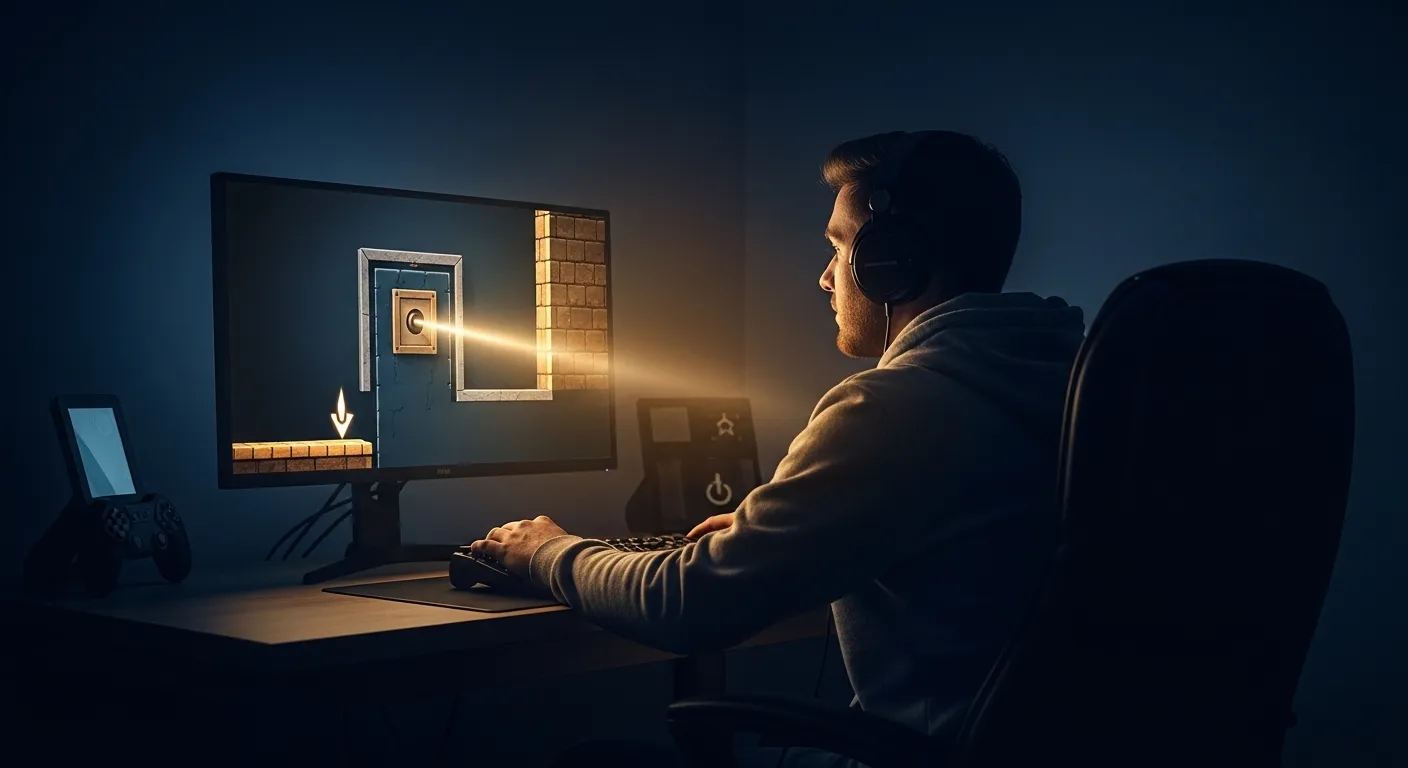
There’s this moment I remember vividly from playing a challenging puzzle game last year. I’d been stuck for nearly forty minutes, frustration mounting, when the game subtly shifted a light source toward a hidden lever I’d completely missed. No intrusive pop up. No condescending tutorial. Just a gentle environmental nudge that felt almost telepathic. That’s AI-based in-game guidance at its finest.
What Exactly Is AI Based In Game Guidance?
At its core, AI based in game guidance refers to intelligent systems embedded within video games that adapt to player behavior, skill level, and decision making patterns. Unlike static hint systems or linear tutorials, these dynamic frameworks observe how you play and respond accordingly.
Think of it as having an invisible mentor watching over your shoulder one who knows when to step in and when to let you figure things out yourself.
Modern games employ machine learning algorithms that analyze thousands of data points: how long you’ve been in one area, your death count, button inputs, camera movements, and even pause frequency. From this behavioral fingerprint, the system determines whether you need assistance and exactly how much.
The Evolution From Clippy to Intelligent Companions
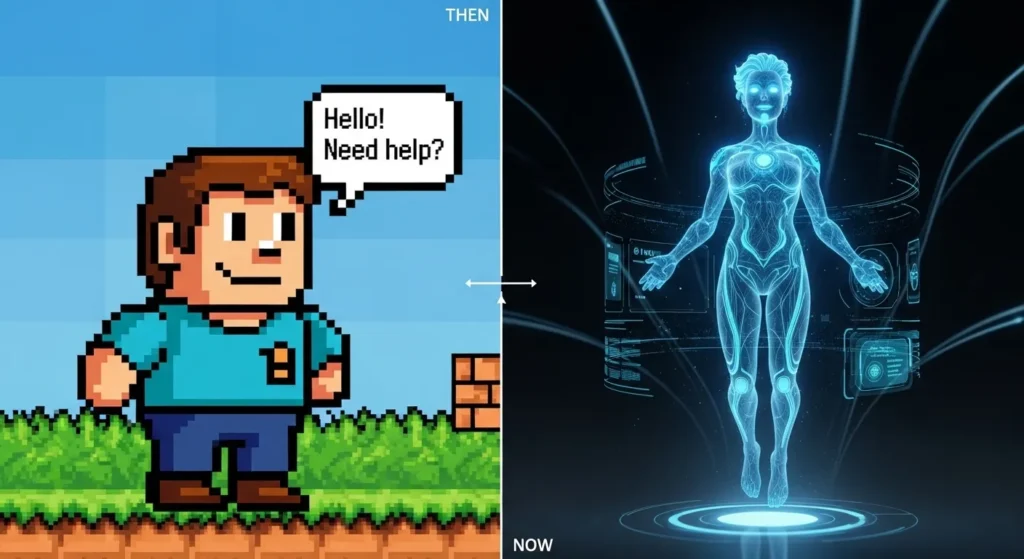
Remember the helper characters of the early 2000s? They’d interrupt gameplay constantly, often providing obvious advice nobody asked for. “Press A to jump!” Thanks, I had no idea.
The gaming industry has come a long way since those days. Early assistance systems were rule based, triggering predetermined responses at specific checkpoints. They couldn’t distinguish between a struggling newcomer and an experienced player momentarily distracted by their phone.
Today’s AI guidance represents a fundamental shift. Games like Ghost of Tsushima use environmental storytelling combined with adaptive hint systems. The famous “guiding wind” mechanic doesn’t just point toward objectives it considers your exploration patterns and adjusts intensity based on wandering behavior.
Hades, developed by Supergiant Games, implements what I’d call “invisible difficulty tuning.” After multiple failed runs, the game subtly increases certain power ups’ spawn rates without announcing this change. Players feel accomplished when they finally progress, unaware that the game quietly lowered barriers.
Real World Applications Across Genres
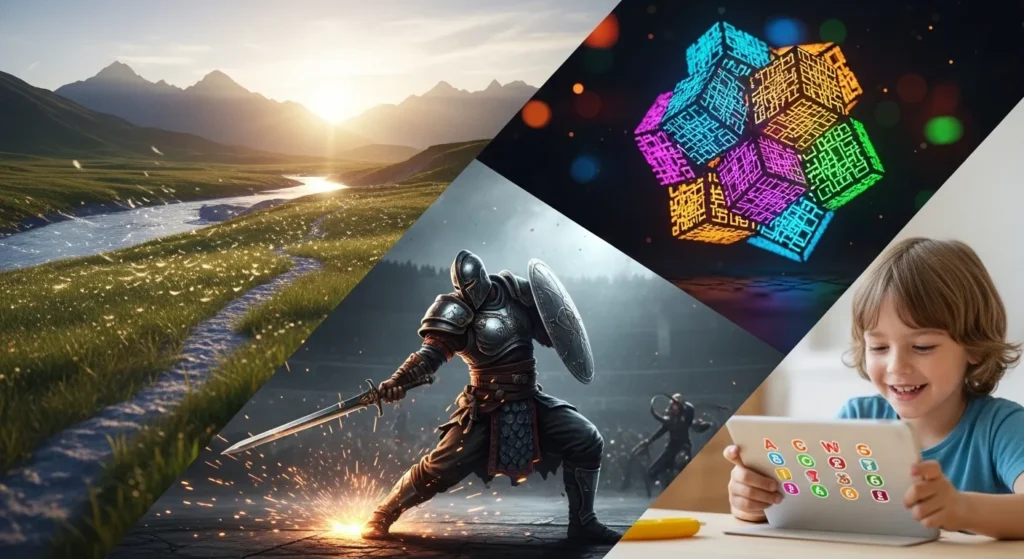
Different game genres implement AI guidance uniquely, and honestly, some do it better than others.
Open World Adventures:
Red Dead Redemption 2’s companion AI occasionally offers contextual hints during missions. If you’re heading the wrong direction, characters might casually mention landmarks integrating guidance into natural dialogue rather than breaking immersion.
Puzzle Games:
The Witness famously offers zero traditional guidance, but its level design employs what designer Jonathan Blow calls “teaching through architecture.” AI systems track your solution attempts and can adjust future puzzle arrangements based on demonstrated understanding.
Combat Heavy Games:
Souls like titles have historically rejected guidance systems entirely. However, games like Elden Ring introduced subtle innovations NPC summon signs appear more frequently in areas where player death statistics cluster.
Educational Games:
Perhaps nowhere is adaptive guidance more refined than in educational gaming. Platforms like Prodigy Math track individual student performance, adjusting question difficulty and hint frequency in real time.
The Psychology Behind Effective Guidance
Here’s something fascinating I’ve noticed through years of gaming: the best guidance systems tap into intrinsic motivation rather than external rewards.
When a game hands you the answer, dopamine response flares. When it nudges you toward discovering solutions yourself, that neural reward pathway fires much stronger. Good AI guidance systems understand this psychology.
The key lies in timing and subtlety. Research from the University of California found that players who received delayed, contextual hints reported higher satisfaction than those given immediate solutions, even when both groups completed levels at similar rates.
Potential Drawbacks and Legitimate Concerns
Not everything about AI guidance deserves celebration. Several concerns warrant discussion.
Over reliance Issues:
Some players, particularly younger ones, may never develop problem solving skills if games constantly smooth their path. There’s educational value in struggle that overly helpful AI eliminates.
Privacy Considerations:
These systems require extensive behavioral tracking. What happens to that data? How long is it stored? Most players don’t realize the depth of information being collected about their playing patterns.
Homogenized Experiences:
When everyone receives personalized assistance, shared cultural experiences diminish. Part of gaming’s community appeal involves discussing challenges conversations complicated when everyone faces different difficulty curves.
Algorithmic Bias:
Training data determines AI behavior. If systems learn primarily from certain demographics’ play patterns, they might poorly serve others.
Where This Technology Is Heading
The next decade promises remarkable innovations in adaptive gaming assistance. Companies are experimenting with multimodal AI that reads controller grip pressure, voice frustration levels, and even facial expressions via camera.
Imagine a system detecting your furrowed brow and elevated heart rate before you consciously recognize frustration then seamlessly adjusting challenge levels.
Some developers are exploring “AI directors” that don’t just assist individual players but craft entirely personalized narrative experiences. Your choices, play style, and demonstrated preferences could shape storylines uniquely yours.
Finding the Right Balance
The best AI guidance systems share a common philosophy: assistance should feel like a gentle breeze, not a hurricane. Players want agency. They want accomplishment. Nobody boots up a game hoping to be carried through it.
Developers walking this tightrope must consider accessibility needs, too. What feels patronizing to experienced players might be essential for those with cognitive differences or disabilities. Customizable guidance intensity, letting players choose their support level, remains the most elegant solution I’ve encountered.
Final Thoughts
AI based in game guidance represents one of gaming’s most quietly revolutionary developments. When implemented thoughtfully, it dissolves frustration barriers while preserving challenge. When executed poorly, it patronizes players and undermines satisfaction.
The technology continues evolving rapidly, and honestly, we’re still early in understanding its full implications. What seems certain is that static, one size fits all game design belongs to the past. Our games are learning to know us and that changes everything.
Frequently Asked Questions
What is AI based in game guidance?
It’s a dynamic system using machine learning to observe player behavior and provide personalized assistance, hints, or difficulty adjustments automatically.
Does AI guidance make games too easy?
Not necessarily. Well designed systems maintain challenge while eliminating unnecessary frustration. Many allow players to disable or adjust guidance intensity.
Which games use AI guidance effectively?
Notable examples include Ghost of Tsushima, Hades, Left 4 Dead’s AI Director, and various educational gaming platforms.
Can I turn off AI guidance in games?
Most modern games offer accessibility settings allowing players to minimize or disable automated assistance features.
Does AI guidance collect my data?
Yes, these systems require behavioral tracking to function. Privacy policies vary by developer and platform.
Will AI guidance replace game tutorials?
Likely not entirely, but traditional tutorials may become shorter as adaptive systems handle ongoing player education contextually.