
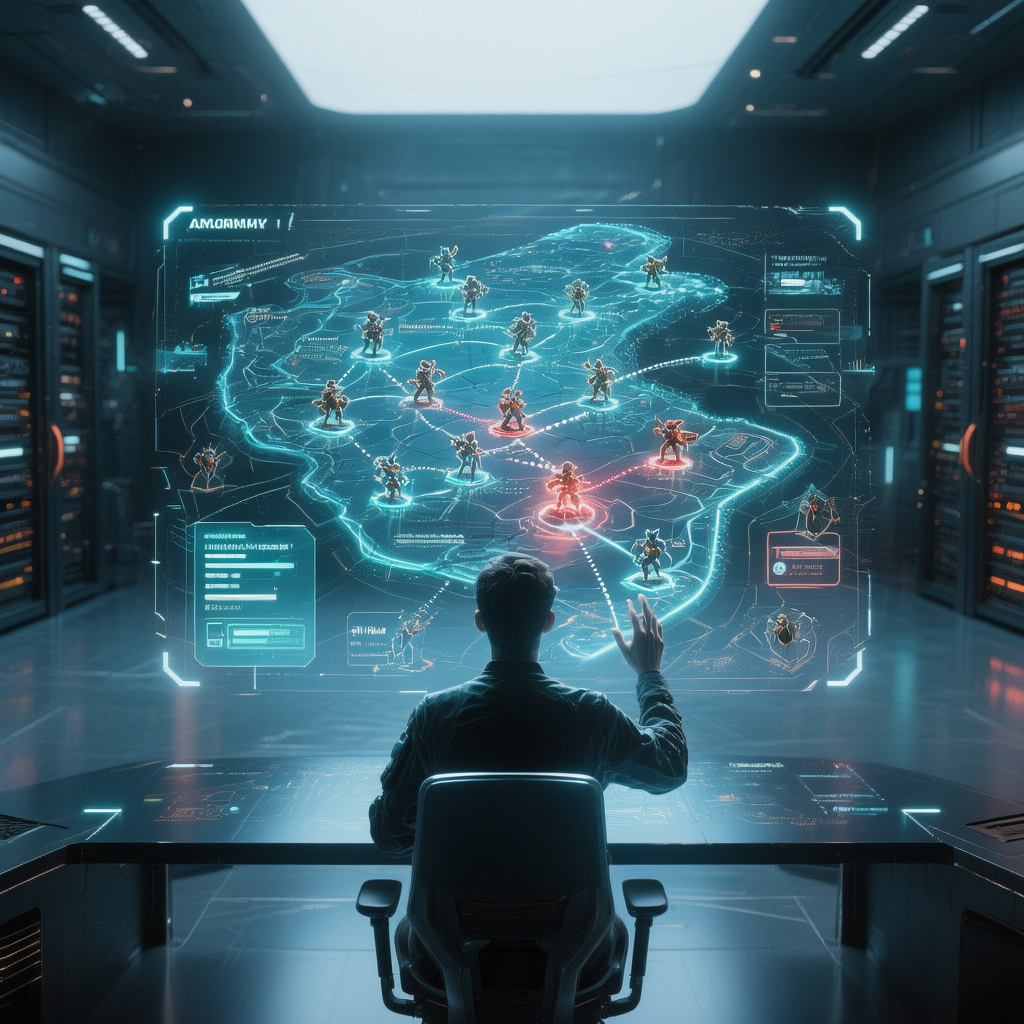
I remember the first time I played F.E.A.R. back in 2005. The enemies didn’t just stand there waiting to be shot. They flanked me, communicated with each other, and actually retreated when outgunned. That was my “aha” moment the realization that artificial intelligence was going to fundamentally change how we experience video games.
Nearly two decades later, AI powered game systems have evolved beyond anything we imagined. They’re not just making enemies smarter; they’re creating entire worlds, adapting to how you play, and crafting experiences that feel genuinely personal.
The Evolution of Game AI: From Simple Scripts to Complex Behaviors
Gaming AI started with basics. Think Pac Man’s ghosts, each programmed with simple patterns. Blinky chased directly, Pinky aimed ahead, and so on. Predictable, but revolutionary for 1980.
Fast forward to today, and the landscape looks completely different. Modern AI systems process thousands of variables in real-time, making decisions that even developers can’t always predict. It’s fascinating and, honestly, a little unnerving sometimes.
The shift happened gradually. Developers moved from scripted behaviors to behavior trees, then to machine learning models that could adapt and improve. Each generation brought games that felt more alive.
How AI Powers Modern Game Systems
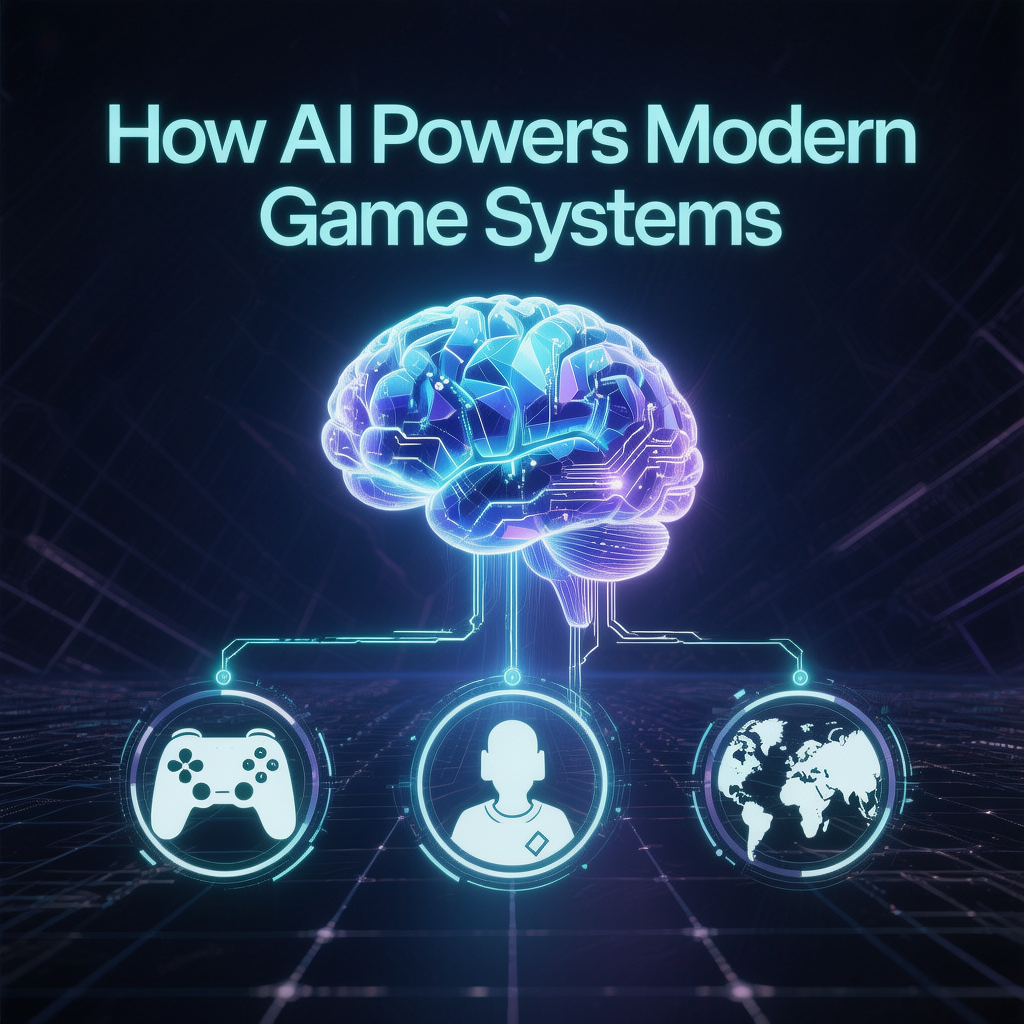
Non-Player Character Behavior
NPCs have come a long way from walking preset paths. In Red Dead Redemption 2, characters remember your actions. Rob a store owner once, and they’ll greet you with a shotgun next time. Help a stranger on the road, and they might return the favor hours later.
This isn’t magic it’s sophisticated AI tracking player decisions and adjusting NPC responses accordingly. Rockstar’s system creates what feels like a living world, where your choices actually matter.
I spent probably 80 hours in that game, and I still encountered behaviors that surprised me. A drunk stumbling out of a saloon once recognized me from a bar fight three in-game days prior. Small details like these build immersion in ways scripted events simply cannot.
Procedural Content Generation
Games like No Man’s Sky use AI to generate entire planets, ecosystems, and creatures. The system creates billions of unique locations using mathematical algorithms and machine learning principles.
Does it always work perfectly? Honestly, no. Some procedurally generated content feels repetitive or nonsensical. But when it works and it often does you discover places that literally no other player has ever seen. That’s powerful.
Minecraft employs similar techniques for world generation. The AI ensures biomes transition naturally, caves form realistically, and resource distribution makes geological sense. Most players never think about it, but sophisticated systems work constantly behind the scenes.
Adaptive Difficulty Systems
Here’s something that’s changed my gaming experience significantly: dynamic difficulty adjustment. Games like Resident Evil 4 and Left 4 Dead pioneered AI directors that monitor your performance and adjust challenges accordingly.
Struggling with a section? The game quietly reduces enemy health or provides better item drops. Breezing through? Prepare for tougher encounters.
The best implementations are invisible. You never feel like the game is going easy on you it simply maintains that perfect tension point where challenge meets enjoyment. Bad implementations feel patronizing. The line between them often determines whether players love or abandon a game.
Enemy AI and Combat Systems
Modern tactical games employ remarkable combat AI. The aforementioned F.E.A.R. used something called Goal-Oriented Action Planning, where enemies assessed situations and selected actions from available options based on likelihood of success.
More recent titles have built on these foundations. The Last of Us Part II features enemies that communicate verbally, search areas systematically, and respond emotionally when allies die. It’s disturbing how human their reactions feel.
Real-World Applications Beyond Entertainment
Gaming AI doesn’t stay in games. Military organizations use game-derived AI for training simulations. Healthcare applications employ similar systems for surgical training. Even urban planning benefits from AI originally developed for city-building games.
This technology transfer happens because games demand AI that works reliably under unpredictable conditions—exactly what real-world applications need.
Challenges and Limitations
Let’s be realistic about current limitations. AI in games requires massive computational resources. Not everyone owns hardware capable of running the most sophisticated implementations.
There’s also the uncanny valley problem. AI that’s almost human-like but not quite can feel creepier than obviously artificial behavior. Developers constantly balance sophistication against authenticity.
And sometimes AI just breaks in hilarious ways. I’ve watched NPCs walk into walls for hours, have conversations with dead bodies, and completely ignore major threats. These moments remind us that even impressive systems have boundaries.
Ethical Considerations Worth Discussing
AI-powered games raise genuine ethical questions. Systems that adapt to keep you playing longer could enable addictive patterns. AI that learns your psychological tendencies might be weaponized for manipulative monetization.
The industry needs to address these concerns proactively. Players deserve transparency about how AI systems influence their experiences.
Looking Forward
Cloud gaming will enable AI systems impossible on consumer hardware. We’ll likely see NPCs powered by large language models capable of genuine conversation. Procedural storytelling might create narratives as compelling as authored content.
But the fundamental goal remains unchanged: creating experiences that feel real, responsive, and meaningful. AI serves that goal when implemented thoughtfully.
After covering this industry for years, I’m genuinely excited about where it’s heading. The games my kids will play are going to make current titles feel as primitive as Pac-Man feels to us now.
Frequently Asked Questions
What is AI in gaming?
AI in gaming refers to systems that control non-player elements, generate content, adapt difficulty, and create responsive virtual worlds that react to player actions.
Which games have the best AI?
Notable examples include F.E.A.R., The Last of Us Part II, Red Dead Redemption 2, Alien: Isolation, and Halo series for combat AI excellence.
Does gaming AI actually learn?
Some systems use machine learning to improve over time, while others use sophisticated rule-based systems. Both approaches can create convincing intelligent behavior.
Will AI replace game developers?
Unlikely. AI enhances development capabilities but cannot replace human creativity, narrative design, and artistic vision that make games meaningful.
How does adaptive difficulty work?
Games monitor performance metrics like death frequency, completion times, and resource management, then adjust enemy strength, spawn rates, or item availability accordingly.
Is gaming AI expensive to develop?
Sophisticated AI systems require significant investment in programming, testing, and computational resources, contributing substantially to development budgets.