
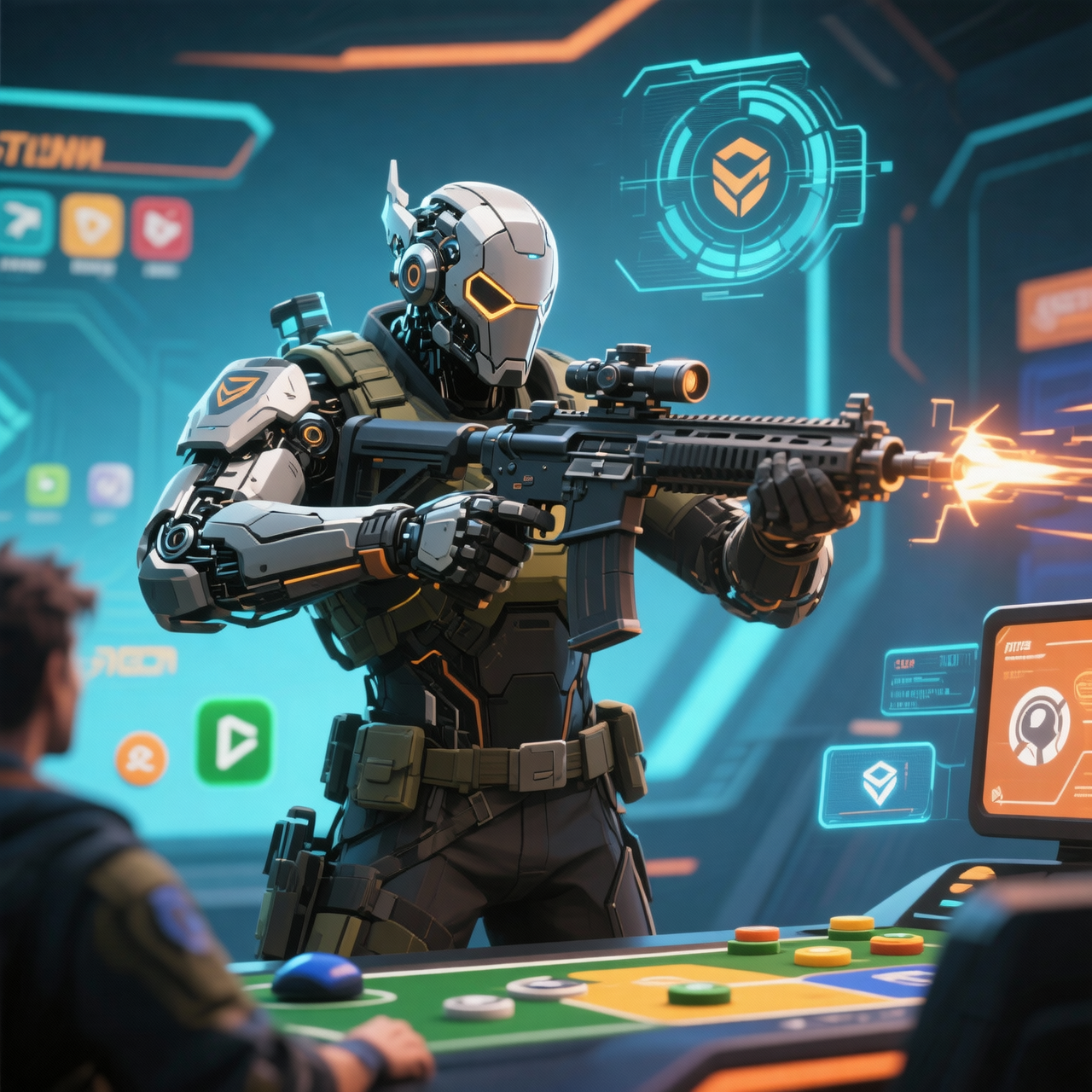
I still remember the first time a game genuinely surprised me with smart enemy behavior. It was during a late night session of F.E.A.R. back in 2005. I had cornered what I thought was a lone enemy soldier, only to watch him call for backup, toss a grenade to flush me out, and coordinate a flanking maneuver that left me scrambling for cover. That moment changed how I thought about game design forever.
Tactical reasoning AI represents one of the most fascinating intersections of game development and computer science. Unlike scripted behaviors that follow predetermined patterns, tactical AI actively evaluates situations, weighs options, and makes decisions that create genuinely challenging and unpredictable gameplay experiences.
What Exactly Is Tactical Reasoning AI?
At its core, tactical reasoning AI refers to decision making systems that allow non player characters to analyze their environment, assess threats, and execute coordinated strategies. Think of it as giving enemies or allies the ability to “think” rather than simply react.
The difference becomes obvious when you compare older shooters to modern titles. Early games like Doom featured enemies that charged directly at players or followed basic patrol routes. Today’s games showcase adversaries who understand cover systems, recognize tactical advantages, and adapt their approach based on player behavior.
This evolution didn’t happen overnight. Developers spent decades refining techniques that balance computational efficiency with believable behavior.
The Building Blocks of Smart Game AI
Several key technologies power tactical reasoning in contemporary games:
Behavior Trees form the backbone of most modern game AI. These hierarchical structures organize decision-making into nodes that check conditions and execute actions. When you watch an enemy soldier decide between reloading, taking cover, or throwing a grenade, behavior trees typically drive those choices.
Influence Maps help AI characters understand spatial relationships. These invisible overlays track factors like danger zones, resource locations, and strategic positions. A sniper in a stealth game might use influence maps to identify optimal vantage points while avoiding areas where players frequently patrol.
Goal-Oriented Action Planning (GOAP) allows characters to work backward from desired outcomes. Rather than following fixed scripts, GOAP driven AI identifies goals and constructs action sequences to achieve them. This creates emergent behaviors that can genuinely surprise players.
I’ve spent countless hours analyzing how games like Halo implement these systems. The Covenant forces don’t just shoot at you they establish suppressing fire, coordinate retreats when injured, and even sacrifice lesser units to protect high value targets.
Real World Examples That Changed the Industry
Certain games deserve recognition for pushing tactical AI boundaries:
The Last of Us showcased enemy communication systems where adversaries would call out player positions, discuss search patterns, and react realistically to sounds. Getting spotted triggered genuine panic as enemies coordinated their response.
Total War series demonstrates tactical reasoning at scale. Commanding thousands of units that independently assess terrain, morale states, and enemy formations requires sophisticated underlying systems. Watching cavalry units identify exposed flanks without player input remains impressive.
XCOM 2 balances accessibility with tactical depth. Alien forces evaluate cover quality, prioritize wounded targets, and exploit environmental hazards. They occasionally make suboptimal decisions intentionally to maintain fairness without eliminating challenge.
The Delicate Balance of Difficulty

Here’s something developers rarely discuss publicly: making AI too smart ruins games.
During my years following game development, I’ve seen teams deliberately hobble their AI systems. Perfect tactical reasoning creates frustrating, unbeatable opponents. Players don’t want enemies who never miss shots or always exploit weaknesses. They want adversaries who feel intelligent while remaining conquerable.
This balancing act requires extensive playtesting. Studios iterate constantly, tweaking decision weights and adding intentional delays to create that sweet spot where enemies feel smart but fair.
The best tactical AI cheats less than players assume. Many believe enemies have impossible awareness, but sophisticated systems actually limit AI knowledge to simulate realistic information gathering. An enemy who spots you should logically inform teammates but not instantly alert everyone on the map.
Current Challenges and Limitations
Despite remarkable progress, tactical reasoning AI faces persistent obstacles:
Computational costs restrict complexity, especially in games with numerous active characters. Processing sophisticated decision-making for dozens of enemies simultaneously strains hardware resources.
Predictability versus chaos creates design tension. Players appreciate learning enemy patterns, but pure predictability feels artificial. Finding that middle ground remains challenging.
Testing complexity multiplies exponentially with smarter AI. Emergent behaviors create unexpected scenarios that quality assurance teams struggle to anticipate and address.
Where Tactical AI Heads Next
The future looks genuinely exciting. Machine learning techniques are beginning to influence game AI, though primarily in research contexts rather than commercial releases. Training AI through millions of simulated encounters could eventually produce unprecedented tactical sophistication.
Procedural generation combined with tactical reasoning promises games where enemy behaviors evolve across playthroughs. Imagine adversaries that learn your preferred strategies and specifically counter them.
Cloud computing might eventually enable more complex calculations without straining local hardware. Persistent worlds could feature AI that genuinely adapts across player interactions.
Final Thoughts
Tactical reasoning AI transforms games from pattern recognition puzzles into dynamic experiences where every encounter feels fresh. The best implementations remain invisible players simply feel they’re facing intelligent opponents rather than recognizing the underlying systems.
Next time an enemy flanks your position or coordinates a devastating ambush, appreciate the decades of research and iteration that made that moment possible. Those virtual soldiers are smarter than they’ve ever been, and they’re only getting better.
Frequently Asked Questions
What games have the best tactical AI?
F.E.A.R., Halo series, The Last of Us, and XCOM 2 consistently receive praise for intelligent enemy behavior and coordinated tactics.
Does tactical AI actually cheat?
Some games provide AI with information advantages, but well-designed systems limit enemy knowledge to what they could realistically observe.
Why don’t all games have smart AI?
Computational limitations, development costs, and design choices all factor in. Smarter AI isn’t always better for player enjoyment.
Can tactical AI learn from player behavior?
Some games implement adaptive systems that track player tendencies, though true learning AI remains relatively rare in commercial titles.
Is tactical AI different from strategy game AI?
They overlap significantly, though tactical AI typically focuses on real time combat decisions while strategy AI handles broader resource and planning considerations.