
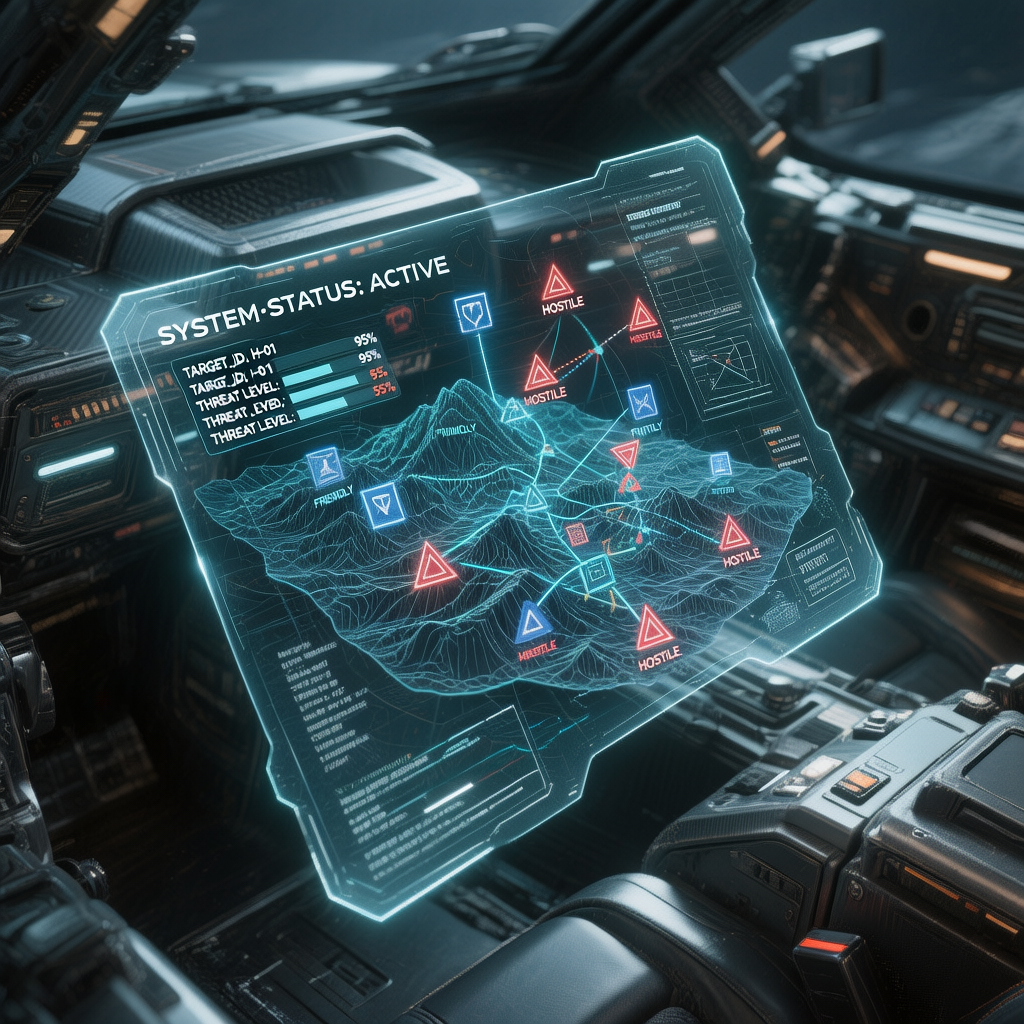
The first time I witnessed an autonomous targeting demonstration at a defense conference in 2019, I remember feeling genuinely unsettled. Not because the technology failed quite the opposite. It worked with terrifying precision, identifying and tracking multiple simulated targets faster than any human operator could blink. That moment crystallized something I’d been wrestling with for years: we’re fundamentally reshaping how warfare works, and the implications deserve serious examination.
The Reality on Today’s Battlefields
Let’s cut through the hype and fear mongering. AI decision making in combat systems isn’t science fiction anymore it’s operational reality. The Israeli Iron Dome system has been using algorithmic decision making for years, calculating intercept trajectories in milliseconds when rockets threaten civilian populations. During the 2021 Gaza conflict, the system reportedly achieved a 90% interception rate, making split-second calculations that no human team could match.
But Iron Dome represents just one end of the spectrum. Modern combat AI encompasses everything from logistics optimization to target recognition, from autonomous drones to predictive maintenance systems. The U.S. military’s Joint All-Domain Command and Control (JADC2) initiative aims to connect sensors, shooters, and decision-makers across land, sea, air, space, and cyberspace all orchestrated by artificial intelligence systems.
What most civilians don’t realize is how deeply AI has already penetrated military operations. When I spoke with a former Navy operations officer last year, he explained that AI-assisted systems now routinely analyze satellite imagery, flag potential threats, and even recommend engagement priorities. The human operators remain essential, but they’re increasingly working alongside algorithms rather than purely relying on traditional assessment methods.
How These Systems Actually Think
Combat AI decision-making operates through several distinct approaches, and understanding the differences matters enormously for evaluating risks and benefits.
Machine learning models trained on vast datasets of combat scenarios form the backbone of many systems. These algorithms identify patterns distinguishing between civilian vehicles and military transports, predicting enemy movement based on terrain and historical behavior, or recognizing the electromagnetic signatures of specific weapon systems.
Then there’s what the industry calls “sensor fusion,” where AI integrates data from multiple sources simultaneously. A single platform might combine radar returns, infrared imagery, electronic emissions, and visual data into a coherent picture something humans simply cannot do at the same speed or scale.
The Turkish Kargu-2 drone reportedly used autonomous targeting capabilities in Libya during 2020, marking what many analysts consider a watershed moment. Whether that system actually engaged targets without human authorization remains disputed, but the technical capability clearly exists.
The Human Element: More Complicated Than You’d Think

Here’s where I push back against both the technology enthusiasts and the doomsayers. The debate over “killer robots” often misses crucial nuances about how these systems actually function in operational environments.
Most Western militaries maintain what’s called “meaningful human control” the requirement that humans remain in the decision loop for lethal force. But that phrase hides enormous complexity. When an algorithm presents a commander with a recommended target list, sorted by priority, with confidence scores attached how meaningfully is that human actually controlling the decision? They’re not reviewing raw data. They’re accepting or rejecting machine conclusions.
I’ve interviewed operators who describe approval processes lasting seconds. The cognitive reality is that humans under time pressure tend to defer to system recommendations, especially when those systems have proven reliable in training scenarios.
This doesn’t mean autonomous systems are inherently problematic. Sometimes removing human hesitation actually saves lives both friendly forces and civilians. An AI system detecting an incoming missile doesn’t second-guess itself with the kind of psychological friction that might delay a human response past the point of effectiveness.
Ethical Fault Lines
The ethical debates surrounding autonomous weapons have intensified significantly. The Campaign to Stop Killer Robots has attracted support from dozens of nations calling for preemptive bans on fully autonomous lethal systems. Meanwhile, major military powers have resisted binding international agreements, arguing that such systems might actually reduce civilian casualties through more precise targeting.
Both positions contain legitimate arguments. AI systems don’t experience fear, anger, or revenge emotions that have driven countless war crimes throughout history. They can be programmed with strict engagement rules that humans might violate under stress.
But algorithmic systems also fail in ways humans don’t. Training data biases can produce discriminatory targeting. Edge cases situations the system wasn’t designed to handle can produce catastrophic errors. And there’s the fundamental question of accountability: when an autonomous system kills civilians, who bears responsibility?
These aren’t abstract philosophical puzzles. They’re questions that military lawyers, commanders, and defense contractors grapple with right now.
Looking Ahead
The trajectory seems clear, even if the destination remains uncertain. Defense budgets worldwide reflect massive investments in autonomous systems. China’s military modernization explicitly prioritizes AI integration. Russia has developed armed ground robots and autonomous submarine vehicles.
What concerns me most isn’t the technology itself but the competitive dynamics driving its deployment. When adversaries develop autonomous capabilities, the pressure to match them becomes intense potentially rushing systems into operational use before ethical frameworks and technical safeguards mature.
The next decade will likely see AI decision-making become standard across most military platforms. The question isn’t whether this happens, but how we ensure these systems remain aligned with international humanitarian law and basic human values.
After twenty years observing this field, I’m neither optimistic nor pessimistic I’m realistic. AI in combat systems offers genuine benefits: faster responses, reduced cognitive load on operators, potentially fewer civilian casualties. But it also introduces novel risks that we’re still learning to understand and mitigate.
The fog of war isn’t lifting. It’s just getting processed by different kinds of intelligence.
Frequently Asked Questions
Are fully autonomous weapons currently deployed?
Most operational systems maintain human oversight for lethal decisions, though defensive systems like Iron Dome operate with significant autonomy due to reaction time constraints.
Can AI systems comply with international humanitarian law?
Current technology struggles with complex proportionality assessments and distinguishing combatants from civilians in ambiguous situations, though capabilities continue improving.
Which countries lead in military AI development?
The United States, China, Russia, and Israel are generally considered frontrunners, with significant investments from European nations and others.
What prevents AI systems from making targeting errors?
Multiple safeguards including human oversight, engagement rules, confidence thresholds, and extensive testing—though no system is infallible.
Will AI eventually replace human soldiers?
Highly unlikely in the foreseeable future. Most experts anticipate human-machine teaming rather than full replacement, particularly for complex ground operations.
How do militaries address AI bias in targeting systems?
Through diverse training data, extensive testing across scenarios, and ongoing monitoring though this remains an active challenge with no perfect solutions.